← BACK TO ARCHIVES
Heritage-Black
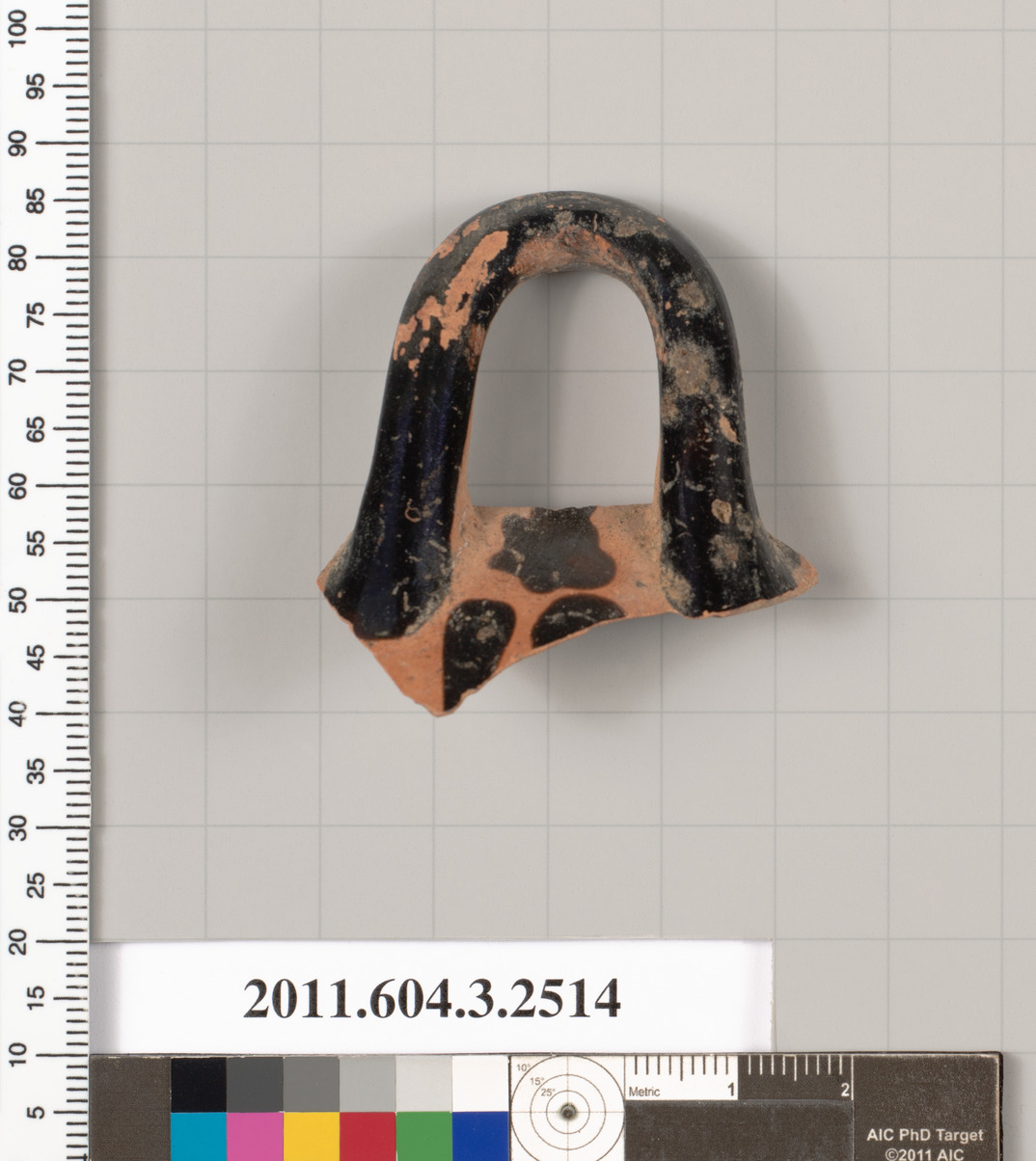
Heritage Synthesis: Terracotta fragment of a kylix (drinking cup)
Curated on Aug 09, 2026 // Node: LDN-01
The Fractured Muse: Terracotta Fragments and the Architecture of Old Money Silence
The internal archive speaks of a dialectic—the broken mold and the ordered panel, the breath of *韵* (rhythm) against the measure of *度* (restraint). It is a language of beauty born from the tension between the incomplete and the eternal. When we place the museum’s *Terracotta fragment of a kylix* (Greek, Attic) beside this philosophical inheritance, we are not merely observing a relic of symposia. We are witnessing a masterclass in the semiotics of absence, a visual grammar that resonates profoundly with the 2026 Old Money silhouette. This fragment, with its severed figures and its raw, fired earth, does not speak of ruin; it speaks of *selection*. It teaches us that true luxury is not the accumulation of the whole, but the curation of the essential—a principle that will define the coming season’s most compelling garments.
I. The Kylix Fragment as a Study in Negative Space
The Attic kylix, in its complete form, was an object of convivial symmetry—a broad, shallow bowl designed for the communal flow of wine, its interior painted with scenes of revelry or myth. Our fragment, however, is a violent excision from that narrative. We see a sliver of a figure, perhaps a komast or a satyr, caught mid-gesture. An arm, a fold of himation, the curve of a lyre. The rest is void. This is not the *ruin* of Romanticism, which mourns decay. This is the *fragment* of Modernity, which celebrates the power of the cut. The fragment does not ask us to reconstruct the whole; it asks us to *feel* the energy that the missing parts imply.
For the 2026 Old Money silhouette, this translates into a radical rethinking of construction. We move away from the totalizing, head-to-toe suiting of previous decades. Instead, we propose the *deliberate incompletion*. A single, impeccably tailored shoulder—a jacket cut with surgical precision to expose the collarbone—becomes our kylix rim. A skirt that falls asymmetrically, revealing the architectural line of a boot, echoes the broken curve of the bowl. The “missing” fabric is not an accident; it is a design decision, a statement of confidence. The wearer does not need the full narrative; the power lies in the suggestion. This is the *韵* of the mold fragment—the breath, the pause, the space between notes that makes the music. In practical terms, this means investing in garments with dramatic, engineered cuts: a cashmere coat with a single, sculptural lapel that folds away to nothing; a silk blouse with a back that plunges to the waist, leaving the front as a pristine, buttoned column. The eye is drawn to the *edge*, the point where the fabric yields to skin, just as the eye is drawn to the fractured edge of the terracotta.
II. The Tactile Theology of the Fired Earth
The internal text reminds us that the mold fragment’s beauty lies in its “触觉” (tactile) nature—it was born of fire, of the earth, of the artisan’s hand. Unlike the painted kylix, which relies on the visual illusion of the image, our fragment is fundamentally *sculptural*. The raised lines of the relief, the rough texture of the reverse, the subtle undulation of the surface—these are not meant to be seen, but to be *felt*. This is a critical distinction for the 2026 Old Money aesthetic. The new luxury is not about print or pattern; it is about *material truth*.
We are moving away from the glossy, the synthetic, and the digitally-printed. The 2026 silhouette will be defined by its *haptic* quality. Think of a double-faced wool that has been fulled and milled to a dense, almost stone-like firmness, yet drapes with a liquid weight. Think of a raw silk, with its slubs and irregularities, that catches the light not in a uniform sheen but in a thousand tiny, fractured glints—each one a micro-fragment of the whole. Think of a heavy, unwashed linen, its weave as visible and tactile as the fingerprints of the potter. These fabrics are the terracotta of our craft. They carry the memory of their making. A jacket in this wool does not merely clothe the body; it *armors* it with the quiet authority of the earth. The construction must honor this materiality. Seams should be pressed open, not fused. Linings should be of a contrasting, equally luxurious material—a whisper of silk against the wool—so that the wearer experiences a private, tactile pleasure, a secret known only to them. This is the “life temperature” of the artisan, transferred to the garment.
III. The Geometry of Restraint: From Coffin Panel to Suit Structure
If the kylix fragment gives us the *韵* of movement, the *Section of a Coffin Platform* gives us the *度* of structure. The internal archive describes its “规整的几何纹样” (regular geometric patterns) and its “节奏性重复” (rhythmic repetition). This is not a chaotic cosmos; it is a universe of order, where death itself is subsumed into a dignified, symmetrical pattern. For the 2026 Old Money silhouette, this is the return of the *suit as architecture*. But it is not the aggressive, power-shouldered architecture of the 1980s. It is a quieter, more internalized structure.
The new suit is a study in hidden geometry. The shoulder is soft, but the canvas inside is meticulously engineered, creating a line that is both relaxed and unyielding. The lapel is not merely a fold of fabric; it is a precise, geometric statement, its width and angle calculated to frame the face and the torso. The trouser is cut with a straight, columnar line, falling from the hip with a deliberate break at the shoe. This is the “horizontal panel” of the coffin translated into verticality. The repetition is not in the pattern, but in the *proportions*—the consistent relationship between shoulder, waist, and hem. This creates a visual rhythm, a sense of calm and permanence. The wearer is not dressed for a moment; they are dressed for an eternity of moments. This is the “驯服” (taming) of chaos, the imposition of order onto the body. The details are the key: a horn button, a hand-finished buttonhole, a pick-stitch along the lapel edge. These are the “神兽” (mythical beasts) of our modern cosmos—small, repeated motifs of craftsmanship that speak of a world where quality is the only constant.
IV. Synthesis: The 2026 Silhouette as a Living Archive
The 2026 Old Money silhouette is not a nostalgia trip; it is a philosophical synthesis. From the kylix fragment, we take the *courage of the cut*, the beauty of the unfinished, the tactile intelligence of the material. From the coffin panel, we take the *discipline of the line*, the serenity of proportion, the quiet power of repetition. The result is a wardrobe of pieces that are at once broken and whole, immediate and eternal.
Consider the signature ensemble: a single-breasted jacket in a dense, undyed cashmere—the color of raw clay. Its shoulder is softly rounded, but its internal structure is as precise as a temple frieze. It is worn over a simple, columnar dress in a heavy, matte silk, the skirt falling to the mid-calf, its hem a clean, unadorned line. The only ornament is a single, sculptural piece of gold—a cuff, perhaps, or a brooch—that echoes the fragmentary nature of the kylix. The overall effect is one of profound stillness, a stillness that is not empty but full of latent energy. This is the “圣殿” (sanctuary) without a threshold. It is a garment that does not shout, but *resonates*. It is the sound of the musician, sealed in clay, finally released by the touch of the wearer. It is the soul of the departed, finding flight in the perfectly measured geometry of the panel. This is the heritage of the future, a legacy written not in fabric, but in the space between the threads.
Heritage Lab Insight
Genetic Bridge: Archive node focusing on Heritage-Black craftsmanship.