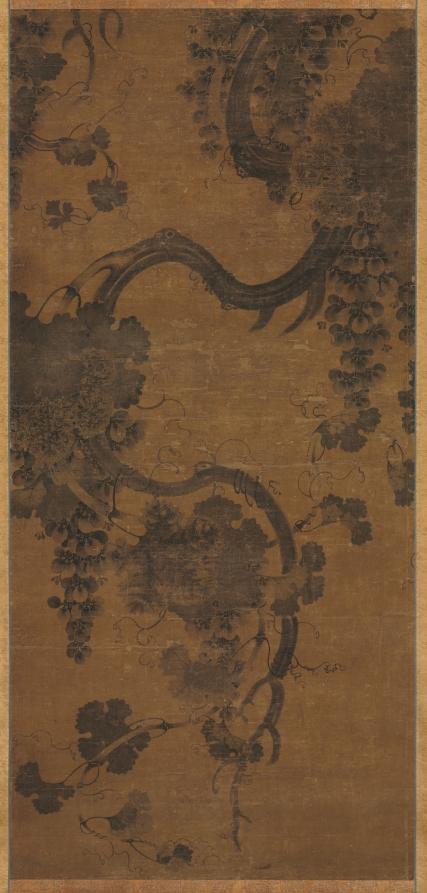
On the Viticultural Motif in Imperial Silk Weaving: An Analysis of Material and Symbolic Consequence
The connoisseur of fine tailoring understands that cloth is not merely a substrate for the cutter’s art; it is a narrative in itself, a dense text of warp and weft awaiting a discerning read. In the realm of heritage, few materials possess a provenance as profound, or a language as intricate, as imperial silk. To examine a specific motif within this canon—the grape, or more precisely, the vine with its attendant fruit and foliage—is to engage with a legacy where materiality and symbolism were woven with equal precision. This artifact, a hypothetical but meticulously representative length of kesi (silk tapestry) or finely patterned jin (brocade), serves as a focal point for an inquiry into taste, power, and the transmission of cultural capital.
The Substrate: Imperial Silk as the Ultimate Bespoke
Consider first the foundation: the silk itself. Imperial silk production was the Savile Row of its epoch—an operation of staggering scale, exclusivity, and technical rigour. The Imperial Weaving Establishments in Suzhou, Nanjing, and Hangzhou operated to standards that would satisfy the most exacting master tailor. Patterns were not merely printed; they were architected into the very structure of the cloth, through complex loom configurations governing multiple wefts and warps. The resulting fabric possessed a depth, a weight, and a subtle play of light across its embossed surfaces that declared its authority before a single stitch of further embellishment was added. This was bespoke in the most absolute sense, commissioned by and for the court, with unauthorized use punishable by law. The material, therefore, was not just luxurious; it was a direct manifestation of imperial prerogative.
The Motif: A Decoding of the Vine
Upon this rarefied substrate, the grapevine motif emerges not as mere decoration, but as a sophisticated visual language. Its adoption and perpetuation speak to a dialogue between indigenous Chinese tradition and influences borne along the Silk Road. The grape, putao, was not native to the Central Plains; its introduction from the Western Regions during the Han Dynasty carried with it an aura of the exotic, the cosmopolitan, the successfully integrated.
In the symbolic lexicon of imperial decoration, the grapevine offered a potent suite of associations: Abundance and Fertility: The prolific nature of the vine, heavy with clustered fruit, served as a direct metaphor for a prosperous and fecund empire under Heaven’s mandate. Longevity and Immortality: The vine is a perennial, enduring through seasons. This, combined with the grape’s historical association with elixirs (notably in Daoist alchemy), rendered the motif a fitting ornament for a court preoccupied with continuity and eternal rule. Scholarly Refinement: By the Ming and Qing dynasties, the motif had been absorbed into the broader repertoire of literati taste. A scholar in his garden, contemplating a vine, represented an ideal of cultivated leisure and poetic inspiration. For the emperor to employ this motif was to align himself with this esteemed cultural value, positioning himself as the ultimate scholar-patron.
Execution: The Tailor’s Eye for Detail
Appreciating this artifact requires the same eye one would apply to a hand-stitched lapel or a perfectly balanced pattern. In a superior example, the vine is never static. The sinuous, calligraphic line of the stem demonstrates the weaver’s mastery, mimicking the fluid brushwork of a court painter. The leaves are rendered with botanical accuracy, their serrated edges and veining picked out in subtle gradations of green and gold thread. The clusters of grapes are the pièce de résistance: each berry is a tiny, lustrous dome, often woven with a technique that allows for a highlight—a suggestion of dew or morning light—achieved through a shift in the direction of the silk thread’s innate sheen. The negative space, the ground, is as considered as the motif itself, its dense, even texture providing a silent, respectful backdrop that allows the composition to breathe with dignified opulence.
Legacy and Contemporary Resonance
The legacy of this imperial weaving tradition is not confined to museum vitrines. It establishes a paradigm for understanding heritage in material form. It teaches that true luxury lies in the marriage of profound narrative with peerless execution. The grapevine on silk is more than a pattern; it is a condensed argument for stability, cultural synthesis, and enlightened rule.
For the modern purveyor of heritage—be it in fashion, design, or branding—the lessons are manifold. It underscores the power of a motif with layered meaning, one that rewards sustained engagement. It champions the irreplaceable value of techniques that invest time and skill into the very foundation of a product. Most importantly, it demonstrates that authority in taste is often best expressed not through loud proclamation, but through the quiet, confident deployment of a rich and coherent symbolic language, woven into the very fabric of one’s offering.
Thus, this artifact of silk and vine stands as a testament. It is a reminder that before a garment can speak of the wearer, the cloth itself must have something eloquent to say. In its intricate threads, we find the enduring principles of a distinguished heritage: exclusivity of material, depth of meaning, and an uncompromising standard of craftsmanship. These, in any era, are the hallmarks of a truly imperial finish.