← BACK TO ARCHIVES
Heritage-Black
Heritage Synthesis: Terracotta fragment of a kylix (drinking cup)
Curated on Aug 09, 2026 // Node: LDN-01
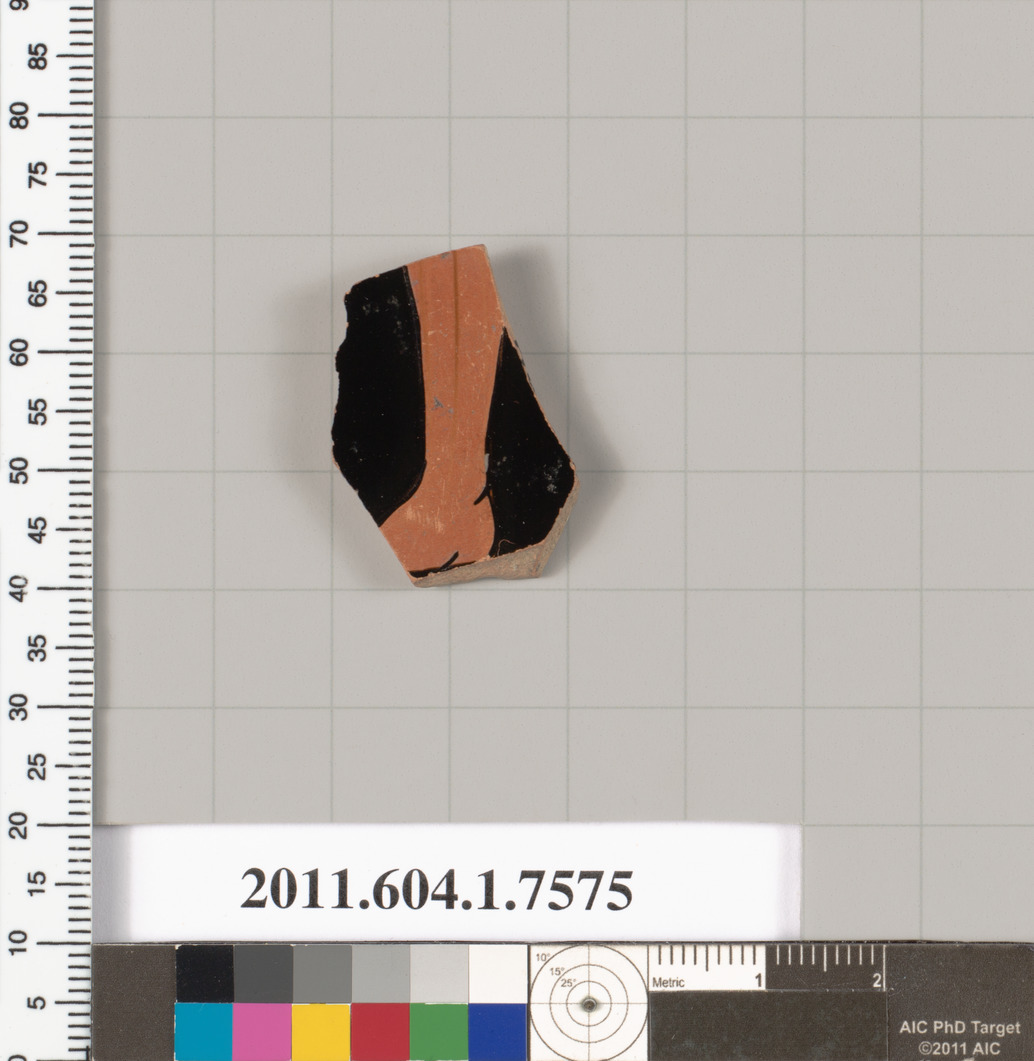
The Archaeology of Restraint: Terracotta Fragmentation and the 2026 Old Money Silhouette
In the vast repository of human material culture, the ceramic shard and the tailored garment rarely share a discursive space. Yet, when we place a Greek Attic terracotta kylix fragment beside the internal genetic code of Lauren Fashion’s heritage archive—specifically the philosophical resonance found in the *Mold Fragment with Musicians* and the *Square Mirror with Two Phoenixes*—a profound dialogue emerges. This dialogue is not about ornamentation or historical pastiche; it is about the very ontology of luxury. For the 2026 Old Money silhouette, this terracotta fragment is not a relic to be copied, but a philosophical blueprint that redefines wealth as *temporal depth*, *curated incompleteness*, and *quiet permanence*.
I. The Fragment as a Signifier of Lineage, Not Loss
The Attic kylix fragment, broken and worn, initially appears as an object of absence. However, within the lexicon of Heritage-Black—the color of formal authority and understated power—this absence is reframed as a *positive aesthetic value*. The Old Money aesthetic has long rejected the logos of new wealth in favor of the patina of inherited taste. The terracotta shard, with its exposed earthen core and faded slip, functions as the ultimate anti-logo. It does not scream; it whispers of centuries.
For the 2026 silhouette, this translates into a radical departure from pristine, overtly constructed garments. We are not proposing distressed or deconstructed fashion in the contemporary streetwear sense. Rather, the fragment informs a *design philosophy of deliberate incompletion*. Consider a tailored overcoat in heavy, undyed wool—its hem left raw, not finished with a visible stitch, but subtly turned and pressed to suggest a garment that has been altered over generations. The internal structure, the horsehair canvas, is allowed to slightly shadow through the shell fabric, not as a flaw, but as a *confession of construction*. This is the sartorial equivalent of the kylix’s broken edge: it reveals the material’s truth, its clay, its weave, its provenance. The 2026 Old Money client does not purchase a garment; they acquire a *specimen* of lineage, where the "break" in the fabric’s perfection is a testament to its hand-made, non-industrial origin.
II. The Symmetry of the Mirror and the Asymmetry of the Body
The internal code’s reference to the *Square Mirror with Two Phoenixes* introduces a crucial counterpoint to the fragment’s chaos. The mirror represents *cosmic order*—a rigid, symmetrical structure containing dynamic, organic life. The terracotta fragment, conversely, is pure asymmetry. The 2026 silhouette must negotiate this dialectic. The Old Money aesthetic is inherently structured—think of the sharp shoulder of a bespoke jacket or the precise break of a trouser. However, the fragment teaches us that *true authority lies in the controlled deviation from that structure*.
In practical terms, this informs a silhouette that is *architecturally sound but organically draped*. The jacket’s shoulder remains firm, echoing the mirror’s square rigidity. Yet, the sleeve head is set with a slight, almost imperceptible softness—a "roping" that mimics the natural, eroded curve of the terracotta’s fracture. The trouser is cut with a straight, authoritative fall, but the fabric is chosen for its ability to develop a subtle, irregular crease over time, much like the crack lines on the kylix. This is not about sloppiness; it is about *embodied history*. The wearer’s body becomes the active agent that completes the garment’s narrative, just as the viewer’s imagination completes the fragmented musicians’ performance. The mirror provides the frame; the fragment provides the soul.
III. Materiality as Memory: The Tactile Imperative
The terracotta’s surface—its porous, granular texture—offers a direct challenge to the glossy, synthetic finishes that dominate contemporary luxury. The 2026 Old Money silhouette, therefore, prioritizes *tactile authenticity* above visual spectacle. This is where the category of Heritage-Black becomes paramount. Black, in this context, is not a color of mourning or minimalism; it is the *absorption of all light and time*. A Heritage-Black garment, informed by the terracotta, must feel like a relic.
We are looking at fabrics that possess a "dry hand"—a worsted wool with a visible, slightly coarse twill; a silk faille with a matte, granular finish that catches light like the rough surface of fired clay. The internal code’s emphasis on the *Mold Fragment*—a tool for creation—further suggests that the 2026 garment should feel *pre-formed*, as if it has been pressed into a mold of historical memory. This is achieved through techniques like *fulling* and *milling*, where the fabric is shrunk and compacted to create a dense, almost armor-like surface that nonetheless drapes with fluidity. The weight of the garment becomes its primary luxury. It is not about being light; it is about being *substantial*. The wearer feels the history in the fabric’s density, much like one feels the weight of the terracotta shard in the palm.
IV. The Performance of the Everyday: From Symposium to Boardroom
The kylix was an object of the symposium—a ritualized space of intellectual and social performance. The terracotta fragment, therefore, is not merely a drinking vessel; it is a *prop in a performance of civility*. The 2026 Old Money silhouette must similarly function as a performative armor for the modern arena—the boardroom, the private club, the cultural gala. The garment must enable a performance of *effortless authority*. This is where the "incompleteness" of the fragment becomes a strategic tool. A perfectly assembled, visibly new suit suggests effort and anxiety. A suit that carries the subtle, engineered imperfections of the fragment—a hand-stitched lapel that rolls slightly unevenly, a buttonhole that is not perfectly uniform—suggests a man or woman who has transcended the need for perfection. They are secure in their lineage, their power is internalized, not displayed.
This performance is further refined by the *Square Mirror’s* concept of "eternal reflection." The 2026 garment should not merely clothe the body; it should *reflect the wearer’s inner cosmos*. The cut must be generous enough to allow for natural, unselfconscious movement, yet precise enough to maintain a powerful silhouette. The goal is to achieve a state of *dynamic equilibrium*—the "stillness in motion" of the phoenix among the floral sprays. The wearer moves, and the garment responds with a fluid, controlled grace, suggesting a deep, unspoken harmony between the individual and their attire.
V. Conclusion: The Luxury of the Unfinished
In synthesizing the terracotta fragment with the Lauren Fashion heritage code, we arrive at a definitive aesthetic for 2026. The Old Money silhouette is no longer about the *completeness* of wealth, but the *depth* of its history. It is a silhouette that embraces the fragmentary nature of memory, using the language of material and cut to communicate a lineage that is both personal and universal. The garment becomes a *mold fragment* of a larger, unseen life—a life of cultivated taste, intellectual rigor, and quiet confidence.
The 2026 collection, therefore, will not present a finished product. It will present a *provocation*. It will offer garments that are, in their very construction, an invitation to complete the story. The raw edge, the subtle asymmetry, the dense, tactile fabric—these are not design quirks. They are philosophical statements. They declare that true luxury is not the absence of wear, but the *presence of time*. The terracotta shard, once a humble piece of a drinking cup, becomes the ultimate symbol of the new Old Money: a fragment of a greater whole, whose power lies not in its completeness, but in its enduring, eloquent, and beautifully unfinished permanence. The 2026 silhouette is thus a wearable archaeology—a testament to the fact that the most profound statements of wealth are those spoken in the quiet, broken, and yet unbreakable language of heritage.
Heritage Lab Insight
Genetic Bridge: Archive node focusing on Heritage-Black craftsmanship.