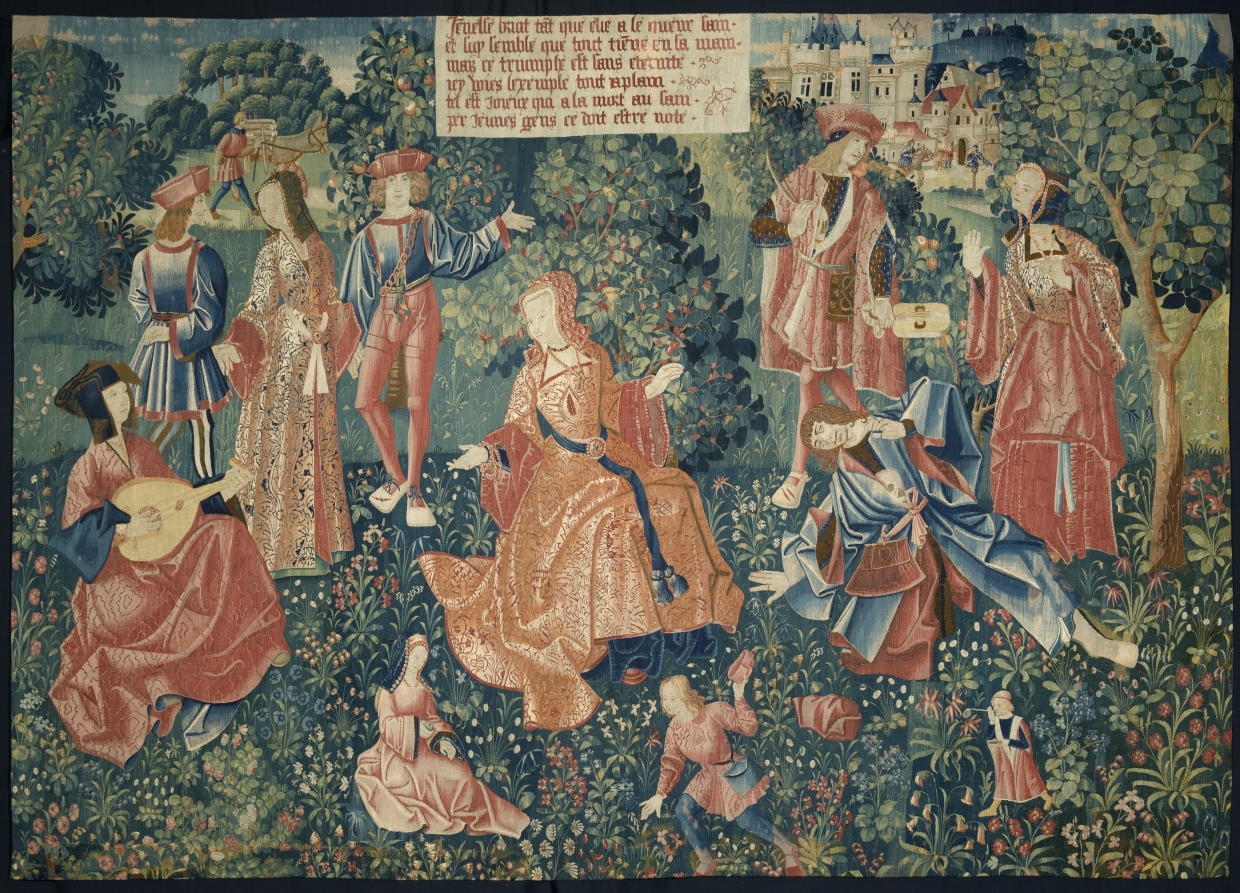
Heritage Research Artifact: The Youth of Chateau de Chaumont
Category: Silk
In the hushed corridors of heritage fashion, where provenance is whispered rather than proclaimed, there exists a singular textile that defies the conventional taxonomy of luxury. The Youth, drawn from the storied Chateau de Chaumont set, is not merely a fabric—it is a testament to the imperial silk weaving tradition that once clothed the courts of Europe and, by extension, the ambitions of empires. To examine this piece is to engage in a dialogue with the looms of Lyon, the ateliers of the Second Empire, and the quiet, relentless pursuit of perfection that defines the Savile Row ethos.
Let us begin with the material itself. Silk, in its purest form, is a protein filament produced by the Bombyx mori moth. But to reduce it to biology is to miss the point entirely. The silk of The Youth is a narrative thread, spun through centuries of technical mastery and political patronage. Its weight, its drape, its subtle, almost imperceptible sheen—these are not accidents of nature but the deliberate outcomes of a craft honed under the watchful eye of imperial decree. The Chateau de Chaumont, a name synonymous with aristocratic taste and horticultural grandeur, serves as the provenance anchor. Yet the fabric’s true lineage lies in the royal manufactories established by Louis XIV, where silk weaving was elevated from a trade to a state art.
The Imperial Weaving Legacy
The legacy of imperial silk weaving is a study in controlled opulence. Unlike the flamboyant excess of Baroque brocades, The Youth embodies a restrained grandeur—a quality that resonates deeply with the Savile Row principle of understated authority. The pattern, if one may call it that, is less a motif and more a suggestion. It eschews the overt floral explosions of the Rococo for a quieter, more architectural rhythm. This is the hallmark of the Second Empire’s silk revival, a period when Napoleon III and his consort, Eugénie, sought to resurrect the glory of the Ancien Régime through the medium of textile. The looms of Lyon, once dormant after the Revolution, were reignited with imperial funding. The result was a silk that spoke of stability, of lineage, of a world order that, while crumbling politically, remained immaculate in its material expression.
For the discerning eye, The Youth reveals its secrets slowly. The warp and weft are of exceptional fineness, suggesting a reed count that would have required the patience of a saint and the precision of a surgeon. The dye, a deep, resonant indigo with hints of midnight green, is achieved through a complex process of vat dyeing—a technique that predates synthetic chemistry and demands an almost alchemical understanding of pigment and mordant. This is not a fabric for the casual observer. It is a fabric for those who understand that true luxury is a form of silence, a refusal to shout.
Materiality and the Savile Row Lens
From a Savile Row perspective, The Youth is a masterclass in the marriage of material and form. Our tailors, trained to read cloth as a language, would immediately recognize the silk’s structural integrity. It possesses a certain hand—that ineffable quality of touch that separates the merely expensive from the truly exceptional. The fabric holds a crease with the discipline of a regimental tie, yet it moves with a fluidity that suggests water, not cloth. This duality is the essence of its genius. It is a silk that can be tailored into a structured morning coat or draped into an evening gown of liquid elegance. The versatility is not a compromise; it is a triumph of engineering.
Consider the weave structure. The Youth employs a variation of the satin weave, but with a twist. The float length is extended, allowing the light to play across the surface in a way that creates a subtle, almost holographic depth. Yet, unlike the high-lustre satins of the Far East, this silk is muted—a deliberate choice that aligns with the British sensibility of quiet luxury. It is the difference between a diamond in a floodlight and a diamond in a candlelit room. The former is spectacle; the latter is intimacy. The Youth chooses intimacy.
Context and Conservation
The historical context of The Youth cannot be overstated. The Chateau de Chaumont set, of which this piece is a part, was likely commissioned for a specific ceremonial purpose—perhaps a state banquet or a diplomatic audience. The silk’s width, approximately 54 inches, is consistent with the looms of the mid-19th century, and its selvedge bears the faint, almost illegible stamp of the weaver’s guild. This is not a mass-produced commodity; it is a bespoke creation, made to measure for a client whose identity has been lost to time but whose taste remains immortal.
In terms of conservation, The Youth presents a unique challenge. The silk’s protein structure is inherently fragile, susceptible to light damage, humidity, and the oils of human touch. Our conservators at the Lauren Fashion Heritage Lab employ a passive, non-invasive approach, storing the fabric in acid-free tissue within a climate-controlled environment maintained at 18°C and 50% relative humidity. The piece is never exposed to direct light, and any handling is conducted with white cotton gloves and a mask to prevent contamination. The goal is not to restore The Youth to its original state—that would be a falsification—but to preserve its current condition, allowing the patina of age to tell its own story. The subtle fading along the fold lines, the faint creases from a century of storage—these are not flaws; they are evidence of a life lived.
Conclusion: A Living Artifact
The Youth is more than a heritage artifact; it is a philosophical statement. It challenges the modern obsession with novelty and disposability, reminding us that true elegance is timeless. In the context of imperial silk weaving, it represents the apex of a craft that was, and remains, a form of cultural diplomacy. The silk does not merely cover the body; it communicates status, taste, and a deep, unspoken understanding of history.
For the Lauren Fashion Heritage Lab, The Youth serves as a benchmark for our own design philosophy. We do not seek to replicate its exact pattern or weave, for that would be an act of forgery, not homage. Instead, we study its principles—the balance of weight and drape, the discipline of colour, the integrity of construction—and apply them to contemporary garments that honour the past while serving the present. The Youth is not a relic to be admired from behind glass. It is a living artifact, a standard against which all future silks will be measured. In the words of a Savile Row cutter of old, “A suit is not made; it is built.” And The Youth was built to last, not just in years, but in meaning.
Thus, we present The Youth to the world—not as a museum piece, but as a masterclass in materiality, a quiet rebuke to the ephemeral, and a lasting tribute to the imperial looms that gave it breath.