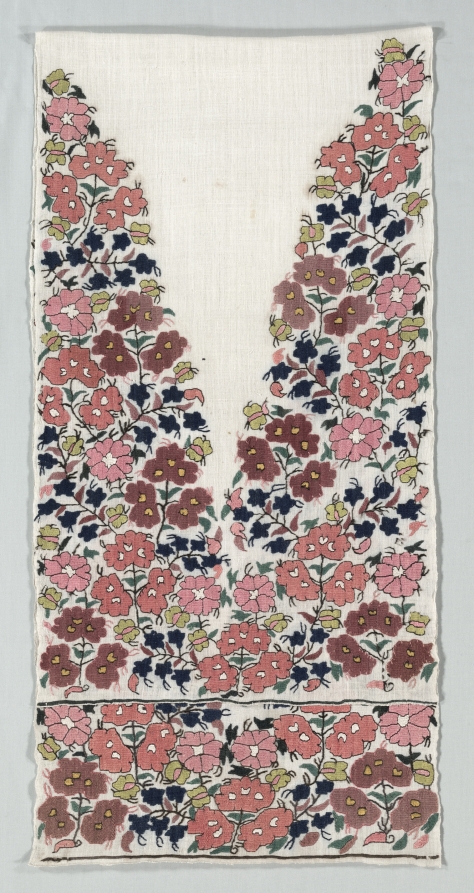
The Scarf as a Living Document: Silk, Empire, and the Savile Row Continuum
Introduction: The Weight of a Thread
In the hushed, wood-panelled ateliers of Savile Row, where the air is thick with the scent of cedar and beeswax, one learns to read cloth as a ledger. Every bolt of worsted wool, every length of cashmere, carries the provenance of its making. Yet no textile in our heritage canon speaks with the quiet authority of the silk scarf. It is not merely an accessory; it is a portable fragment of imperial history, a distilled testament to a global supply chain that predates the corporation by centuries. To hold a silk scarf is to hold the culmination of a journey that began in the mulberry groves of the East and ended, often, in the disciplined hands of a London cutter. This artifact, ostensibly simple, is in fact a complex negotiation between materiality, power, and taste.
The Material Imperative: Why Silk?
Silk is not a fabric; it is a biological marvel engineered for tyranny. The filament of the Bombyx mori silkworm, extruded in a single, unbroken strand of up to a kilometre, possesses a tensile strength comparable to steel of the same diameter. This is the first lesson of materiality: silk is not delicate. It is resilient, breathable, and possesses a natural lustre that no synthetic can replicate. For the imperial weaver, this was not a matter of aesthetic preference but of strategic necessity. The scarf, unlike the tailored coat, must drape, fold, and knot without losing its integrity. It must survive the friction of a collar, the pull of a travel case, the damp of a London autumn. The molecular structure of fibroin—the protein core—allows for a unique interplay of light and shadow, a depth of colour that shifts with the angle of the wearer’s neck. This is why, in the heritage lexicon, silk is never printed; it is woven or dyed in the gum state, allowing the colour to penetrate the fibre itself, not merely sit upon its surface.
The Imperial Weave: From Canton to Spitalfields
The legacy of imperial silk weaving is not a romantic footnote; it is a brutal, efficient commercial architecture. By the 18th century, the East India Company had established a monopoly on raw silk from Canton and Bengal, shipping thousands of bales to London’s docks. The silk was not woven in the East; it was processed in the Spitalfields workshops of Huguenot refugees, who brought with them the drawloom techniques of Lyon. This is the crucial point of context: the scarf you wear is the product of a triangulated power structure—raw material extracted under colonial mandate, transformed by skilled European labour, and consumed by a metropolitan elite whose status was defined by access to this very cloth.
The imperial aesthetic was one of controlled excess. Patterns were not whimsical; they were cartographic. Paisley, borrowed from the Kashmiri shawl, was re-engineered into a dense, symmetrical boteh motif, signifying not just wealth but the ability to command a design language from across the globe. The scarf became a miniature flag of empire, worn by officers in the Punjab, by diplomats in Constantinople, and by the wives of industrialists in Mayfair. It was a silent declaration of reach—a promise that the wearer’s world was not bounded by the Thames but extended to the very edges of the known map.
The Savile Row Intervention: Discipline and Drape
Savile Row’s relationship with the silk scarf is one of restrained appropriation. We do not drape; we structure. The Row’s genius lies in the paradox of the scarf: it is the only garment that must appear effortless, yet its construction is anything but. The heritage houses—Gieves & Hawkes, Huntsman, Anderson & Sheppard—did not invent the scarf; they disciplined it. The correct scarf, in our canon, is not the flamboyant foulard of the Riviera but the understated, hand-rolled edge of a silk twill, finished with a rolled hem that requires a minimum of 45 minutes of hand-stitching per side. This is not decoration; it is engineering. The roll provides weight, ensuring the scarf sits flat against the chest, resisting the urge to fly away in a gust of wind.
The pattern scale is equally considered. A Savile Row scarf is never loud; it is confident. The motifs—a subtle houndstooth, a micro-check, a discreet regimental stripe—are scaled down to a 2-inch repeat, a deliberate counterpoint to the bold, oversized prints of the fashion houses. This is a matter of proportion. The scarf is worn against the face, and the face is the client’s primary asset. The cloth must complement, not compete. The imperial legacy is thus inverted: where the empire used silk to announce presence, the Row uses it to convey discretion. The message is not “I have conquered,” but “I have inherited, and I choose not to boast.”
Conservation and Continuity: The Artifact’s Second Life
In the Lauren Fashion Heritage Lab, we treat the silk scarf as an archaeological object. Its conservation requires an understanding of its dual life—as a functional textile and as a bearer of symbolic weight. The primary threat is not wear but light. The very dyes that give the scarf its imperial depth are fugitive; prolonged exposure to UV radiation will fade a 19th-century madder red to a pale salmon within a decade. We store scarves flat, interleaved with acid-free tissue, in drawers maintained at a constant 18°C and 50% relative humidity. We do not fold; we roll, to prevent crease fatigue along the fibroin chain.
Yet the artifact’s true preservation lies not in the archive but in its continued use. A scarf that is worn is a scarf that is understood. The patina of a well-worn silk scarf—the slight softening of the twill, the gentle sheen at the fold lines—is not damage; it is biography. It records the wearer’s habits: the way they knot it at the throat, the way they use it to wipe a lens, the way they leave it draped over a chair at a club. This is the final lesson of materiality: silk is not eternal, but it is honest. It will tell you, with absolute clarity, how it has been treated. The imperial weavers knew this; they built their reputation on the integrity of the fibre. The Savile Row cutter knows this; he builds his reputation on the integrity of the drape. And we, as custodians of this heritage, must know that the scarf is not a relic but a living document—one that requires, above all, a wearer worthy of its history.
Conclusion: The Knot That Binds
The silk scarf, in its final form, is a paradox of scale. It is small, yet it contains the world. It is soft, yet it is strong. It is a product of imperial extraction, yet it is the most personal of garments. As you reach for a scarf this morning, consider the thread. It has crossed oceans, passed through the hands of weavers and dyers and cutters, and arrived at your collar as a quiet, unassuming testament to the enduring power of material culture. Wear it well. It is not merely silk; it is a legacy, and it expects a certain standard of conduct.