← BACK TO ARCHIVES
Heritage-Black
Heritage Synthesis: Terracotta fragment of a kylix: eye-cup (drinking cup)
Curated on Aug 09, 2026 // Node: LDN-01
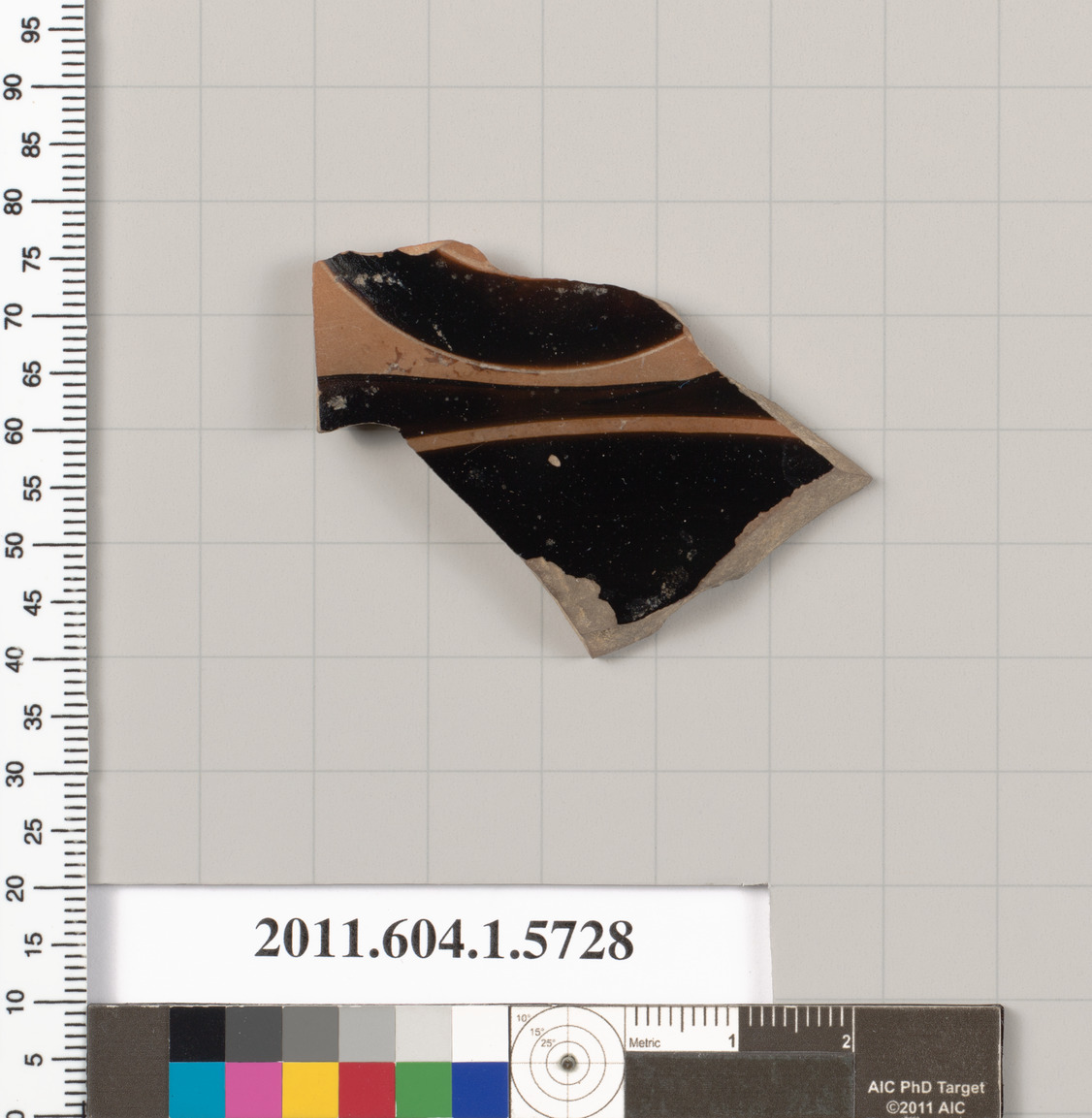
The Dialectics of the Gaze: Reinterpreting the Attic Eye-Cup as a Blueprint for 2026 Old Money Silhouettes
Within the hallowed archives of the Lauren Fashion Heritage Lab, we often speak of the “genetic code” of a garment—the invisible threads of cultural memory, spiritual intention, and artisanal logic that bind a silhouette to a deeper human narrative. Our internal study of the *Bodhisattva* and the *Amulet in the Form of a Seated Figure with Bovine Head* has long illuminated a fundamental dichotomy: the former as an instrument of *interior* transcendence, the latter as a shield for *exterior* protection. Yet, when we turn our analytical lens to the museum artifact before us—a **Terracotta fragment of a kylix: eye-cup** from Attic Greece—we encounter a third, more subversive paradigm. This humble drinking vessel, fractured by time yet potent in its iconography, does not merely depict a face; it *weaponizes* the gaze. For the 2026 Old Money silhouette, this artifact offers a radical departure from the quietude of monastic robes or the rigidity of apotropaic amulets. It proposes a language of *guarded visibility*—a sartorial philosophy where power is not asserted through volume or ornament, but through the deliberate, almost confrontational, framing of the self.
The Apotropaic Function: From Temple Wall to Tailoring Seam
The Attic eye-cup, produced in the 6th century BCE, is a masterpiece of functional apotropaism. When the drinker raised the kylix to his lips, the two large, staring eyes painted on the vessel’s exterior would appear to look back at him, creating a mirror-like confrontation. In the symposium—a space of heightened social and political negotiation—this was not mere decoration. The eyes served as a prophylactic against the *phthonos* (envy) of fellow revelers and the malevolent forces that lurked in the wine’s intoxication. The gaze was a boundary, a defensive perimeter drawn in black-figure paint.
For the 2026 Old Money aesthetic, which has historically favored the understated, the muted, and the invisibly luxurious, the eye-cup introduces a critical tension. The Old Money uniform—the cashmere roll-neck, the unstructured tweed jacket, the pleated wool trouser—has always been about *not* looking. It is a code of belonging predicated on the suppression of individual spectacle. However, the eye-cup suggests a sophisticated evolution: a shift from *passive anonymity* to *active, controlled observation*. The 2026 silhouette will not shout, but it will *watch*.
This translates into tailoring through the concept of the “framed aperture.” Consider the high, structured neckline of a new overcoat, not as a collar, but as a deliberate frame for the face—a terracotta-hued visage set against a field of deep, Heritage-Black wool. The cut is precise, almost architectural, echoing the geometric symmetry of the kylix’s painted eyes. The shoulders, while not exaggerated, are cut with a clean, unbroken line that mimics the vessel’s rim, creating a sense of contained, monumental presence. This is not the soft, draped shoulder of a monastic robe; it is the firm, defensive shoulder of a sentinel.
Symmetry and the Architecture of Assurance
The eye-cup’s power lies in its bilateral symmetry. The two eyes are identical, creating a hypnotic, stabilizing rhythm. This is a visual manifestation of *cosmos* (order) against *chaos* (the intoxication of the symposium). In our 2026 designs, this principle manifests in a renewed commitment to rigorous symmetry in construction. Where previous seasons might have allowed for a slouchy, relaxed fit, the new Old Money silhouette demands a return to the *tailor’s exactitude*.
We see this in the double-stitched seams of a herringbone wool blazer, where the parallel lines function as a rhythmic incantation, a sartorial mantra of reliability. We see it in the perfectly matched plaid of a kilted skirt, where the pattern’s intersection becomes a point of meditative focus, akin to the pupil of the painted eye. The silhouette itself becomes a vessel—a kylix of the self—whose outer form is a disciplined, symmetrical container for the inner, potentially chaotic, human experience. The message is clear: *I am composed; I am in control; I am not easily read.* This is the apotropaic function translated into the language of bespoke tailoring—a defense against the prying eyes of the nouveau riche, the market fluctuations, and the vulgarities of trend.
The Materiality of the Gaze: Terracotta Tones and the Patina of Power
The artifact’s material—terracotta—is equally instructive. Its earthy, burnt-orange hue is a far cry from the icy neutrals often associated with luxury. Yet, in its fragmentary state, the terracotta possesses a profound *gravitas*. It is the color of the earth from which the Greek gods were born, the color of the potter’s wheel, the color of civilization’s foundational craft. For 2026, we introduce a new chromatic anchor: **Terracotta Ash**. This is not a bright, sun-drenched orange, but a muted, desaturated tone—the color of dried clay, of ancient ruins, of a heritage that has weathered millennia.
This hue will appear in the lining of a Heritage-Black cashmere overcoat, a secret flash of archaic warmth when the garment is opened. It will surface in the stitching of a wool waistcoat, or as the primary color for a pair of high-waisted, wide-leg trousers cut from a heavy, felted wool. The combination of Heritage-Black and Terracotta Ash is a dialogue between the eternal and the elemental. The black provides the void, the mystery, the unreadable surface; the terracotta provides the grounding, the historical root, the tangible evidence of a lineage that cannot be purchased but only inherited. This is a color story that speaks to the *patina of power*—not the shine of new wealth, but the deep, burnished glow of enduring presence.
Conclusion: The Sympotic Silhouette
The Bodhisattva teaches us to look inward; the bovine-headed amulet teaches us to ward off external evil. The Attic eye-cup, however, teaches us a more complex lesson: to *engage* with the external world from a position of fortified interiority. The 2026 Old Money silhouette, informed by this fragment, is not a costume of retreat. It is a *sympotic garment*—one designed for the social arena, for the boardroom, for the gallery opening, where one must participate while remaining invulnerable.
The new silhouette is a vessel, its seams are the potter’s lines, and its wearer is the wine—precious, potent, and protected. The garments we craft are not merely clothes; they are *amulets of the gaze*. They do not ask for attention; they command a certain kind of *observation*—one that recognizes the weight of history, the precision of craft, and the quiet, unyielding confidence of a self that has looked into the eyes of the world and refused to blink. In this, the ancient kylix finds its most modern expression: a suit of armor for the soul, tailored in Heritage-Black and fired in the kiln of time.
Heritage Lab Insight
Genetic Bridge: Archive node focusing on Heritage-Black craftsmanship.