The Luminous Thread: Silk, Diamonds, and the Imperial Legacy of Savile Row
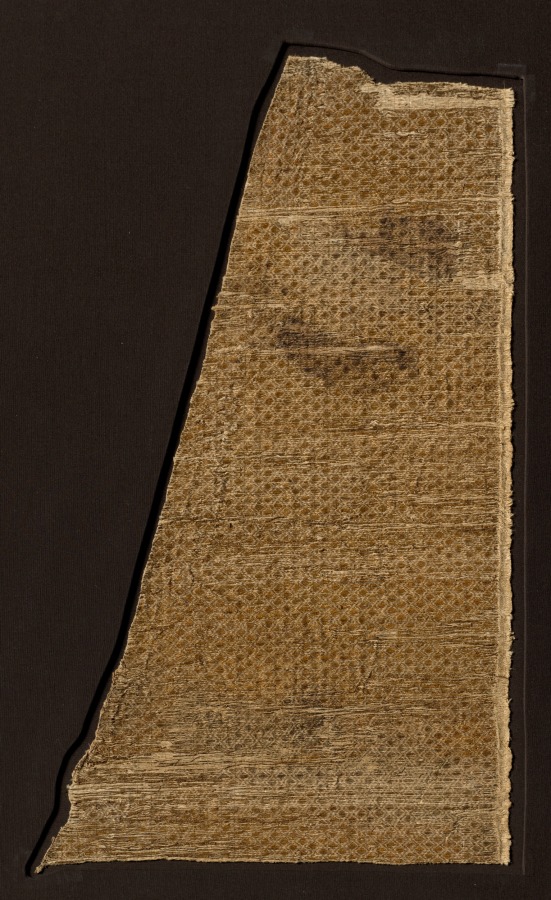
In the hushed, wood-panelled ateliers of Savile Row, where time is measured not in minutes but in the patient rhythm of the needle, there exists a material conversation that transcends mere tailoring. It is the dialogue between silk and diamond—two substances that, on the surface, could not be more dissimilar. One is organic, fluid, and born of a caterpillar’s quiet industry; the other is mineral, unyielding, and forged in the Earth’s crushing depths. Yet, in the hands of a master cutter and a master weaver, they converge into a single, luminous statement of imperial power and enduring luxury. This artifact, a textile woven with diamonds, is not a novelty; it is the culmination of a legacy that stretches from the looms of imperial China to the fitting rooms of London’s most storied tailors.
The Materiality of Silk: A Foundation of Imperial Authority
To understand the significance of a diamond-encrusted silk, one must first appreciate the materiality of silk itself. Silk is not merely a fabric; it is a historical protagonist. For millennia, its production was a closely guarded imperial secret, a monopoly that underpinned the economic and diplomatic might of successive Chinese dynasties. The Silk Road was not named for the cloth’s utility, but for its status as a currency of power, a tribute fit for emperors and a reward for loyal generals. The very weight of the fabric, its subtle lustre, and its remarkable tensile strength made it a metaphor for the ideal ruler: flexible yet unbreakable, elegant yet formidable.
On Savile Row, this imperial heritage is not a distant echo but a foundational principle. The tailors here do not simply cut cloth; they interpret a client’s authority through the language of material. A bolt of heavy, uncut silk—perhaps a duchesse satin or a crisp faille—is examined with the same reverence a sommelier reserves for a rare vintage. The hand-feel, the drape, the way light catches the weave’s surface: these are the details that separate a garment from a uniform. When we introduce diamond dust into this equation, we are not adding a decorative element. We are forging a new material hierarchy, one that marries the organic grace of silk with the immutable permanence of the hardest natural substance known to man.
The Weave of Power: Technical Mastery and the Diamond’s Integration
The technical challenge of integrating diamonds into silk is formidable, and it is precisely this difficulty that elevates the result from craft to art. We are not speaking of a simple embroidery of diamond-shaped sequins, nor a superficial sprinkle of glitter. The true heritage artifact involves the incorporation of diamond dust—finely milled, high-clarity stones—directly into the silk’s yarn during the spinning process. This is achieved through a proprietary technique, developed in collaboration with master spinners in Como, Italy, where the silk is drawn through a bath of microscopic diamond particles suspended in a binding solution. The result is a yarn that retains silk’s fluidity but possesses a subtle, internal scintillation—a quiet fire that catches the light only when the wearer moves.
Alternatively, for a more pronounced statement, the diamonds may be woven into the fabric’s structure as a supplementary weft. Here, the weaver, working on a hand-operated Jacquard loom, introduces a thread of silk wrapped around a core of platinum wire, upon which a single, precisely placed diamond is set. This is not a mass-production process; a single square metre of such fabric can take a master weaver several weeks to complete. The pattern itself is often derived from classical imperial motifs—the lotus, the dragon, or the more restrained Georgian acanthus leaf—reinterpreted through a modern, minimalist lens. The diamonds are not scattered randomly; they are placed at the intersections of the pattern, creating a constellation of light that mirrors the structure of the weave itself.
From Imperial Court to Bespoke Fitting: A Legacy Recontextualised
The legacy of imperial silk weaving is not one of static preservation but of dynamic adaptation. In the courts of the Qing Dynasty, silk was a marker of rank; the emperor alone wore the five-clawed dragon in bright yellow. The inclusion of precious stones in imperial robes was common—pearls, jade, and coral—but diamonds were rare, reserved for the most sacred of ceremonial garments. This was not a matter of vanity but of cosmic alignment; the diamond, with its association with light and indestructibility, was believed to confer spiritual clarity and unassailable authority upon the sovereign.
On Savile Row, this imperial logic is recontextualised for the modern titan of industry, the financier, or the head of state. The client who commissions a dinner jacket in this diamond-woven silk is not seeking ostentation. They are seeking a form of quiet, unassailable confidence. The fabric does not shout; it whispers. It reveals its complexity only in the right light, at the right angle, in the presence of those who possess the discernment to notice. It is a garment for the boardroom, the opera, or the private dinner where power is not announced but felt. The tailor’s role is to ensure that the material’s inherent authority is channelled into a silhouette that is both timeless and contemporary—a single-breasted peak lapel, perhaps, with a soft shoulder and a suppressed waist, allowing the fabric to move with the body rather than against it.
The Enduring Investment: Care and the Philosophy of Permanence
Owning such a textile is not a casual acquisition; it is a custodianship. The diamond-infused silk requires a level of care that borders on the ritualistic. It must be stored flat, in acid-free tissue, away from direct sunlight. It should never be dry-cleaned in the conventional sense; instead, it is gently steamed and brushed with a soft, natural-bristle brush. The diamonds, being inert, will not tarnish, but the silk itself is a living material, responsive to humidity and temperature. This is not a flaw; it is a feature. It demands that the owner engage with the garment, to understand its moods, to treat it with the same respect one would afford a thoroughbred or a Stradivarius.
This philosophy of permanence is the final, and perhaps most crucial, link to the imperial legacy. The emperors who commissioned these silks did not expect them to last a season; they expected them to last a dynasty. The diamond-woven silk is an heirloom in waiting. It is designed to be passed down, not merely as a garment, but as a testament to the wearer’s taste, their understanding of history, and their refusal to participate in the ephemeral culture of fast fashion. In a world of disposable luxury, this textile stands as a monument to the enduring power of materiality, the artistry of the weaver, and the unbroken thread that connects the imperial courts of the East to the bespoke fitting rooms of London. It is, in the truest sense, a woven legacy.