← BACK TO ARCHIVES
Heritage-Black
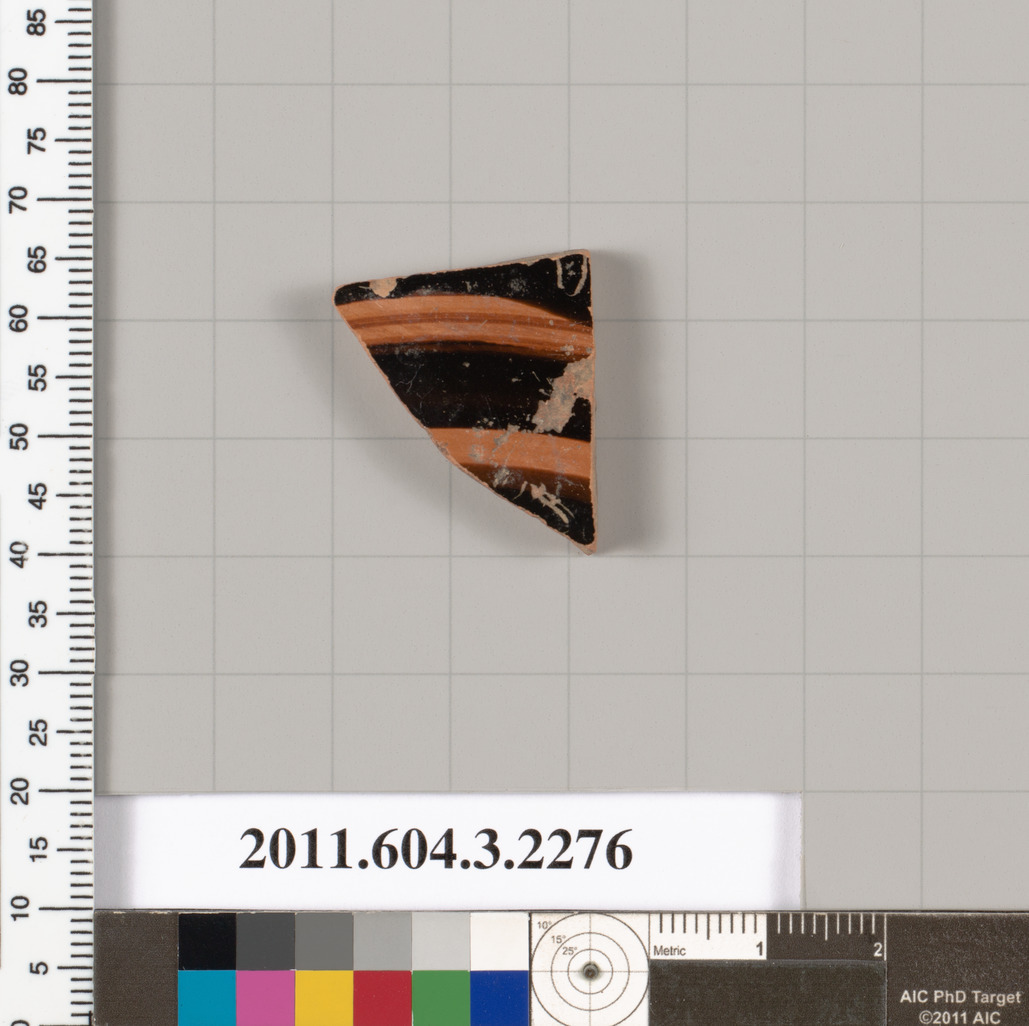
Heritage Synthesis: Terracotta fragment of a kylix (drinking cup)
Curated on Aug 09, 2026 // Node: LDN-01
The Dialectic of Stillness and Motion: Terracotta Fragments and the 2026 Old Money Silhouette
The internal genetic code of Lauren Fashion Heritage Lab—a philosophy distilled from the juxtaposition of the *Musician-Figure Terracotta Mold Fragment* and the *Arhat Holding a Peach with Attendant Dog*—offers a profound lens through which to reinterpret the 2026 Old Money silhouette. When this Eastern aesthetic dialectic of “dynamic vitality” and “static eternity” is applied to the Western classical form of a Greek Attic terracotta kylix fragment, a new sartorial grammar emerges. The kylix, a drinking cup designed for the symposion, is itself an artifact of fleeting pleasure, social performance, and transient sound—song, debate, and laughter. Its broken state, like the Chinese mold fragment, preserves a moment of exuberance while simultaneously speaking to the inexorable passage of time. For the 2026 Old Money aesthetic—a language of quiet luxury, generational continuity, and understated power—this terracotta fragment provides a critical intervention: it challenges the prevailing notion that heritage dressing must be purely static, proposing instead a silhouette that embodies *controlled dynamism* and *material memory*.
The Kylix Fragment as a Blueprint for “Tectonic Ease”
The Attic kylix fragment, typically rendered in fine-grained terracotta with black-figure or red-figure decoration, is a study in structural tension. Its curved wall, once part of a shallow bowl, demonstrates an engineering of containment—designed to hold liquid without spilling, to be lifted with grace. The painted figures, often revelers or athletes, are depicted in mid-motion: a runner’s stride, a lyre player’s bent elbow, a dancer’s twisted torso. This is not chaotic movement but *rhythmic, measured action*. For the 2026 Old Money silhouette, this translates into what I term “tectonic ease”—garments that appear relaxed yet are meticulously engineered to maintain a precise line of fall. Think of a double-faced cashmere overcoat with a concealed internal seam structure that allows the shoulder to move freely while the hem remains perfectly still. Or a wool crepe trouser with a subtle, invisible gusset at the hip, permitting a full stride without disturbing the knife-edge pleat. The terracotta’s lesson is that true dynamism in luxury dressing is not about loose, unstructured draping; it is about *internal architecture* that enables external grace. The fragment’s broken edges—rough, irregular, yet revealing the clean cross-section of the clay—mirror the Old Money penchant for garments that show their construction honestly: a hand-stitched lapel, a visible pick-stitch, a functional buttonhole. These are not flaws but *evidence of process*, akin to the visible strata of the clay body.
Color and Patina: The New Chromatic Restraint
The terracotta’s palette—burnt sienna, deep umber, and the matte black of the glaze—offers a radical departure from the beige-and-navy uniformity often associated with Old Money dressing. For 2026, I propose a “terracotta spectrum” integrated into the heritage lexicon: not the bright, sun-baked orange of Mediterranean tourism, but the *muted, mineral tones* of archaeological discovery. Consider a silk twill blouse in “fired clay”—a brown with a red undertone that shifts in different lights, reminiscent of the kylix’s oxidized surface. Pair this with “amphora black,” a near-charcoal hue that absorbs light rather than reflecting it, used for a tailored blazer in a wool-silk-linen blend. The patina of age—the subtle iridescence that develops on ancient ceramics—suggests a new finish for luxury fabrics: a *slight, irregular sheen* achieved through fabric brushing or the use of slub yarns, rather than the high-gloss of satin. This is not a costume of antiquity but a *chromatic memory* that whispers of excavation, of layers of time, of a garment that has lived. The 2026 Old Money silhouette, therefore, does not shy away from earthy, oxidized tones; it embraces them as markers of depth and authenticity, rejecting the sterile brightness of fast fashion.
Silhouette Architecture: From Symposion to Boardroom
The kylix’s form—a wide, shallow bowl on a narrow stem with two horizontal handles—offers a geometric paradigm for the 2026 silhouette. The bowl suggests a *generous, rounded volume* in the upper body, not as an oversized blazer but as a *structured cocoon*—a coat that envelops the torso with a defined shoulder and a gently curved hem, echoing the kylix’s profile. The narrow stem translates into a *cinched or elongated waist*, achieved through a high-waisted trouser or a column skirt that tapers slightly at the ankle. The handles—projecting outward, functional, and unadorned—suggest *pragmatic details*: patch pockets with a leather trim, a belt with a horn buckle, a cuff that can be rolled and secured with a hidden tab. This is a silhouette that is simultaneously *monumental and mobile*, like the kylix poised between the hand and the lip. The fragment’s broken symmetry also informs asymmetry in design: a single-shouldered top, a skirt with a longer back hem, a jacket with one flap pocket. This is not avant-garde distortion but *considered imbalance*, reflecting the fragment’s status as a part of a whole—a nod to the wearer’s own incomplete, evolving narrative.
The “Residual Sound” of Luxury: Material as Memory
The most profound lesson of the kylix fragment for 2026 Old Money is the concept of *residual sound*. Just as the Chinese mold fragment “hears” the music of a vanished feast, the terracotta kylix retains the echo of symposiastic debates and toasts. In sartorial terms, this means garments that carry a *sensory memory*—not through obvious branding, but through tactile and olfactory cues. A wool overcoat with a slight lanolin scent, a silk scarf with a hand-rolled hem that feels different on the skin, a leather bag that develops a patina unique to its owner’s habits. The 2026 silhouette is not a static object but a *vessel for experience*, designed to be worn, marked, and passed down. The kylix fragment’s broken edge is a reminder that perfection is not the goal; rather, it is the *honest record of use*. This aligns with the Old Money ethos of “buy less, choose well,” but elevates it: the garment must be *architecturally sound* enough to withstand decades, and *aesthetically rich* enough to grow more beautiful with each wear. The terracotta’s porous surface, which absorbs oils from the hand, becomes a metaphor for fabrics that absorb the wearer’s life—a linen jacket that softens, a tweed that molds to the shoulder, a knit that stretches slightly at the elbow.
Conclusion: The Eternal in the Ephemeral
In synthesizing the Greek kylix fragment with the Eastern dialectic of the *Musician Mold* and the *Arhat Paintings*, the 2026 Old Money silhouette emerges as a study in *paradoxical permanence*. It is dynamic in its construction—allowing for movement, breath, and life—yet static in its aesthetic—maintaining a line of quiet authority. It is colored by the earth yet elevated by craftsmanship. It is broken, in the sense that it acknowledges the wearer’s mortality and the passage of time, yet complete in its spiritual and material integrity. The terracotta fragment teaches us that heritage is not a museum piece to be preserved under glass, but a *living dialectic* between the fleeting gesture and the enduring form. For the Lauren Fashion Heritage Lab, the 2026 silhouette is thus not a return to a nostalgic past, but a *forward-looking meditation* on how we carry history on our bodies—how we wear the broken cup of the past as a crown of quiet, eternal grace. The garment becomes the kylix, the wearer the symposiast, and the act of dressing a ritual that connects the din of the ancient feast to the silence of the modern boardroom, finding harmony in the space between.
Heritage Lab Insight
Genetic Bridge: Archive node focusing on Heritage-Black craftsmanship.