← BACK TO ARCHIVES
Heritage-Black
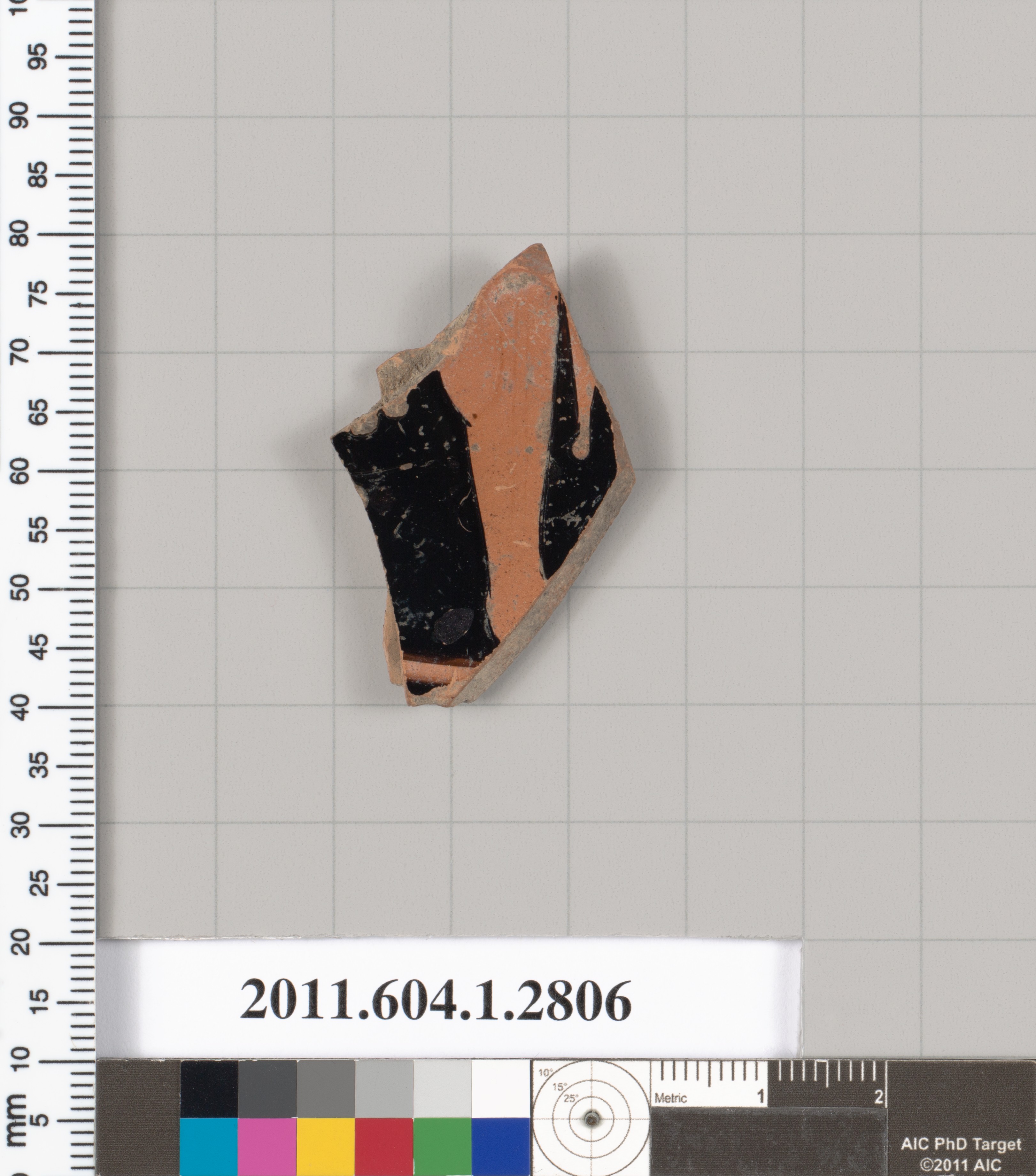
Heritage Synthesis: Terracotta fragment of a kylix (drinking cup)
Curated on Aug 09, 2026 // Node: LDN-01
The Mirror and the Kylix: Dialectical Emptiness in the Construction of 2026 Old Money Silhouettes
Within the Lauren Fashion Heritage Lab, we do not merely archive garments; we archive the philosophical substrata that give cloth its gravity. The internal genetic code—our foundational text—speaks of the “优昙钵华” temple plaque and the Han dynasty bronze mirror, the *Divine Beast Chariot White Tiger Mirror*. These two artifacts, one of carved wood and one of cast bronze, articulate a dialectic of emptiness (*kong*) and fullness (*man*), stillness and motion, that defines the apex of Eastern aesthetic consciousness. The plaque achieves beauty through *ma—*the pregnant void of negative space—while the mirror achieves it through *mi—*the breathless density of narrative form. Together, they teach us that true mastery lies not in choosing between these poles, but in holding them in dynamic tension.
Now, we introduce a third artifact, seemingly alien to this lineage: a **Terracotta fragment of a kylix** (Greek, Attic, circa 490–480 BCE). At first glance, the red-figure pottery shard—perhaps bearing the remnant of a symposium scene, a draped ephebe, or the curve of a wine cup’s lip—belongs to a different cosmology. The Greek kylix is a vessel of *symposion*, of communal intoxication and civic discourse. Its painted surface is a celebration of the human body’s kinetic perfection. Yet, when we place this fragment beside the Han mirror and the Buddhist plaque, a startling resonance emerges. All three are *threshold objects*: the plaque marks the boundary between secular and sacred; the mirror mediates between self and cosmos; the kylix, in its broken state, mediates between the wholeness of antiquity and the fragmentation of the present. For the 2026 Old Money silhouette, this tripartite dialogue offers a profound recalibration.
The Kylix Fragment as a Grammar of Restraint
The Attic kylix is renowned for its *tondo*—the circular image at the cup’s interior base, visible only when the wine is drained. This is a deliberate act of concealment and revelation. The drinker must empty the vessel to perceive the image. This is the architectural logic of the Old Money silhouette. It is not about display but about *delayed disclosure*. In 2026, we translate this into garments that are outwardly austere—a black cashmere overcoat with a high, concealing collar; a wool suiting in a near-black charcoal with a matte, unfinished surface—but which reveal their complexity only in motion or in intimate proximity. The interior lining of a Heritage-Black jacket might bear a jacquard of the kylix’s vine scrolls, invisible until the wearer gestures. The silhouette is a *tondo*: it demands that the observer earn the image.
The fragment’s broken edge is equally instructive. It does not pretend to completeness. In the Old Money aesthetic, this translates to a rejection of the “loud” finish. We eschew the blinding sheen of newness. Instead, we embrace the *fragmentary*: a slight irregularity in the lapel roll, a hand-stitched seam that is not perfectly straight, a wool twill that has been washed to a subtle, sueded softness. This is not decay; it is *patina as philosophy*. The kylix fragment teaches us that the passage of time is not an enemy to be defeated but a collaborator to be courted. The 2026 silhouette, therefore, is cut with a sense of *archaeological respect*—garments that look as though they have always existed, that carry the memory of a body even before they are worn.
Emptiness and Fullness: The Silhouette’s Dual Register
Returning to our internal code, the plaque’s “空寂” (emptiness and stillness) and the mirror’s “动的韵律” (rhythm of motion) are not opposites but complementary registers. The kylix fragment, in its terracotta warmth, bridges these. The clay body is dense, tactile, full of mineral weight—yet the painted figures float on its surface with a calligraphic lightness that echoes the “优昙钵华” plaque’s ink strokes. For 2026, we propose a silhouette that operates on this dual register.
**The Fullness of Structure:** The outer shell of the garment—the shoulder line, the chest piece, the fall of the skirt—must possess the *man* of the Han mirror. It is a confident, architectural fullness. Think of a double-faced wool coat with a sculpted, almost Roman shoulder, but cut with a suppressed waist that recalls the kylix’s sympotic elegance. The fabric is dense, like the bronze of the mirror, with a tight weave that holds its shape like a relief. This is the “密不透风” (dense as to be windproof) quality—a garment that projects authority through sheer material presence.
**The Emptiness of Drape:** Yet, within this fullness, there must be the *kong* of the plaque. This is achieved through negative-space tailoring: a back vent that opens like a temple door, a sleeve head that is set with a deliberate softness to allow a whisper of air, a skirt that falls from a narrow waistband into a fluid, unconstructed column. The kylix fragment’s curved shard informs this—we cut bias panels that mimic the cup’s radial geometry, allowing the fabric to spiral around the body like the painted figures around the tondo. This emptiness is not absence; it is *potential*. It is the space where the wearer’s breath, movement, and life reside.
Material Translation: From Terracotta to Heritage-Black
The terracotta fragment’s specific materiality—its warm, rust-red iron oxide—demands a translation into our 2026 palette. We do not copy the color; we translate its *thermal memory*. The Heritage-Black category is not a single shade. It is a spectrum of blacks that carry the warmth of the earth. We propose a “Terracotta Black”—a black wool that has been overdyed with a trace of madder root, yielding a black that is not cold but has the faint, ember-like glow of the kylix’s clay. For evening, a black silk velvet is treated with a mineral wash to create a surface that shifts between matte and sheen, echoing the contrast between the kylix’s fired clay and its painted slip.
The gold-thread embroidery that might appear on a lapel or cuff is not decorative; it is a *graphic fragment*, a single line that traces the curve of a lost kylix handle. This is the “象外之象” (image beyond image)—the garment does not depict the kylix; it *becomes* a vessel for the same contemplative energy.
Conclusion: The Wearer as Archaeologist
The 2026 Old Money silhouette, informed by the terracotta kylix, is not a costume of antiquity. It is a *method of being*. The wearer is an archaeologist of their own presence. They do not announce; they *imply*. The garment’s fullness gives them a stage; its emptiness gives them a sanctuary. The kylix fragment, broken yet eloquent, reminds us that true luxury is not about the completeness of the object but about the completeness of the *experience* it enables.
When our client dons the Heritage-Black overcoat with its hidden tondo lining, they are not merely dressing. They are stepping into a continuum that includes the Han mirror’s cosmic chariot, the temple plaque’s silent bloom, and the Greek symposiast’s drained cup. They are, in a single gesture, holding the dialectic of emptiness and fullness in perfect balance. This is the ultimate Old Money statement: not the possession of wealth, but the possession of *depth*. And in that depth, we find the eternal return of the “言有尽而意无穷” (words end, but meaning is infinite)—a meaning that the kylix, in its broken beauty, still whispers to us across three millennia.
Heritage Lab Insight
Genetic Bridge: Archive node focusing on Heritage-Black craftsmanship.