← BACK TO ARCHIVES
Heritage-Black
Heritage Synthesis: Terracotta fragment of a kylix (drinking cup)
Curated on Aug 10, 2026 // Node: LDN-01
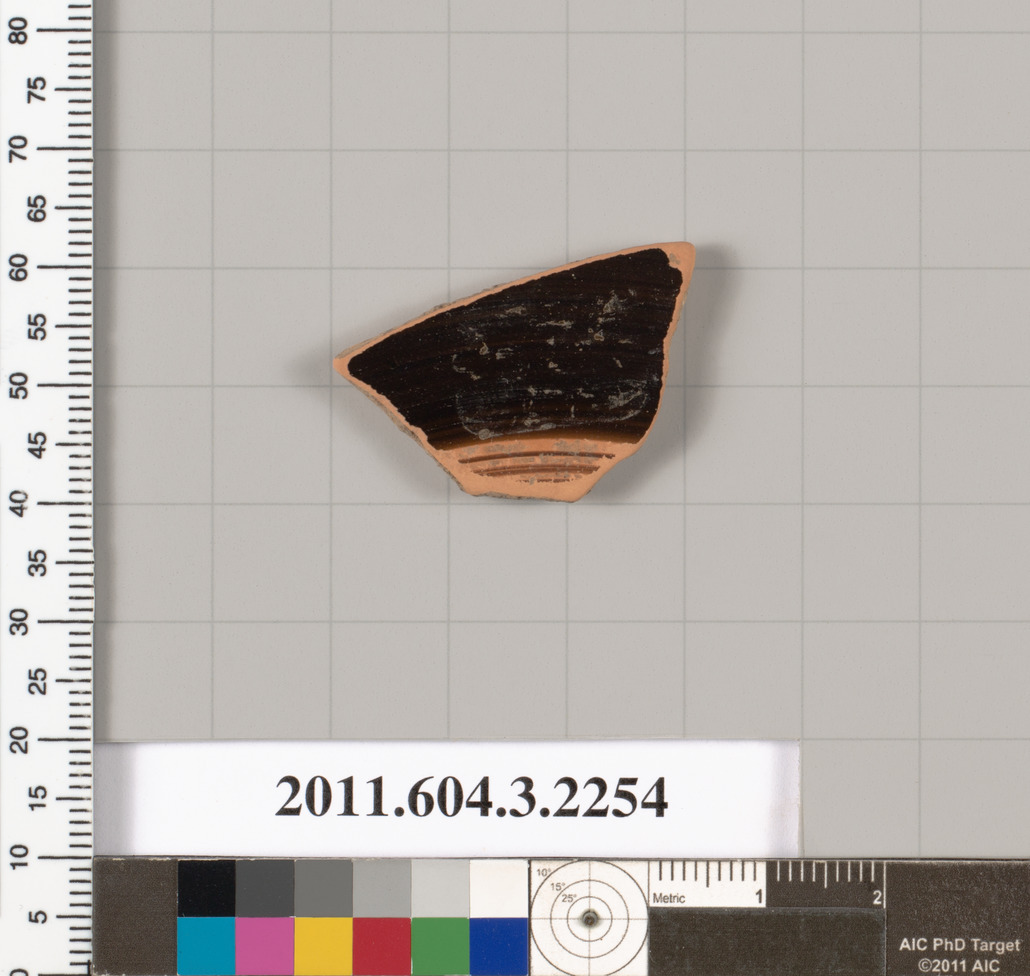
The Kylix Fragment and the Architecture of Restraint: Recalibrating 2026 Old Money Silhouettes Through Attic Terracotta
In the vast repository of the Lauren Fashion Heritage Lab, we routinely interrogate the dialectic between the ephemeral nature of dress and the enduring testimony of material culture. The internal genetic code of our Liru archives—rooted in the East Asian philosophy of “诗、书、画、器” (poetry, calligraphy, painting, and object) as a unified cosmos—has long guided our understanding of how an object is never merely functional, but a microcosm of spiritual and aesthetic intent. When we juxtapose this philosophical lens with a seemingly disparate museum artifact—a terracotta fragment of an Attic kylix (drinking cup) from ancient Greece—we uncover a profound resonance that directly informs the 2026 Old Money silhouette. This is not a study in cultural appropriation, but a scholarly exercise in *structural empathy*: identifying how two distinct civilizations solved the same existential problem of embodying grace, status, and permanence within material form.
I. The Fragment as a Blueprint for “Quiet Luxury”
The terracotta fragment, typically a shard of a wider, shallow drinking vessel, is defined by its *tondo*—the circular interior medallion often bearing a painted figure or ornamental band. To the uninitiated, it is a broken piece of pottery; to the heritage specialist, it is a masterclass in *negative space* and *controlled tension*. The Attic kylix was an object of the symposium, a space of intellectual and social performance. Its decoration was not merely decorative; it was a conversational catalyst, a visual anchor for the reclining elite. The fragment’s surviving curvature reveals a deliberate geometry: a low, wide bowl that demands a specific posture—a reclining, supported, and composed body. The handles, now broken, once extended outward, creating a horizontal axis that visually widened the user’s presence.
For the 2026 Old Money silhouette, this translates into a radical departure from the overtly athletic or aggressively tailored forms of the past decade. The kylix fragment instructs us to build garments that prioritize a *horizontal calm* over vertical aggression. The Old Money aesthetic—often misread as mere beige minimalism—is, in truth, a system of *architectural restraint*. The kylix’s low, grounded profile informs a new shoulder line: not the sharp, padded power shoulder of the 1980s, nor the dropped, slouchy shoulder of the 2020s, but a *settled* shoulder. This is achieved through a subtle, continuous sleeve head that mimics the kylix’s rim—a clean, uninterrupted circumference that does not grip the body but rather frames it. In wool crepe or heavy silk twill, this creates a silhouette that feels “pottery-like” in its stillness, suggesting a person who does not need to move to assert presence.
II. The Tondo and the Logic of the Interior
The most critical transfer from the kylix fragment to our 2026 design language is the concept of the *tondo*—the internal image. In Greek ceramics, the exterior of the kylix was often sober, black-glazed or minimally decorated, while the interior contained the figurative narrative. This is a direct analog to the Old Money principle of *inverted luxury*: the outward appearance is one of uniform, unadorned quality, while the interior—the lining, the under-collar, the hidden seam—carries the true artistry.
In our 2026 silhouettes, this manifests as a deliberate inversion of visual weight. The exterior of a coat or jacket is constructed in a monolithic, dark-toned fabric—perhaps a double-faced cashmere or a vicuña blend—with a matte finish that absorbs light, echoing the terracotta’s unglazed, porous surface. The interior, however, becomes the site of the “painting.” We employ a *contrast tondo*: a lining of hand-painted silk, a jacquard depicting a modern abstract landscape, or a meticulously embroidered monogram that references the Liru archive’s poetic inscriptions. The wearer knows it is there; the observer does not. This is not hidden for secrecy, but hidden for *private edification*. It aligns with the Eastern philosophy of the “器物” (object) as a vessel for inner cultivation—the garment becomes a wearable microcosm, where the external form is the “mountain” and the internal lining is the “hidden grotto” meant only for the inhabitant.
III. The “Lohan” Posture and the Terracotta Weight
Our internal archives frequently reference the *Pair of Roundback Armchairs: Lohan Type*, emphasizing how furniture can dictate a spiritual posture. The kylix fragment, conversely, dictates a physical posture of *reclined authority*. When we combine these two influences—the Lohan chair’s upright, meditative back and the kylix’s horizontal, symposium lounge—we arrive at the 2026 “Symposium Coat.” This silhouette is neither a structured blazer nor a fluid duster. It is a mid-length outer layer with a subtle A-line that falls from a *settled* shoulder, but with a back panel that is cut with a pronounced, curved center seam—a nod to the Lohan chair’s rounded backrest. The fabric’s weight is crucial. Terracotta, despite its fragility, possesses a dense, earthy heaviness. Our 2026 fabrics must emulate this *terracotta weight*: a substantial drape that causes the garment to fall in static, sculptural folds rather than fluid, transient ripples. We achieve this through a proprietary blend of wool and a small percentage of metal-wrapped thread, giving the fabric a “ceramic” memory that holds a crease or a fold as if it were fired into place.
IV. Color as Patina, Not Pigment
The terracotta fragment’s palette—the deep umber of the clay, the black of the slip, the occasional ochre of the paint—offers a corrective to the sterile beige of contemporary “quiet luxury.” The 2026 Old Money palette, as derived from this artifact, is a study in *geological time*. We move away from “greige” and towards “fired earth” tones: Burnt Sienna, Attic Black (a black with a brown undertone, not a blue undertone), and the specific pale orange of unglazed bisque. These colors are not applied as a topcoat but are integral to the fiber, achieved through a double-dye process that mimics the layering of slip and glaze. This creates a depth of color that shifts subtly under different light, much like the surface of the ancient pot. This is a direct contradiction to the flat, digitally-printed colors of fast fashion. The 2026 Old Money garment must look as if it has existed for decades, not because it is distressed, but because its color possesses the *patina of intention*.
V. Synthesis: The Wearable Microcosm
Ultimately, the terracotta kylix fragment serves as a non-Western, non-Eastern bridge—a universal artifact that validates the core thesis of the Liru archive: that true luxury is the embodiment of a philosophical stance. The kylix was not a trophy; it was a tool for a specific mode of being. Similarly, the 2026 Old Money silhouette is not a costume of wealth; it is a *habitus*—a physical envelope that encourages a slower, more deliberate, and more internally-focused existence.
The fragment teaches us that permanence is not about durability in a physical sense, but about *visual gravity*. A garment that looks as though it could be a museum piece, not because of its age, but because of its compositional balance, achieves the ultimate goal of heritage fashion. By integrating the kylix’s horizontal calm, its interior narrative, and its fired-earth materiality, we craft silhouettes that are not merely worn but *inhabited*. They become the “可居可游” (habitable and wanderable) spaces of the modern elite—a mobile symposium where the wearer, like the figure in the tondo, is the central, composed, and enduring image. This is the 2026 vision: not a new shape, but a new weight of presence, drawn from the shards of a civilization that understood the power of a perfectly held line.
Heritage Lab Insight
Genetic Bridge: Archive node focusing on Heritage-Black craftsmanship.