← BACK TO ARCHIVES
Heritage-Black
Heritage Synthesis: Terracotta fragment of a kylix (drinking cup)
Curated on Aug 10, 2026 // Node: LDN-01
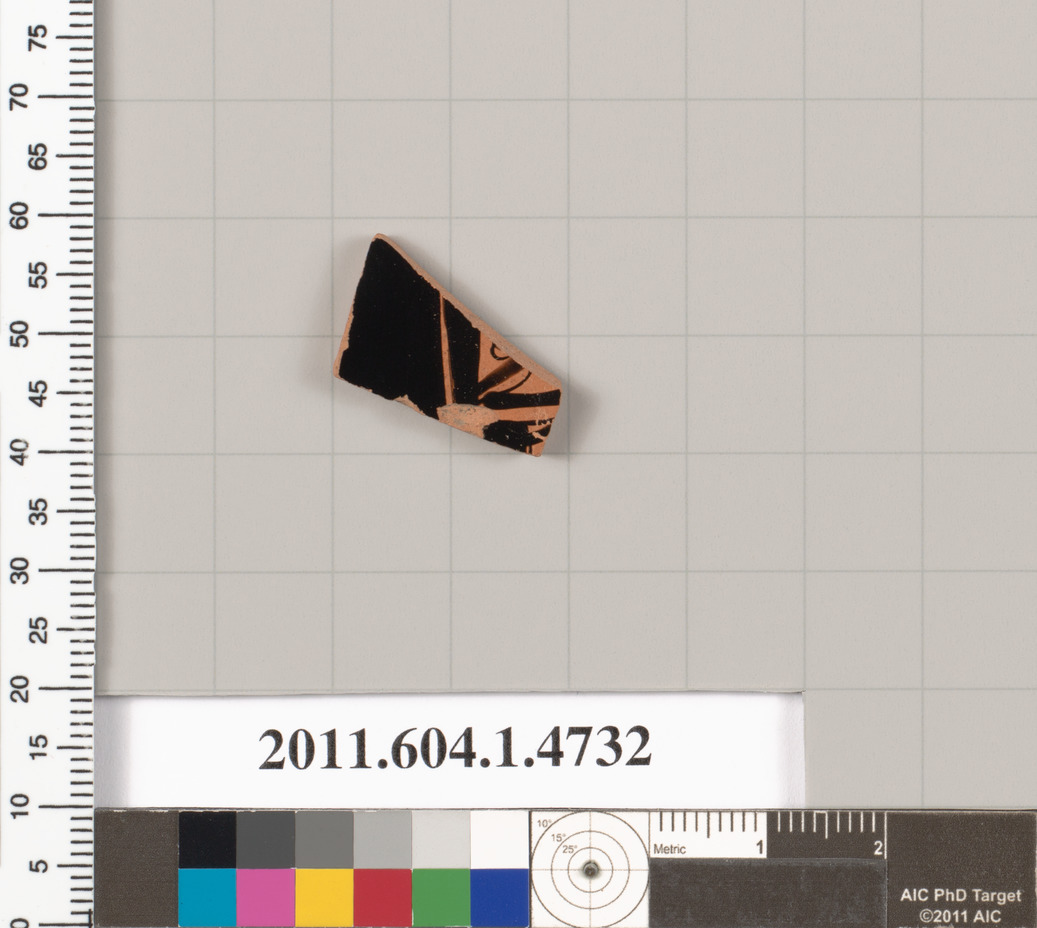
The Terracotta Kylix and the Architecture of Restraint: A Genetic Blueprint for 2026 Old Money Silhouettes
The internal genetic code of Lauren Fashion—our archival DNA—has long been animated by a dialectic between the monumental and the intimate, the imperial and the inquisitive. From the crowned double-headed eagles of sixteenth-century Euro-Islamic textiles to the curious, gold-flecked transpositions of Japanese Nanban screens, our house has consistently mined history not for literal quotation, but for structural principles of power, translation, and quiet opulence. Today, we turn to a seemingly austere artifact—a terracotta fragment of a Greek Attic kylix (drinking cup)—to decode the 2026 Old Money silhouette. At first glance, a broken shard of fired clay appears distant from the plush velvets and metallic brocades of our archive. Yet, upon rigorous analysis, this fragment reveals itself as a foundational text for a new grammar of understated wealth: one that privileges *archaeological depth*, *geometric restraint*, and *matte materiality* over the transient glimmer of trend-driven luxury.
I. The Fragment as a Masterclass in Negative Space
The kylix, in its original form, was a shallow, two-handled vessel used in symposia—the aristocratic drinking rituals of ancient Athens. Its terracotta body, typically a warm, iron-rich orange-red, was often adorned with black-figure or red-figure painting. Our fragment, however, is not about its figural scene. Its power lies in the *residual*: the curve of the lip, the sharp turn of the stem, the unglazed interior that once held wine. For the 2026 Old Money silhouette, this translates into a radical rethinking of construction. The modern suit or dress coat must not be conceived as a surface for decoration, but as a *sculptural fragment*—a study in negative space and controlled volume.
Consider the archetypal Old Money uniform: the tailored blazer. In 2026, we propose a silhouette that borrows the kylix’s structural logic. The shoulder line is not padded into aggressive breadth (a vulgar display of power), but rather *turned* with a subtle, continuous curve, mimicking the kylix’s lip. The waist suppression is not a sharp, corseted pinch, but a gradual, almost imperceptible inward sweep, echoing the vessel’s transition from bowl to stem. The jacket’s length terminates at a precise, deliberate point—like the fragment’s broken edge—creating a visual stop that implies a larger, unseen whole. This is the essence of heritage-black: the confidence to present a *part* as a complete statement, trusting the viewer’s cultural literacy to infer the rest. The 2026 silhouette is thus an *archaeological cut*—a garment that feels excavated from a classical ideal, not manufactured for a seasonal whim.
II. Matte Materiality: The Anti-Gloss Manifesto
The terracotta fragment offers a profound lesson in material honesty. Unlike the gold-threaded brocades of our European archive or the luminous mica grounds of the Nanban screens, terracotta is unapologetically matte, porous, and earthen. Its beauty derives from its *texture of time*—the subtle striations of the potter’s wheel, the faint pitting from centuries of burial. For 2026, this mandates a departure from high-shine luxury fabrics in favor of *dry, tactile, and dense* materials. We are not speaking of casual cotton, but of *structured wool twills with a felted finish*, *uncut mohair with a chalky hand*, and *double-faced cashmere that has been brushed to a soft, non-reflective nap*.
This is a deliberate counter-signal to the logomania and glossy PVC of contemporary fast fashion. Old Money, in its most refined iteration, has always understood that true wealth whispers. The 2026 silhouette will therefore employ fabrics that absorb light rather than reflect it. A coat in a deep, mineral-rich charcoal—reminiscent of the kylix’s fired clay—will not shimmer; it will *absorb* the environment, creating a quiet, authoritative presence. The garment’s surface becomes a *palimpsest* of subtle irregularities: a faint herringbone weave that reveals itself only at close range, a slight slub in the yarn that speaks to artisanal spinning. This is the aesthetic of the fragment: beauty that demands proximity, patience, and a discerning eye.
III. The Architectural Line: From Vessel to Garment
The kylix’s geometry—a shallow bowl on a slender stem—provides a radical template for 2026’s outerwear and evening wear. We propose a new archetype: the *Stem Coat*. This silhouette features a fitted, high-armhole bodice that flares gently from the waist downward, not in a full skirt, but in a controlled, columnar *bell* that suggests the kylix’s bowl. The hem is cut with a deliberate asymmetry—one side slightly longer, echoing the fragment’s broken edge—to create a sense of dynamic repose. The collar is minimal, perhaps a narrow, standing band that echoes the vessel’s rim.
For evening, the kylix informs a new approach to the gown. Instead of a flowing, romantic drape, we propose a *symposiast’s sheath*: a columnar dress with a defined, architectural waist seam, constructed from a heavy, matte silk faille or a compacted wool crepe. The bodice is cut with a precise, geometric neckline—a shallow, horizontal arc that mirrors the kylix’s lip. The sleeves, if present, are set in with a slight forward pitch, echoing the handles of the ancient cup. The overall effect is one of *ceremonial stillness*—a garment that holds its shape like a vessel, rather than yielding to the body’s whims. This is power dressing for a new era: not the power of exposure, but the power of containment.
IV. The Palette of Excavation
The terracotta fragment dictates a specific, restrained color story for 2026. We move beyond the standard navy and black to embrace a palette of *excavated earths*: burnt sienna, deep ochre, faded cinnabar, and the unmistakable *Attic red*—a hue that sits between rust and brick. These are not bright, saturated tones, but *muted, mineralized* shades that appear aged and sun-bleached. They are paired with the deep, carbon black of the kylix’s painted figures, and the warm, chalky white of unglazed clay. This palette is inherently sophisticated because it references a specific historical and geographical locus—the Mediterranean cradle of Western civilization—without resorting to clichéd Grecian draping or column motifs. The color *is* the reference, worn with the same nonchalant authority as a perfectly faded pair of heritage denim.
V. Conclusion: The Fragment as a Total Philosophy
In synthesizing the terracotta kylix with our internal genetic code, we arrive at a definitive philosophy for the 2026 Old Money silhouette. It is not a costume, nor a nostalgic pastiche. It is a *structural and material ideology* that prioritizes permanence over novelty, depth over surface, and restraint over excess. The double-headed eagle taught us the language of imperial gravity; the Nanban screen taught us the art of cultural translation. The kylix fragment teaches us the final lesson: the power of the *incomplete*. By presenting a garment that feels like a fragment—a perfectly finished part of a larger, imagined whole—we create an aura of inherited history, of a lineage so secure that it need not display its full inventory. The 2026 silhouette is thus a quiet monument: a piece of terracotta, fired in the kiln of classical antiquity, re-fired in the ateliers of Lauren Fashion, and offered to a world that increasingly craves the authentic, the durable, and the profoundly, quietly elegant.
Heritage Lab Insight
Genetic Bridge: Archive node focusing on Heritage-Black craftsmanship.