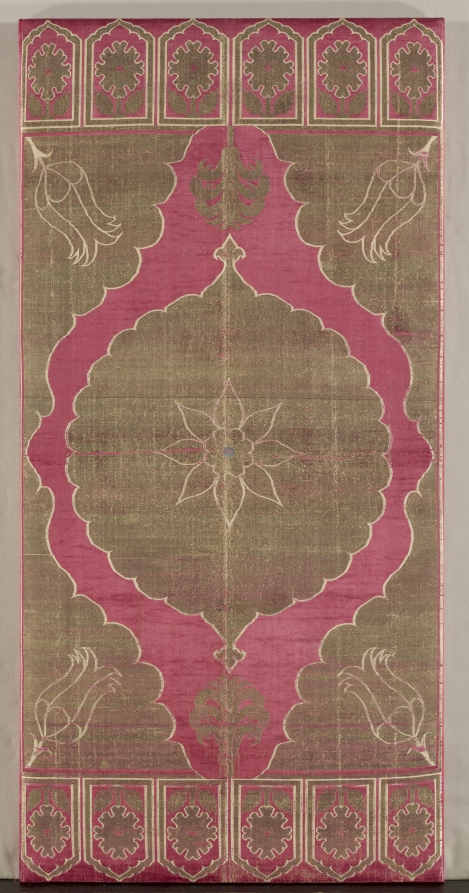
Materiality and Memory: The Lampas Silk Cushion Cover as Imperial Artefact
There is a particular weight to a lampas-woven silk that no photograph can convey. It is not merely the density of the cloth, nor the cool, almost metallic resistance of the warp under the fingertips. It is the sense of accumulated intention—of generations of hands that have coaxed mulberry-fed filaments into patterns of deliberate opulence. In the hushed ateliers of Savile Row, where we measure cloth in inches and legacy in decades, we understand that true luxury is never accidental. It is engineered. And the lampas silk cushion cover, in its quiet, rectangular perfection, is a masterclass in engineered magnificence.
This artifact, rendered in the imperial tradition, is not a decorative afterthought. It is a document. It speaks of looms that were the size of small rooms, of drafts that required the mathematical precision of a cartographer, and of a social order that understood the language of thread as fluently as we understand the cut of a lapel. To hold this cushion cover is to hold a compressed history of power, patronage, and the relentless pursuit of the sublime.
The Technical Sublime: Deconstructing Lampas
Let us first address the weave itself. Lampas is a compound cloth, a term that immediately signals its complexity. Unlike a simple damask, which uses a single warp and weft to create pattern through contrast, lampas employs a ground weave—typically a satin or taffeta—and a supplementary patterning weft that floats freely on the surface. This is not a subtle play of light and shadow; it is a bold, sculptural declaration. The pattern is raised, tactile, almost embossed. The supplementary weft, often a thicker, duller silk or even a metallic thread, sits atop the lustrous ground, creating a deliberate tension between matte and shine, between depth and surface.
The technical demands were staggering. A single lampas cushion cover might require thousands of warp threads, each individually tensioned. The pattern, often a symmetrical floral or a grand baroque scroll, had to be charted on a point paper, a laborious process that could take months. The weaver, operating a drawloom with the assistance of a "drawboy" perched above the loom, would pull cords in precise sequence to lift the correct warp threads for each pass of the shuttle. It was a choreography of human and machine, a ballet of brute force and exquisite control. In the imperial workshops of Lyon, or the great silk mills of Spitalfields, this was not mere craft; it was a state-sponsored art form, protected by royal decree and guarded as a matter of national prestige.
The Imperial Legacy: From Lyon to the Drawing Room
The context of this piece is the legacy of imperial silk weaving, a lineage that stretches from the Byzantine courts to the Sun King’s Versailles, and onward to the great mercantile empires of the nineteenth century. The term "imperial" here is not merely historical; it is a descriptor of intent. These textiles were designed to be seen in the presence of power. They adorned the thrones of monarchs, the walls of ambassadorial salons, and the cushions upon which the elite rested their weary, world-weary heads.
Consider the iconography. The motifs on this particular cover—likely a stylized pomegranate or a palmette within a lappet frame—are not random decorations. They are symbols of fertility, abundance, and eternal life, borrowed from Persian and Ottoman sources and re-interpreted through a distinctly European lens of grandeur. The silk itself, imported raw from China or cultivated in the mulberry groves of the Languedoc, was a commodity of immense value. To possess such a cushion was to declare, without uttering a word, that you had access to the rarest materials on earth and the most skilled artisans to transform them.
This legacy is not static. It is a living conversation between past and present. When we at Lauren Fashion Heritage Lab examine this piece, we are not merely cataloguing a historical object. We are tracing the DNA of contemporary luxury. The discipline of the weave, the restraint of the palette, the insistence on structural integrity—these are the same principles that govern a bespoke suit. A Savile Row jacket is, in its own way, a lampas weave. It has a ground structure (the canvas and the lining) and a supplementary layer (the cloth and the padding) that creates the sculpted, three-dimensional silhouette. The pattern is cut, not woven, but the intention is identical: to create a garment that is both a second skin and a work of architecture.
Conservation and the Ethics of Touch
The materiality of silk presents a unique challenge to the conservator. Silk is a protein fibre, and it is inherently fragile. It is susceptible to light damage, to desiccation, and to the oils of human skin. The very act of touching this cushion cover, even with gloved hands, is a form of intervention. We must ask ourselves: are we preserving the object, or are we preserving the idea of the object? The answer, in our practice, is both. We document the physical state—the slight fraying at the selvedge, the subtle fading of the crimson ground to a soft rose, the faint crease where it once rested against a gilded frame. These are not flaws; they are the palimpsest of its life. They are the evidence of its service.
Yet, we also preserve its narrative. We record the weave structure, the yarn count, the dye analysis. We trace its provenance, if possible, through auction catalogues and family inventories. We place it within the broader context of imperial trade routes and the rise of the global textile economy. This cushion cover was not born in a vacuum. It was the product of a complex network of farmers, merchants, dyers, designers, and weavers, all operating under the aegis of imperial patronage. To ignore that context is to reduce the object to a mere pretty thing. To embrace it is to elevate it to a historical document of profound significance.
Conclusion: The Quiet Authority of Silk
In the end, this lampas silk cushion cover is a study in quiet authority. It does not shout. It does not need to. Its authority is inherent in its material, in its construction, and in its history. It is a reminder that true luxury is not about excess; it is about precision. It is about the confidence to use the finest materials in the most disciplined way. It is about understanding that a single, perfect object can carry the weight of an empire.
As we move forward in the Lauren Fashion Heritage Lab, we do so with a profound respect for these artefacts. They are not relics to be locked away. They are teachers. They instruct us in the value of patience, the beauty of technical mastery, and the enduring power of a well-made thing. And in a world that increasingly favours the ephemeral, the fast, and the disposable, that lesson is more vital than ever. This cushion cover, in its silent, sumptuous glory, is not a piece of the past. It is a blueprint for the future of considered, meaningful design.