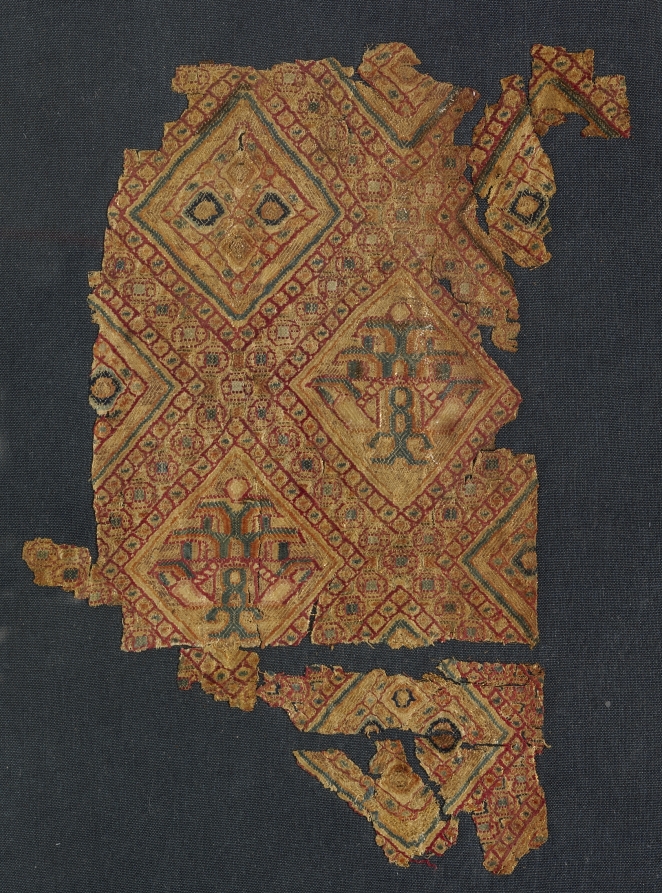
A Fragment, Illuminated: On the Material Sovereignty of Imperial Silk
One must approach the subject not as a mere scrap of fabric, but as a sovereign entity. The fragment in question—a few square inches of jewel-like silk, its warp and weft holding a cosmology of colour and pattern now faded to a gentleman’s whisper—demands a particular deference. It is a vestige of the most exacting sartorial protocol ever devised: the legacy of imperial silk weaving. To understand its stature, one must first dismiss the modern conception of cloth as a substrate, a blank canvas awaiting adornment. This silk was the adornment; its very materiality was its authority.
The Loom as Throne: A Hierarchy Woven in Thread
Consider the provenance. Imperial silk workshops, whether in Byzantium, Damascus, or the formidable state-run manufactories of Ming China, operated on a principle of exclusive patronage. They were, in essence, the Savile Row of their epoch—if Row tailors answered only to emperors, popes, and caliphs. The designs were not merely decorative; they were heraldic, theological, and geopolitical. A dragon motif was not a fancy; it was the celestial mandate of the Son of Heaven, rendered in sericulture. A complex lattice of arabesques spoke of an infinite, indivisible God. The silk itself, its density, its sheen, the number of threads per inch, was legislated. Sumptuary laws enforced a material hierarchy as rigid as any court ranking; to wear a silk of a certain weight or hue without sanction was not a fashion faux pas, but treason.
Our fragment, therefore, is a physical shard of this vanished bureaucracy. The jewel-like quality—likely achieved through the use of dyes derived from cochineal, kermes, or precious lapis lazuli, and enhanced by a tabby or satin weave of exceptional fineness—was not an aesthetic accident. It was a calculated demonstration of reach. The ability to command the carmine from a Mediterranean insect, the gold from African sands, and the peerless filament from Chinese silkworms, and to converge them upon a single loom, was a silent, potent broadcast of imperial power. The loom was a throne from which authority was woven, metre by luminous metre.
The Patina of Legacy: A Grammar of Wear
Now, observe the fragment’s condition. The wear is not a deficit, but a dialect. The areas where the crimson has softened to rose, where the gold has dulled to a honeyed patina, these are not flaws. They are the grammar of use, the narrative of a garment that draped a shoulder of consequence. This silk has known the weight of a coronation robe, the friction of a diplomatic sash, or the careful fold of a sacred vestment. Its current fragility is a testament to its original perfection; only something of extraordinary fineness could age with such dignified specificity. It whispers of candlelit chambers, of incense, and of the slow, deliberate theatre of statecraft.
This patina, this dignified decay, is what the modern atelier, in its pursuit of sterile perfection, so often forgets. Legacy is not about preservation in aspic; it is about understanding the nobility inherent in a material’s life. The finest gabardine on Savile Row gains its character from moulding to the client’s form, from holding the memory of a thousand city rains. So too with this silk. Its value is compounded by its gentle surrender to time, not diminished by it.
A Contemporary Imperative: The Heirloom Standard
What, then, is the imperative for the contemporary custodian of heritage, be they a fashion house or a collector? It is to recognise that this fragment establishes a heirloom standard. The lesson is not in the literal replication of a dragon or a phoenix, but in the reinstatement of a hierarchy of values. It champions the sovereignty of material over logo, of narrative over novelty, and of sanctioned craftsmanship over indiscriminate production.
To translate this legacy today is to engage in a form of material diplomacy. It means sourcing yarns with a pedigreed provenance, investing in dyeing techniques that yield depths of colour rather than mere surface coverage, and commissioning weavers who understand that cloth has a architecture. It is to treat each garment as a future fragment—an artifact that, should it survive the centuries, would tell a coherent story of excellence, intention, and respect for its own constituent parts. The jewel-like quality must emanate from within the cloth itself, from the alchemy of fibre, dye, and hand, not from subsequent application.
In the end, this silent, luminous fragment serves as both benchmark and reprimand. It reminds us that true luxury is not purchased; it is decreed—by an unwavering commitment to the highest possible expression of a material’s potential. It is the difference between fabric and regalia. To hold it is to understand that in the hands of the imperial weaver, silk was not simply worn. It was commanded. And in that command, echoing down the years through this fragile, brilliant shard, lies the only heritage worth the name.