← BACK TO ARCHIVES
Heritage-Black
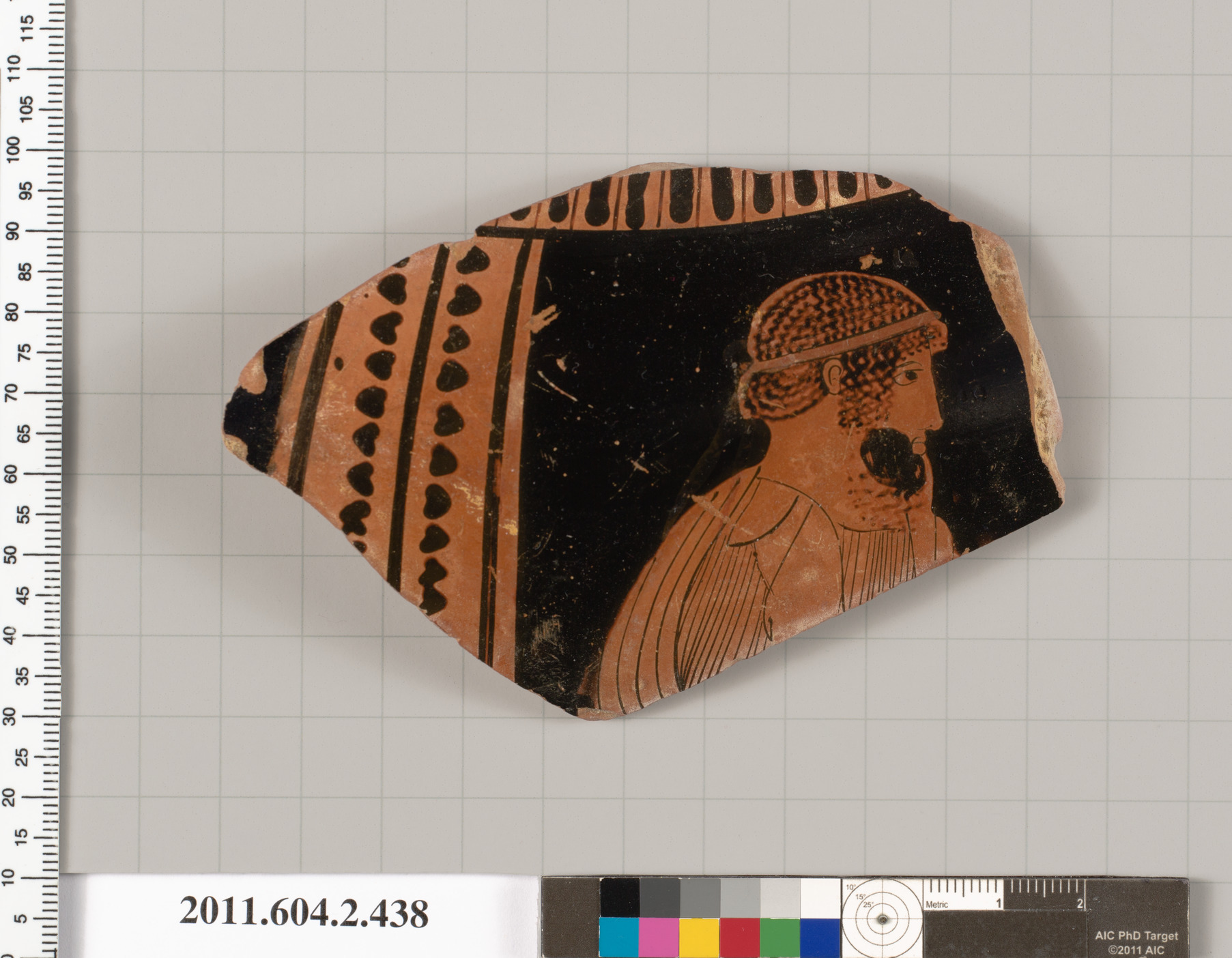
Heritage Synthesis: Terracotta fragment of a column-krater (bowl for mixing wine and water)
Curated on Aug 10, 2026 // Node: LDN-01
The Dialectics of Stasis and Whirl: Terracotta Fragments and the 2026 Old Money Silhouette
The internal genetic code of Lauren Fashion—encapsulated in the dialectical pairing of the ceramic artifact *Youth and Dervish* and the painted canvas *Pedestal*—offers a profound hermeneutic lens through which to interrogate the 2026 Old Money silhouette. At first glance, a Greek Attic terracotta column-krater fragment, a vessel for mixing wine and water, seems archaeologically remote from the tailored restraint of contemporary luxury. Yet, when read through the aesthetic paradox of “standing” and “spinning” that defines our internal archive, this fragment becomes a crucial material witness. It speaks not of ornament, but of the *architecture of the body* under the weight of civilization—a theme that must govern how we cut, drape, and finish the forthcoming collection. The fragment is not merely a decorative source; it is a philosophical blueprint for a silhouette that must negotiate between the burden of heritage and the ecstatic possibility of release.
The Krater’s Ontology: Containment and the Weight of Form
The column-krater, in its original function, was a vessel of *mixture*—a site where potent wine was tempered with water to create a socially sanctioned beverage. Its terracotta body, fired and fragile, embodies a fundamental tension: it is designed to hold, yet it is inherently brittle. This duality mirrors the condition of the modern subject as depicted in *Youth and Dervish*. The youth, shoulders laden, is frozen in a posture of bearing; the dervish, mid-whirl, is arrested in a moment of spiritual flight. The krater fragment, with its surviving figural or geometric relief, does the same to time. It captures a gesture of ancient life—a symposium, a ritual, a dance—and holds it in a state of permanent suspension. For the 2026 Old Money silhouette, this translates into a sartorial philosophy of *structured containment*. The garments must not flow freely; they must *hold*. Shoulders are constructed with a quiet, architectural precision—not padded to exaggerate, but shaped to *support*. The line of a jacket, like the curve of the krater’s belly, must suggest an interior volume that is both protected and protective. This is the “weight” of Old Money: not the weight of fabric alone, but the weight of history, of social standing, of the expectation to carry oneself with unshakeable composure. The silhouette becomes a vessel, containing the self against the chaos of the modern world, just as the krater contained the diluted wine of civic discourse.
The Empty Pedestal and the Unmoored Garment
The painting *Pedestal* introduces a critical rupture: the base is empty, the face is blurred. This is the anxiety of the contemporary inheritor of tradition. The classical ideal—the heroic statue, the god-like figure—has vacated its plinth. The 2026 Old Money aesthetic cannot, therefore, rely on the *grandeur* of a bygone aristocracy. It must instead embrace a form of *negative capability*. The silhouette is defined by what it refuses to do: it refuses to shout, refuses to trend, refuses to conform to the athletic, logo-driven luxury of the recent past. The terracotta fragment informs this by its very incompleteness. We do not possess the whole krater; we possess a shard. This shard is more evocative than the whole because it demands an act of imaginative reconstruction. Similarly, the new silhouette is a *fragment* of a larger, lost totality. A single-breasted jacket cut with an almost imperceptible suppression at the waist; a trouser that breaks just so over the shoe; a knitwear piece with a hand-finished edge that mimics the potter’s thumbprint—these are not complete statements. They are fragments of a language of restraint, hinting at a coherence that exists only in the eye of the beholder. The wearer is not standing on a pedestal; they are walking past one, acknowledging its absence with a quiet, knowing grace.
Rotation, Release, and the Kinetic Hem
The dervish’s spin offers the counterpoint to the youth’s burden. In Sufi practice, the whirling is not chaos but a disciplined act of prayer, a physical surrender to a cosmic order. The terracotta fragment, with its painted figures often depicted in motion around the krater’s circumference, captures this kinetic energy in a static medium. For the 2026 collection, this suggests a crucial element: *the potential for movement within stillness*. The Old Money silhouette must not be a straitjacket. It must be a garment that, while structured, allows for a *controlled release*. This is achieved through cut and fabric technology. A wool crepe that has a subtle, fluid drape; a silk lining that allows the jacket to slip over a knit without friction; a skirt that is cut on the bias to permit a swirl that is never flamboyant, but always present. The hemline becomes the site of this dialectic. It is the point where the garment, having held its form, finally yields to the body’s motion. The wearer does not dance; they *move*. And in that movement, there is a quiet echo of the dervish—a momentary forgetting of the weight, a glimpse of the freedom that exists *within* the discipline. The terracotta’s painted figures, frozen in their ritual steps, remind us that this release is always temporary, always framed by the vessel’s edge.
The Ethics of the Unsupported Stance
The deepest resonance of this archaeological source lies in its ethical implication. The terracotta fragment is a survivor. It has endured millennia, not as a complete object, but as a testament to its own destruction. It does not pretend to wholeness. This is the ultimate lesson for the 2026 Old Money silhouette. The modern inheritor of this aesthetic is, like the figure in *Pedestal*, without a base. They cannot claim the unearned authority of a statue. Their dignity must be *self-generated*. The silhouette, therefore, must be an act of ethical self-fashioning. It is not about the price tag or the logo; it is about the *posture*. A jacket that fits perfectly across the back, allowing for a straight spine; a trouser that falls cleanly, suggesting a grounded stance; a coat that provides a sense of shelter without being heavy—these are the tools for standing in the void. The terracotta fragment, with its raw, unglazed surface in places, reminds us of the beauty of the unfinished, the honest, the material. The 2026 collection will therefore favor fabrics that speak of their origins: raw silks with a slight slub, worsted wools with a dry hand, cashmere that is dense but not plush. These are not luxurious in a superficial sense; they are luxurious in their *truthfulness*. They do not attempt to be anything other than what they are—fibers, spun and woven, carrying the weight of their own materiality.
Conclusion: A Silhouette of Fragile Permanence
In synthesizing the terracotta fragment with the internal dialectic of *Youth and Dervish* and *Pedestal*, we arrive at a design philosophy for 2026 that is both austere and deeply human. The Old Money silhouette is not a return to a nostalgic past, but a *critical engagement* with the present condition of being unmoored. It is a silhouette of *fragile permanence*. Like the krater, it is built to hold—to contain the self with dignity. Like the fragment, it acknowledges its own incompleteness, its own history of breakage. And like the dervish, it holds within its stillness the potential for a sacred, silent rotation. The garments will be cut to honor the burden of the youth, to acknowledge the emptiness of the pedestal, and to allow for the whisper of a spin. This is not fashion as spectacle; it is fashion as *sustenance*—a way of dressing that helps us stand, unsupported, in the void, with the quiet confidence of those who know that the vessel may crack, but the form endures. The terracotta’s silent testimony is our guide: we are all fragments, and it is in the honesty of our cut, the integrity of our cloth, and the precision of our stitch that we find our only true, unsupported stance.
Heritage Lab Insight
Genetic Bridge: Archive node focusing on Heritage-Black craftsmanship.