← BACK TO ARCHIVES
Heritage-Black
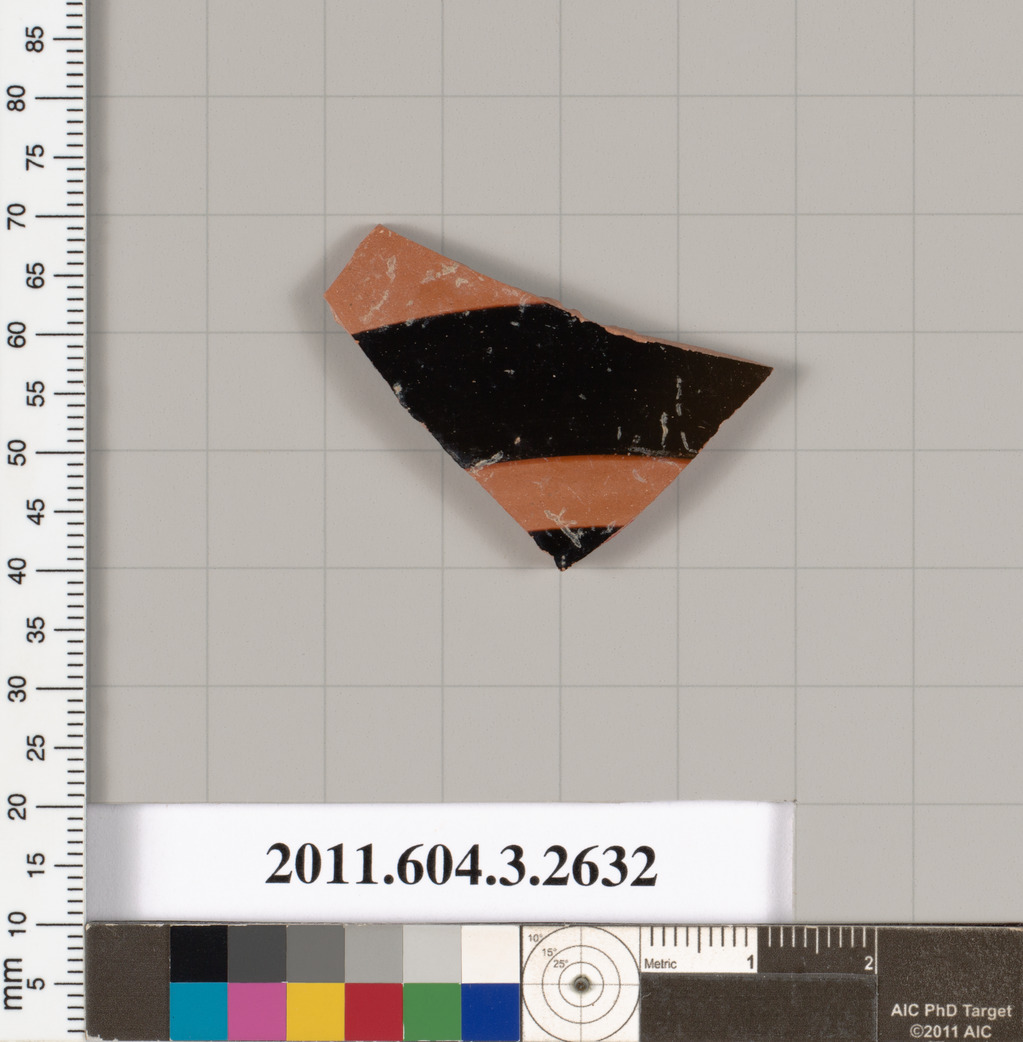
Heritage Synthesis: Terracotta fragment of a kylix (drinking cup)
Curated on Aug 10, 2026 // Node: LDN-01
The Terracotta Kylix and the Architecture of Restraint: Recasting Old Money Silhouettes for 2026
Within the hushed vitrines of the Lauren Fashion Heritage Lab, we do not merely archive garments; we archive the philosophical conditions that make garments inevitable. The internal genetic code—that dialectical tension between the Song dynasty *meiping* and Daumier’s judicial print—has long framed our inquiry into whether beauty can exist beyond ethics. Yet today, we turn to a third artifact, a terracotta fragment of an Attic kylix, to resolve that very tension within the context of 2026 Old Money silhouettes. This shard of a Greek drinking cup, broken and incomplete, is not a relic of aristocratic leisure but a forensic key. It unlocks a new understanding of how the Old Money aesthetic—often misread as mere inherited wealth—is, in fact, a disciplined performance of *contained excess*. The kylix fragment, with its curved tondo and its shattered rim, informs a silhouette that is neither the serene self-sufficiency of the *meiping* nor the moral agitation of Daumier’s courtroom. Instead, it proposes a third path: **the aesthetic of the broken vessel that still holds its shape.**
I. The Kylix as a Structural Metaphor: From Symposion to Sartorial Frame
The Attic kylix was not a passive object. It was an active participant in the Greek *symposion*—a ritualized space where wine, philosophy, and politics converged. Its shallow, wide bowl was designed for reclining drinkers, its two horizontal handles inviting a gesture of reach and release. Crucially, the kylix was often decorated on its interior tondo, so that the image was revealed only as the wine was drained. This is a profound lesson in *delayed revelation*. For 2026 Old Money silhouettes, this translates directly into the cut of a jacket or the drape of a trouser. The current market is saturated with logos and immediate legibility—a form of visual shouting. The Old Money response, informed by the kylix, is the opposite: a garment that reveals its intelligence only upon closer inspection, after the wearer has “drained the wine” of first impressions.
Consider the 2026 silhouette’s shoulder line. The kylix’s curve is not a perfect arc; it is a segment of a larger circle, a fragment that implies a whole. Our new tailoring should adopt this *fragmentary curvature*. Instead of the rigid, architectural shoulder of power dressing (a 1980s relic) or the dropped, slouchy shoulder of contemporary streetwear (a surrender to comfort), we propose the **“kylix shoulder”**: a seam that begins with a precise, almost imperceptible slope, then curves gently outward before being cut cleanly at the sleeve head. This is not a natural shoulder; it is a *suggested* shoulder, one that acknowledges the body’s anatomy but disciplines it into a geometric ideal. The fabric—whether a dense wool crepe or a fluid cashmere—must be cut on the bias to allow this curve to fall without puckering, creating a drape that mimics the kylix’s interior tondo: a concave surface that catches light and shadow, not to display, but to withhold.
II. The Fragment as a Design Principle: Wabi-Sabi in a Western Key
The terracotta fragment is broken. Its handles are missing, its foot is gone, and its painted figures—perhaps a satyr, perhaps a youth—are partially erased. Yet this incompleteness is not a defect; it is a *testimony to time*. The 2026 Old Money silhouette must embrace this principle of *honorable erosion*. This is not the Japanese *wabi-sabi* of rustic imperfection, but a distinctly Western, Attic version: the acceptance of wear as a form of authentication. In practical terms, this means rejecting the “newness” of fast fashion. The 2026 silhouette should be designed to look as though it has already lived. This can be achieved through specific material treatments: a wool twill that is pre-washed to a soft, matte finish; a silk faille that has a slight, irregular slub; a leather belt that is tumbled to create a subtle, organic grain. These are not signs of neglect but of *narrative depth*. The wearer of this silhouette is not buying a garment; they are acquiring a fragment of a larger, ongoing story.
This principle extends to the silhouette’s proportions. The kylix fragment teaches us that a garment need not be complete to be coherent. For 2026, we propose the **“incomplete suit”**: a jacket that is cut slightly shorter than the traditional Old Money length, not to be trendy, but to echo the kylix’s truncated form. The trousers are similarly cropped, breaking just above the ankle, revealing a sliver of sock or bare skin. This is not a casual gesture; it is a deliberate *archaeological cut*, suggesting that the garment is a surviving fragment of a more complete, but now lost, ensemble. The effect is one of quiet authority—the wearer does not need to present a full, polished facade because their confidence is derived from the knowledge of what lies beneath the surface, much like the kylix drinker who knows the tondo image will appear with the final sip.
III. The Tondo and the Interior: The Ethics of the Hidden
The most profound lesson of the kylix is its interiority. The exterior of the vessel was often black-glazed, austere, and uniform—a perfect metaphor for the Old Money exterior: a dark, unadorned wool coat, a charcoal suit, a black cashmere turtleneck. But the interior, the tondo, was where the artistry exploded: red-figure warriors, erotic scenes, mythological battles. This is the *ethics of the hidden*. The 2026 Old Money silhouette must internalize this duality. The exterior remains restrained, monochromatic, and almost anonymous. But the interior—the lining of a jacket, the reverse of a cuff, the inside of a waistband—must be a site of unexpected beauty. We propose linings of printed silk, not with logos, but with abstracted Greek key patterns or terracotta-hued geometric motifs. The buttonholes should be hand-finished with a contrasting thread, visible only when the garment is unbuttoned. The interior pocket of a blazer might be trimmed with a sliver of the same terracotta leather used in the kylix’s clay.
This is not mere luxury; it is a philosophical stance. The kylix fragment tells us that beauty is not for public consumption but for private recognition. In an era of performative transparency, the 2026 Old Money silhouette reasserts the value of the *secret*. The wearer knows the beauty is there; the observer may never see it. This creates a powerful dynamic of *selective intimacy*. The garment becomes a test: those who are worthy—who understand the codes—will be granted access to the interior. Those who are not will only see the black glaze. This is the ultimate expression of the Old Money ethos: not exclusion for its own sake, but a curated, deliberate sharing of aesthetic intelligence.
IV. Resolving the Dialectic: The Kylix as the Synthesis
Returning to our internal genetic code, the *meiping* offered a beauty of pure form, detached from ethics. The Daumier print offered a beauty of moral tension, inseparable from judgment. The kylix fragment offers a synthesis. It is not as serene as the *meiping*—its broken edges are a reminder of violence and time. It is not as agitated as the Daumier—its imagery, even when depicting a symposium, is one of ritual and order, not chaos. The kylix is a vessel that held wine, a substance that can intoxicate and liberate, but also degrade and destroy. It is a container of *potential*, both good and ill. The 2026 Old Money silhouette, informed by this fragment, is likewise a container of potential. It does not preach morality, nor does it retreat into pure aesthetics. It simply *holds*—with grace, with discipline, and with the quiet knowledge that its beauty is not in its completeness, but in its capacity to endure, to be used, and to be broken, and yet still to pour.
The silhouette for 2026 is thus not a return to the past but a *re-founding* of it. It is a garment that acknowledges the fractures of our contemporary world—social, political, environmental—and does not pretend they do not exist. Instead, it incorporates them into its very structure. The kylix fragment is our guide: we do not restore it to its original state; we honor it as it is. And in that honoring, we find a new definition of luxury—not as the absence of damage, but as the elegant, composed presence of it. This is the heritage of the future. This is the black that is not the absence of color, but the presence of all history, distilled into a single, unbroken line.
Heritage Lab Insight
Genetic Bridge: Archive node focusing on Heritage-Black craftsmanship.