Category: Silk
The Material Paradox: Weight and Radiance
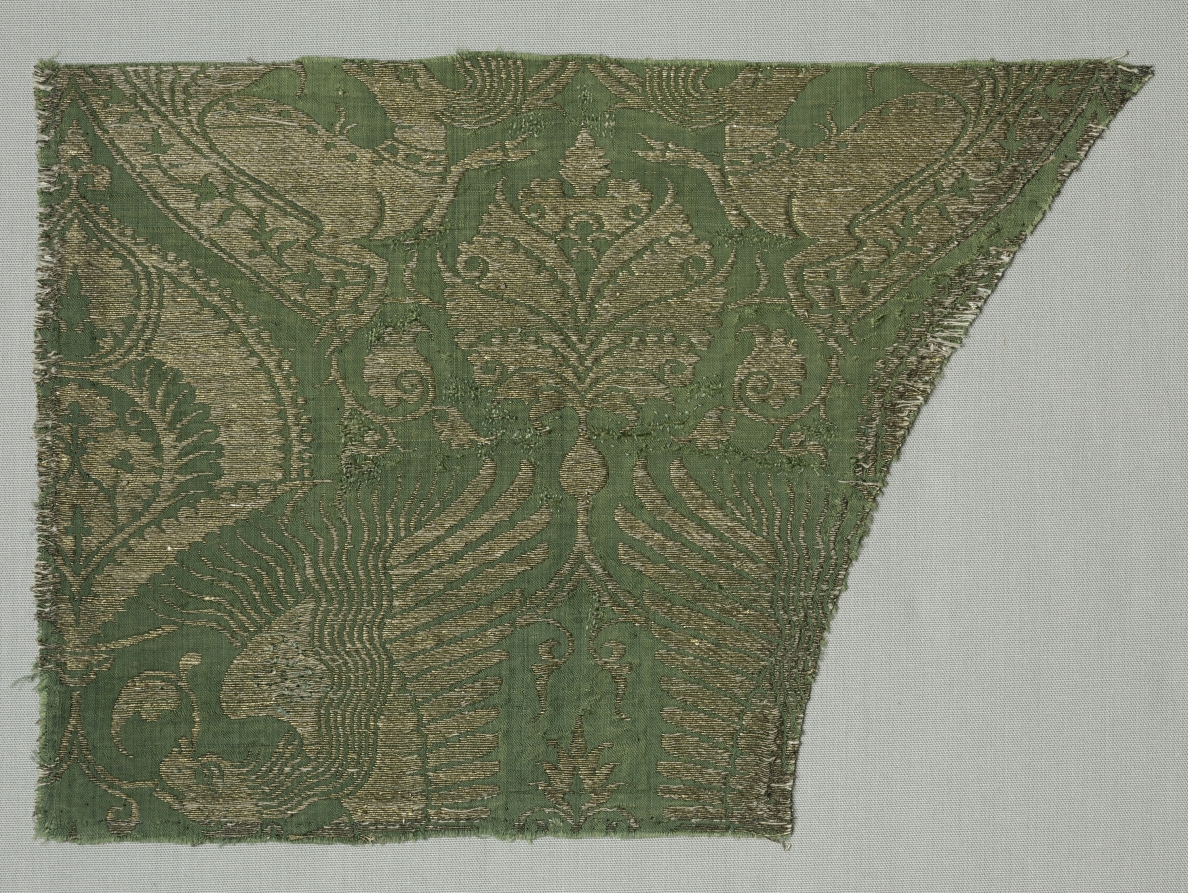
In the hushed ateliers of Savile Row, where the measure of a man is taken in inches and the cut is a matter of honour, the introduction of a fabric speaks in a language older than the tape measure. Exotic gold-patterned silk is not merely a textile; it is a declaration. Its materiality—the raw, unspun filament of the Bombyx mori—possesses a tensile strength that belies its gossamer appearance. Yet, it is the gold, not the silk, that commands the room. The pattern is not printed; it is woven, often with a weft of gilt thread—a core of silk filament wrapped in hammered gold leaf, or more commonly in the modern era, a fine gold-alloy lamé. This construction yields a fabric that drapes with a liquid, heavy fall, resisting the breezy flutter of its plain-weave cousins. The hand-feel is distinct: a cool, metallic crispness against the palm, a subtle rasp that signals the presence of metal, followed by the warm, almost imperceptible give of the silk base. It is a paradox of rigidity and fluidity, designed to hold a silhouette while suggesting motion.
The Imperial Lineage: From Forbidden City to Bond Street
To wear this cloth is to inherit a legacy. The provenance of gold-patterned silk is inextricably tied to the imperial workshops of the Ming and Qing dynasties, specifically the Nanjing Yunjin—literally “Cloud Brocade”—a craft so revered that its production was a state secret, reserved exclusively for the Emperor, his consorts, and the highest echelons of the mandarin class. The weavers, working on massive drawlooms requiring two artisans—one above, one below—would produce a mere two to three centimetres of fabric per day. The patterns were not decorative whims; they were cosmological maps. The dragon, a symbol of imperial power, was woven with five claws for the Emperor and four for princes. The cloud motifs, from which the fabric takes its name, represented the auspicious ether between heaven and earth. The gold was not mere ornament; it was a material embodiment of the sun’s life-giving energy, a talisman of prosperity and authority. To possess such a textile was to possess a fragment of the divine mandate.
The journey from the Forbidden City to the discreet windows of Savile Row is a narrative of trade, plunder, and ultimately, connoisseurship. In the 18th and 19th centuries, European merchants and diplomats, from the East India Company to the envoys of Queen Victoria, encountered these brocades as diplomatic gifts and luxury contraband. The sheer technical mastery—the density of the weave, the brilliance of the gold, the complexity of the pattern—stunned Western tailors. It did not conform to the European aesthetic of floral sprigs or geometric damasks. It was bold, symmetrical, and unapologetically opulent. Early attempts to replicate it in Lyons and Spitalfields failed to capture the same depth; the European gold thread was coarser, the silk less lustrous. Consequently, the original Chinese silks became the ultimate status symbol for the British aristocracy, often repurposed from robes into waistcoats, dressing gowns, and, for the most daring, smoking jackets. This was not appropriation; it was a recognition of an unassailable standard of excellence.
The Savile Row Interpretation: Restraint as the Ultimate Luxury
The genius of Savile Row lies not in amplification, but in curation. A bolt of exotic gold-patterned silk, in its raw state, is a theatrical spectacle. The Row’s craft is to temper that spectacle with the discipline of the cut. The fabric is rarely used for a full suit; that would be a costume, not a garment. Instead, it is deployed with surgical precision. Consider the evening dinner jacket: a midnight-blue Barathea base, with a shawl collar and covered buttons in the gold-patterned silk. The effect is transformative. The collar frames the face, drawing the eye upward, while the pattern’s intricate geometry—perhaps a stylised dragon or a cloud-and-wave motif—becomes a focal point of quiet power. The jacket’s structure, with its roped shoulder and suppressed waist, provides the necessary architecture to support the fabric’s inherent weight. The silk does not overwhelm; it punctuates.
Alternatively, the fabric finds its most intimate expression in a dressing gown. Here, the imperial legacy is fully realised. The robe, cut in a classic shawl-collar style with a self-belt, allows the full breadth of the pattern to flow. The gold catches the light of a morning fire, casting a warm, regal glow. The wearer is not merely comfortable; he is an emperor of his own domain. The tailoring must account for the fabric’s lack of give—a slight ease is added to the shoulder and sleeve head to prevent pulling. The lining is equally critical; a fine, plain-weave silk in a deep oxblood or bottle green provides a counterpoint to the gold, ensuring the garment’s interior is as considered as its exterior. The buttons, whether in smoked mother-of-pearl or dark horn, must not compete with the metallic thread; they are chosen for their matte finish, serving as a silent anchor.
The Modern Commission: A Dialogue with History
For the contemporary client, commissioning a garment in this fabric is an act of historical literacy. It requires an understanding that this is not a seasonal trend but a permanent statement. The Master Cutter’s role is to act as an interpreter, translating the client’s personal style into a dialogue with the cloth’s imperial past. The initial consultation is a study in contrasts: the client’s preferred silhouette—perhaps a soft, natural shoulder versus a structured one—is weighed against the fabric’s demands. The pattern placement is paramount. A large, central motif must be centred on the back panel, aligning with the spine. The sleeves must be matched at the seams, a process that can consume an additional metre of fabric and several hours of the cutter’s time. This is the hidden cost of luxury: not the price per metre, but the expertise required to make the fabric appear effortless.
The result is a garment that transcends fashion. It is an heirloom, a piece of material culture that carries the weight of dynasties. When the client wears it—whether to a gala, a private dinner, or simply to read the morning papers—he is participating in a continuum. He is not wearing a costume; he is wearing a legacy. The gold-patterned silk, once the exclusive province of emperors, now finds its apotheosis on the shoulders of a man who understands that true authority is not loud, but assured. The fabric does the speaking; the tailoring provides the eloquence. And in that quiet, precise alignment of thread and cut, the exotic becomes eternal.