← BACK TO ARCHIVES
Heritage-Black
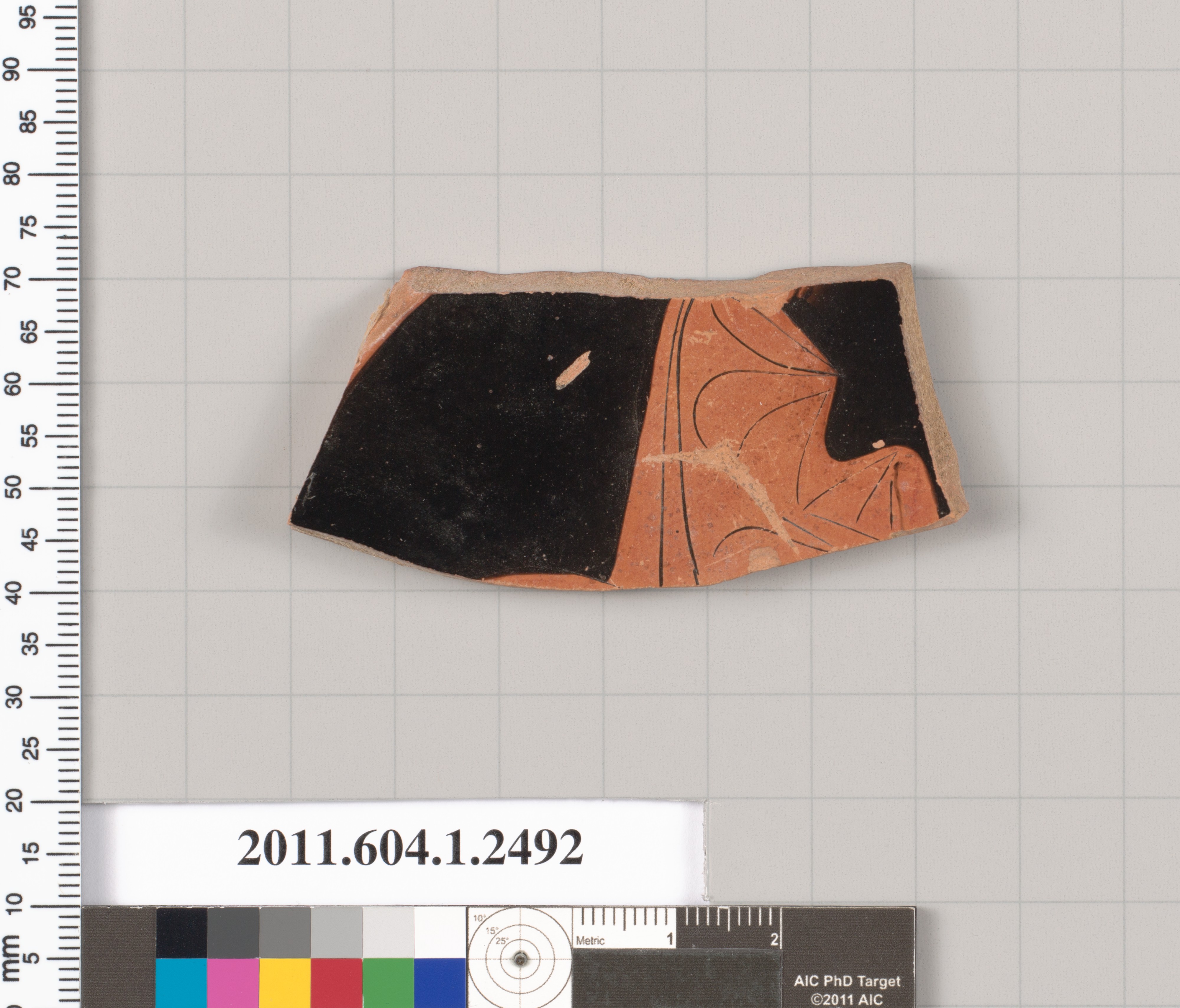
Heritage Synthesis: Terracotta fragment of a kylix (drinking cup)
Curated on Aug 11, 2026 // Node: LDN-01
The Dialectics of Departure: Material Memory and the 2026 Old Money Silhouette
The internal genetic code of Lauren Fashion—that which binds the poetic lament of *Poem of Farewell to Liu Man* to the bronze solemnity of the *Square Wine Container (Fangyou)*—is not merely an archival curiosity. It is a living design philosophy. It teaches us that true luxury does not depict emotion; it *contains* it. The poem uses the "void" of language to hold the weight of parting, while the *Fangyou* uses the "solidity" of bronze geometry to sanctify the same ache. Both achieve what the Chinese aesthetic tradition calls *wu wo he yi* (物我合一)—the fusion of object and self, where sorrow is transmuted into a form so refined that it becomes bearable, even beautiful. This is the essence of "哀而不伤" (grief without injury), a principle of restraint that defines the most sophisticated expressions of human feeling.
Now, we turn to a seemingly foreign artifact: the terracotta fragment of a Greek *kylix* (drinking cup), Attic, circa 5th century BCE. At first glance, this shard of a wine vessel appears distant from a Tang-dynasty farewell poem or a Shang-dynasty ritual bronze. Yet, when read through the lens of our internal code, the *kylix* fragment becomes a profound interlocutor. It is a vessel of conviviality, of symposia, of shared wine and whispered secrets—the very antithesis of solitary departure. But its fragmentary state is its true message. The broken rim, the faded black-figure silhouette, the missing handles: this is an object that has itself experienced a form of *farewell*. It has been separated from its whole, from its context, from the hands that once raised it in a toast. Its beauty now lies precisely in its incompleteness, in the negative space of what is lost. This is the *Fangyou*’s solemnity rendered in the language of loss; this is the poem’s "云烟" (cloud-smoke) made tangible in clay.
For the 2026 Old Money silhouette, this *kylix* fragment offers a radical, quiet directive: **the power of the incomplete, the eloquence of the reserved, and the dignity of the patinated.** The Old Money aesthetic has long been misread as mere conservatism—navy blazers, tailored flannels, understated logos. But the *kylix* fragment, filtered through our *Fangyou* and *Poem* code, reveals a deeper truth: Old Money is not about avoiding rupture; it is about *absorbing* it into the garment’s very structure. The 2026 silhouette must not be a pristine, untouched surface. It must be a vessel that has lived, that has known farewells, and that carries those memories not as damage, but as *gravitas*.
I. The Geometry of Restraint: From *Fangyou* to the Shoulder Line
The *Fangyou*’s square, implacable form is not aggressive; it is *settled*. Its corners are not sharp but slightly softened by casting, its surface interrupted by the deliberate rhythm of *taotie* (饕餮) and *yunlei* (云雷) patterns. This is not decoration for its own sake; it is a visual incantation, a way of binding the vessel’s interior void to the cosmic order. For the 2026 Old Money silhouette, this translates into a shoulder line that is neither padded nor dropped, but *architecturally present*. Think of a coat cut with a subtle, squared-off shoulder that does not mimic the body but rather provides a *frame* for it—a container for the self, much like the *Fangyou* contains the ritual wine. The fabric—a heavy, matte wool in a deep, undyed charcoal or a muted bronze-green—should have a *memory* of its own, a slight stiffness that recalls the bronze’s resistance to touch. The silhouette does not hug; it *accompanies*. It creates a space between the wearer and the world, a private chamber of emotional composure.
II. The Patina of Experience: The *Kylix* Fragment and Fabric Treatment
The terracotta fragment’s surface is not smooth. It bears the marks of centuries—mineral deposits, hairline cracks, a worn-away glaze. In the 2026 collection, this translates into a deliberate manipulation of textile surface. We are not speaking of distressed, grunge-era rips. We are speaking of *patina*: a subtle, almost imperceptible irregularity in the weave, a slight variation in dye depth, a hand-finished edge that feels slightly worn, like the rim of a beloved cup. Consider a double-faced cashmere coat where the inner layer is a shade darker, revealed only at the cuff or hem, as if the garment has been turned inside out over years of use. Or a silk twill blouse with a *jacquard* pattern that mimics the *kylix*’s black-figure silhouettes—not as literal figures, but as abstracted, faded forms that suggest movement and gathering, like the ghosts of symposium guests. This is not nostalgia; it is *materialized memory*. The garment becomes a *kylix* that has been passed down, broken, and lovingly kept. Its value lies not in its perfection, but in its testimony to time.
III. The Void as Luxury: Negative Space and the *Poem*’s "Empty" Words
The *Poem of Farewell to Liu Man* achieves its power through what it does *not* say. The imagery of "云烟" and "流水" points to absence; the poem’s emotional core is the space between the words. The 2026 Old Money silhouette must embody this *negative space* as a luxury. This is not minimalism in the Scandinavian sense of clean lines; it is *Chinese* emptiness—a charged, generative void. In practice, this means a garment that is deliberately *unfinished* in its narrative. A jacket with an asymmetrical closure that leaves a gap, revealing a sliver of the lining—a hidden flash of a deep burgundy or a faded gold-thread brocade. A skirt with a hem that dips lower at the back, creating a sense of trailing motion, as if the wearer is perpetually in the act of departure. A dress with a high neckline in front but a deep, sculptural *V* in the back—a farewell to the viewer, a private offering to the world behind. These are not design tricks; they are *emotional architectures*. They create a tension between what is shown and what is withheld, between the solid *Fangyou* and the evanescent poem.
IV. The Color of Farewell: From Bronze to Terracotta to Ash
The palette for 2026 is not the bright, optimistic hues of new money. It is the palette of *endings* that are also beginnings. From the *Fangyou*: the deep, oxidized greens of ancient bronze, the black-brown of aged patina, the dull gold of inlaid metal. From the *kylix* fragment: the warm, burnt orange of terracotta, the chalky white of broken clay, the faded umber of painted figures. And from the *Poem*: the grey of twilight, the pale blue of distant mountains, the off-white of silk that has yellowed with age. These colors are not worn as a costume; they are worn as a *condition*. They suggest a person who has weathered storms, who has said goodbye to people and places, and who carries the memory of those farewells in their very skin. The 2026 Old Money woman does not dress to impress; she dresses to *remember*. Her garments are not new; they are *renewed*. They are the *kylix* fragment, lovingly re-fired, not to erase its cracks, but to honor them.
V. Synthesis: The Garment as a Vessel of Eternal Farewell
The *kylix* fragment, the *Fangyou*, and the *Poem* converge on a single truth: the most profound luxury is the ability to hold sorrow without being destroyed by it. The 2026 Old Money silhouette, therefore, is not a trend. It is a philosophical position. It rejects the fast-fashion ethos of constant novelty and instead embraces the *archaeological* approach to dress. Each garment is a *site* of memory. The shoulder is a *Fangyou* corner—stable, unyielding. The fabric surface is a *kylix* fragment—textured, imperfect, alive. The cut is a *Poem*—full of pauses, of unspoken words, of the space where a hand once rested and is now gone.
In this silhouette, the wearer becomes a living artifact. She is not merely dressed; she is *inscribed*. Her coat carries the weight of a thousand farewells, but it does not bow under that weight. It stands, like the *Fangyou*, in solemn dignity. Her scarf, perhaps of a whisper-thin silk, moves like the "流水" of the poem—fluid, evanescent, but eternal in its recurrence. Her shoes, with their low, solid heels, make the sound of a steady departure—not a frantic flight, but a measured walk toward the unknown.
This is the 2026 Old Money aesthetic: not the wealth of possessions, but the wealth of *experience*. It is the art of wearing one’s history, of transforming the pain of parting into the beauty of presence. The *kylix* fragment teaches us that a broken cup can be more moving than a full one. The *Fangyou* teaches us that a sealed vessel can contain more than it holds. The *Poem* teaches us that the words we do not say are the ones that last forever. And Lauren Fashion, in its 2026 collection, will teach the world that true elegance is not the absence of sorrow, but the *form* that sorrow takes when it is finally, beautifully, worn.
Heritage Lab Insight
Genetic Bridge: Archive node focusing on Heritage-Black craftsmanship.