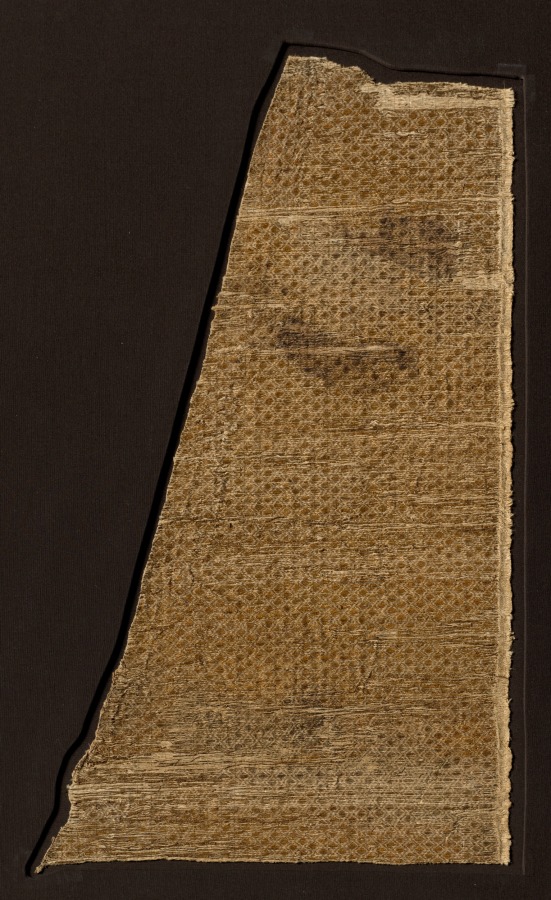
The Enduring Legacy of Imperial Silk: A Material Study of the Diamond Motif
Introduction: The Weight of a Thread
In the hushed, wood-panelled ateliers of Savile Row, where the air is thick with the scent of wool and the quiet confidence of bespoke tailoring, one material commands a particular reverence: silk. It is not merely a fabric; it is a testament to centuries of craft, a narrative woven in light. When we consider a textile bearing the diamond motif, we are not examining a simple pattern. We are handling a fragment of imperial history, a coded language of power, and a pinnacle of material achievement. This artifact, a silk textile emblazoned with diamonds, is a study in contrasts: the softness of the fibre against the rigidity of the geometric form, the lightness of the cloth against the weight of its legacy.
This paper serves as a heritage research artifact, dissecting the materiality, provenance, and cultural resonance of this specific silk. We shall approach it not as a mere decorative piece, but as a document—one that speaks of dynasties, trade routes, and the unbroken thread of artisanal excellence that connects the looms of the East to the cutting tables of the West.
Materiality: The Unrivalled Hand of Silk
Let us first address the substrate itself. Silk, in its purest form, is a protein fibre produced by the silkworm, *Bombyx mori*. Its journey from cocoon to cloth is one of meticulous labour, a fact that has always placed it at the apex of luxury. The materiality of this textile is defined by three critical properties: tensile strength, lustre, and drape. Unlike cotton or linen, silk possesses a natural, triangular prism-like structure that refracts light, creating that unmistakable, deep-seated glow. This is not a surface shine; it is an internal luminosity that shifts with the angle of the viewer, lending the fabric a living, breathing quality.
In the context of imperial weaving, the silk used was not the standard grade. It was a tightly woven, high-density fabric, often a charmeuse or a mikado, chosen for its ability to hold a crisp fold while maintaining a fluid fall. The diamond motif, in this context, is not printed but woven—a crucial distinction. A woven pattern, achieved through a complex jacquard or damask technique, becomes part of the fabric’s very structure. It is permanent, unyielding to wear, and speaks to a level of technical mastery that printing can never replicate. The raised, or *relief*, quality of the weave adds a tactile dimension, inviting the hand to trace the sharp angles of the diamond, a sensory experience that reinforces the visual impact.
The Diamond Motif: A Symbol of Invincibility
The diamond, as a geometric device, is far more than a pretty shape. In the lexicon of imperial iconography, it represents the unconquerable, the eternal, and the divine. Its four points are often interpreted as the four cardinal directions, symbolising dominion over the known world. In many Eastern traditions, the diamond, or *vajra*, is the symbol of indestructible truth and spiritual power. When woven into silk for the imperial court, this motif was a declaration. It was a statement that the emperor’s authority was as unbreakable as the stone itself, and his reign as enduring as the fibre that held the pattern.
The specific arrangement of the diamonds on this artifact is of paramount importance. Are they interlocking, creating a continuous chain of power? Or are they isolated, each a distinct emblem of sovereignty? The spacing, the scale, and the orientation all contribute to the overall message. A larger, bolder diamond suggests a more aggressive assertion of power, while a smaller, more delicate pattern might indicate a period of refined, courtly elegance. The colour of the silk—whether a deep, imperial yellow, a regal crimson, or a serene azure—further amplifies this message, each hue carrying its own set of political and spiritual connotations.
Context: The Imperial Looms and the Silk Road
To fully appreciate this artifact, one must place it within the grand narrative of imperial silk weaving. The legacy begins in ancient China, where sericulture was a closely guarded state secret for millennia. The Silk Road was not merely a trade route; it was a conduit for power. The export of silk was a diplomatic tool, a means of buying peace and forging alliances. The finest silks, however, were reserved for the imperial household, woven in state-run workshops under the direct supervision of court officials. These looms were not mere factories; they were temples of craft, where master weavers passed down their knowledge through generations, their skills as guarded as the secrets of the silk itself.
This particular textile, with its diamond motif, would have been destined for a specific purpose. It could have been a ceremonial robe, worn during the most sacred of rituals. It might have been a wall hanging, adorning the throne room to project an aura of unassailable power. Or, it could have been a diplomatic gift, a piece of woven diplomacy designed to awe and subjugate a foreign dignitary. The weight of these possibilities is palpable when one holds the fabric. It is not just cloth; it is a piece of statecraft, a silent ambassador that has travelled through time.
From Imperial Court to Savile Row: A Modern Translation
The journey of this textile from the imperial looms of the East to the discerning eye of the modern connoisseur is a testament to its enduring relevance. For the contemporary gentleman, a garment crafted from such a fabric is not a costume; it is a connection. It is a nod to a lineage of power and taste that transcends the fleeting trends of the fashion cycle. When we, as heritage specialists, advise a client on a bespoke piece using a silk of this provenance, we are not merely discussing cloth. We are discussing legacy.
The diamond motif, when translated to a Savile Row suit lining or a bespoke smoking jacket, takes on a new, yet equally potent, meaning. It becomes a private signal of discernment, a quiet declaration that the wearer understands the language of true luxury. It is the antithesis of ostentation. The pattern is not shouted; it is whispered through the subtle interplay of light and shadow on the silk’s surface. It is a detail that only the most observant will notice, and it speaks volumes about the wearer’s character. The imperial legacy of power is thus translated into a modern idiom of personal confidence and understated authority.
Conclusion: The Fabric of Power
In conclusion, this silk textile with its diamond motif is a masterclass in material storytelling. It is a convergence of the finest raw material, the most sophisticated weaving techniques, and a symbolic language of immense power. Its materiality—the lustre, the drape, the structural integrity—is a testament to the skill of the imperial weaver. Its context is a reminder of the political and economic forces that shaped the ancient world. And its modern application on Savile Row is a proof of its timeless appeal.
To wear or to commission a piece from such a fabric is to participate in a dialogue with history. It is to acknowledge that true luxury is not about novelty, but about permanence. It is about owning a piece of a story that began centuries ago, in a distant land, on a loom operated by hands that understood the profound weight of their craft. This textile is not just a material; it is a monument, woven in silk, and its diamonds are the enduring jewels of an imperial past that continues to inform the very best of contemporary tailoring.