← BACK TO ARCHIVES
Heritage-Black
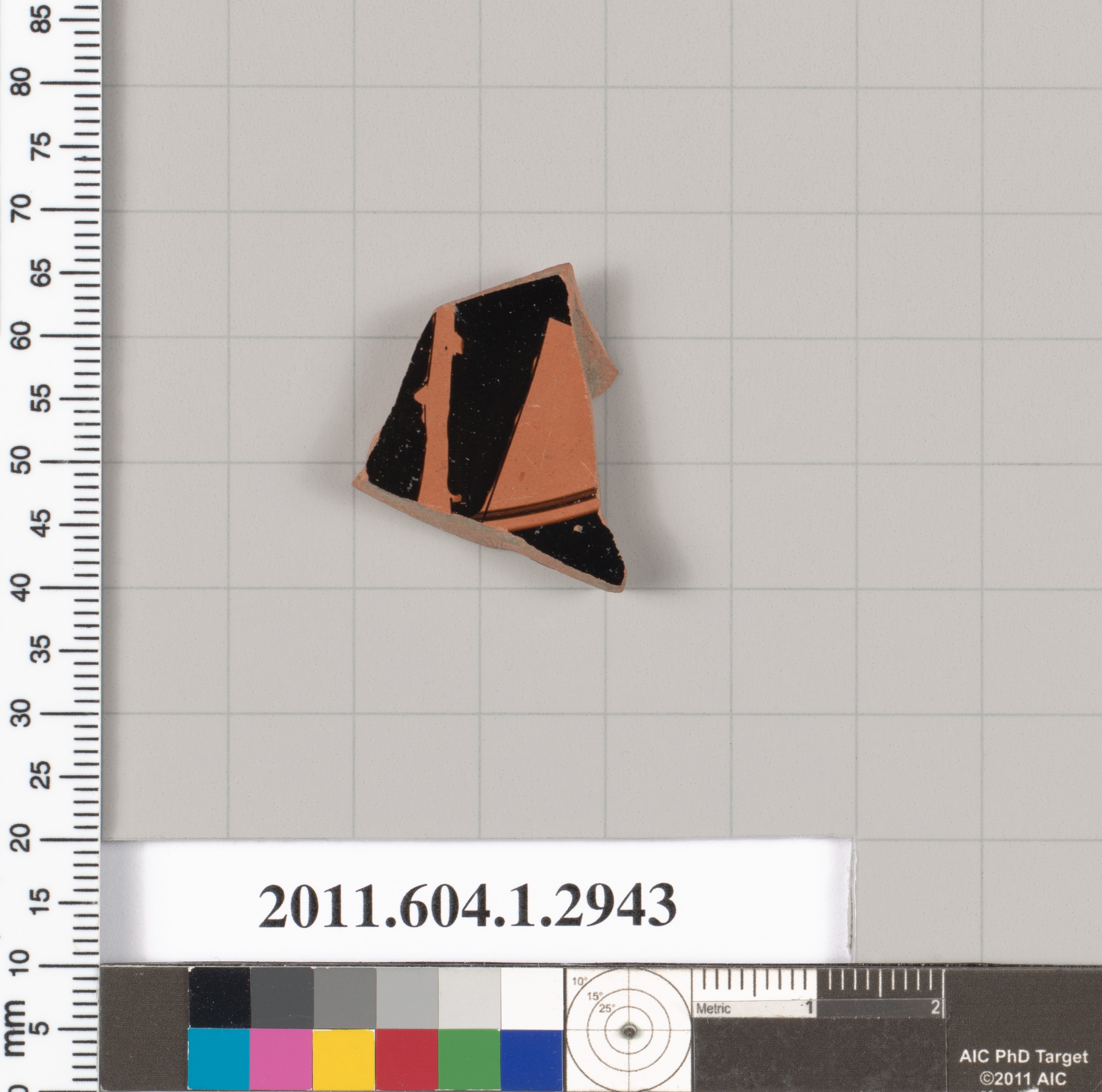
Heritage Synthesis: Terracotta fragment of a kylix (drinking cup)
Curated on Aug 11, 2026 // Node: LDN-01
The Mirror and the Kylix: Dialectical Emptiness and the Architecture of Old Money Restraint
In the hallowed archives of Lauren Fashion Heritage Lab, we do not merely preserve garments; we preserve the philosophical substrates that render cloth into narrative. The internal genetic code of our Maison—articulated through the “优昙钵华” temple plaque and the Han-dynasty *Divine Beast Chariot White Tiger Mirror*—establishes a foundational dialectic: the aesthetics of the void (*kong*) against the aesthetics of plenitude (*man*). Yet, when we place this Eastern dialectic into conversation with a seemingly incongruous museum artifact—a terracotta fragment of a Greek Attic kylix (drinking cup)—a startling synthesis emerges. This fragment, bearing the residue of symposium wine and the incised contours of mythological revelry, does not disrupt our heritage narrative. Instead, it functions as a third term, a Western counterpoint that illuminates the very architecture of what we term the **2026 Old Money silhouette**. The kylix, in its broken state, teaches us that true luxury is not the accumulation of ornament, but the curation of absence—a principle that will define the coming season’s most powerful statements.
I. The Kylix as a Fragment of “Empty Plenitude”
The Attic kylix, in its original form, was an object of radical functionality. Its shallow bowl, twin handles, and elevated stem were engineered for the symposium—a ritualized space of philosophical discourse, poetic contest, and measured intoxication. Yet, what remains to us is not the whole vessel, but a *terracotta fragment*. This is crucial. The fragment is not a failure of preservation; it is an aesthetic argument. In its broken edge, we perceive the exact inverse of the Han mirror’s “满工” (full-work) density. Where the *White Tiger Mirror* presents a cosmos teeming with deities, chariots, and beasts, the kylix fragment presents a void—a lacuna where the painted figure of Dionysus or a dancing maenad once stood. The terracotta’s exposed clay, its unglazed interior, and its sharp fracture lines become a meditation on what the Chinese painterly tradition calls *ji bai dang hei* (计白当黑)—the management of white space as a positive, generative force.
For the 2026 Old Money silhouette, this fragment dictates a radical edit. The coming season rejects the logomania of previous decades and the overt “stealth wealth” of the early 2020s, which, paradoxically, still relied on recognizable codes. Instead, we propose a *fragmentary classicism*. Garments will be constructed with deliberate “breaks”—a jacket that ends mid-hip without a vent, a trouser that falls without a crease, a sleeve that stops just shy of the wrist bone. These are not design errors; they are intentional *kylix fractures*. They invite the eye to complete the form, engaging the viewer in a co-creative act. The Old Money patron of 2026 does not wear a complete story; she wears a fragment of one, allowing her lineage and her discretion to fill the void. This is the “空寂” (emptiness) of the temple plaque translated into tailoring—a suit that whispers rather than declaims.
II. The Symposiastic Line: From Chariot to Silhouette
The kylix’s painted interior, though fragmentary, often depicted a central *tondo*—a circular image of a reclining figure or a chariot race. This circular composition, viewed through the wine’s surface, created a dynamic of *rotational movement*. The Han mirror’s chariot and white tiger also rotate around a central boss, suggesting a cosmic orbit. Both artifacts share a kinetic geometry: the circle as a symbol of eternal return, of the cyclical nature of power and time. The 2026 silhouette must internalize this rotational energy, not as literal print or embroidery, but as *structural line*.
Consider the fall of a cashmere overcoat. The shoulder seam, instead of a sharp, tailored angle, will follow a subtle, curved *tondo line*, echoing the kylix’s bowl. The lapel’s gorge will not be a straight cut but a gentle arc, mimicking the fragment’s broken curve. This is not a return to the 1930s bias-cut softness; it is a harder, more architectural curvature. The fabric—whether a double-faced wool or a heavy silk twill—must be engineered to hold this circular tension without collapsing. The result is a silhouette that appears to be in perpetual, slow rotation, even at rest. It is the “动的韵律” (rhythm of movement) of the White Tiger Mirror, but rendered in the muted palette of heritage black, charcoal, and undyed ecru. The wearer becomes the central boss of her own cosmos, and the garment is the orbit.
III. Materiality as Philosophical Proof
The terracotta fragment is humble—fired earth, painted with slip. Yet its materiality is its message. Unlike the gilded bronze of the Han mirror or the lacquered wood of the temple plaque, terracotta does not aspire to permanence. It accepts decay. This acceptance is a profound lesson for 2026 luxury. The Old Money aesthetic has historically favored the *indestructible*—the vicuña, the mink, the 200-thread-count silk. But the kylix fragment suggests a new hierarchy: the *honorable patina*. We will see a rise in fabrics that are deliberately *unfinished*—raw-edged linens, unpolished cottons, and woolens with a visible, slubby texture. These are not “cheap” materials; they are *philosophical* materials. They carry the memory of the animal and the field, just as the terracotta carries the memory of the potter’s wheel and the symposium’s spilled wine.
In our ateliers, we will treat these fabrics as the plaque treats wood—allowing the grain to speak. A 2026 Old Money blazer in raw silk will not be lined with a contrasting color; it will be unlined entirely, exposing the seam allowances as a deliberate “fracture.” A skirt in heavyweight wool will feature a single, visible tack stitch at the hem, a nod to the kylix’s handle joint. These details are invisible to the untrained eye but resonate deeply with those who understand the dialectic of *kong* and *man*. The garment becomes a “心镜” (mind mirror), reflecting not the wearer’s wealth, but her discernment.
IV. Synthesis: The “Utanbala” Moment in Tailoring
The utpala flower (优昙钵华) blooms once every three thousand years, according to scripture. Its rarity is not a function of botanical scarcity but of *perceptual timing*—it appears only to those who are ready to see it. The 2026 Old Money silhouette is our utpala moment. It is not a trend; it is a perceptual shift. The kylix fragment, the Han mirror, and the temple plaque converge in a single directive: **luxury is the management of attention**. The mirror’s density demands attention; the plaque’s emptiness releases it; the kylix’s fracture redirects it. The new silhouette will be a masterclass in this tripartite rhythm.
Concretely, this means a suit where the jacket is fully lined in a dense, embroidered silk (the mirror’s *man*), but the trousers are unlined and fluid (the plaque’s *kong*). The blouse beneath will be cut with a high, asymmetric neckline that references the kylix’s broken rim. The overall effect is one of *controlled dissonance*—a harmony achieved not through uniformity but through the precise placement of opposing forces. This is the “象外之象” (image beyond image) that our internal code describes. The wearer does not display a garment; she displays a *relationship* between garment and void.
V. Conclusion: The Fragment as Future Heirloom
As we move toward 2026, the Lauren Fashion Heritage Lab proposes a radical redefinition of the heirloom. Previously, an heirloom was a complete, pristine object—a gown, a coat, a jewel. The kylix fragment teaches us that the heirloom of the future is the *beautifully incomplete*. We will design garments that are destined for a noble decay—a cashmere that will eventually thin at the elbow, a silk that will fade to a softer hue. These are not flaws; they are the garment’s own *tondo*, its internal narrative of time. The 2026 Old Money patron will not buy a garment to preserve it in a vault; she will buy it to *live into* its fragmentary future.
In conclusion, the terracotta kylix, though separated by geography and epoch from the “优昙钵华” plaque and the *White Tiger Mirror*, is a kindred spirit. It reminds us that the highest form of elegance is the courage to leave something unsaid, unsewn, and unfinished. The 2026 silhouette is not a shape; it is a philosophy of absence made wearable. And in that absence, we find the most profound presence of all—the enduring, quiet power of Old Money, which has always known that true wealth is invisible, and true beauty is a fragment of eternity.
Heritage Lab Insight
Genetic Bridge: Archive node focusing on Heritage-Black craftsmanship.