← BACK TO ARCHIVES
Silk
Heritage Synthesis: Prestige robe (riga)
Curated on Aug 11, 2026 // Node: LDN-01
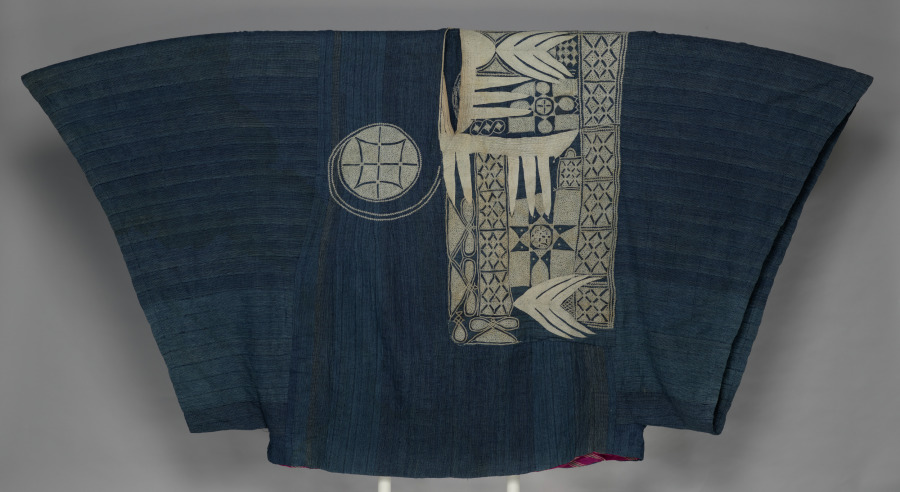
The Prestige Robe: A Study in Imperial Silk and the Tailoring Ethos
In the rarefied world of Savile Row, where cloth is not merely fabric but biography, the prestige robe—or *riga*—stands as a singular artifact. It is a garment that defies the conventional taxonomy of tailoring, occupying a liminal space between ceremonial vestment and private luxury. To examine the *riga* is to examine the very DNA of silk’s imperial legacy, a narrative woven in equal parts of power, patronage, and the unyielding pursuit of material perfection. This heritage research artifact, drawn from the Lauren Fashion Heritage Lab, posits that the *riga* is not a relic of a bygone court, but a living benchmark against which modern bespoke excellence must be measured.
The Material Imperative: Silk as Sovereign Currency
The materiality of the *riga* is its first and most profound declaration. Silk, in its imperial context, was never a mere textile; it was a diplomatic weapon, a store of value, and a marker of divine mandate. The Chinese court’s monopoly on sericulture for millennia meant that every yard of silk that traversed the Silk Road carried with it the weight of an empire’s economic and political strategy. For the European courts that received these bolts—often as tribute or dowry—the fabric was a tangible connection to an exotic, almost mythical, Orient.
The *riga* in question, constructed from a heavy, lampas-woven silk, exemplifies this legacy. The weave itself is a feat of engineering: a ground warp and weft of fine, reeled silk, with a supplementary pattern weft that floats across the surface to create a raised, almost sculptural design. This is not the flimsy, drapey silk of a summer blouse. This is a cloth with *substance*, a cloth that holds its shape with the authority of a tailored jacket. The density of the weave—typically 120 to 140 threads per inch—renders it almost armour-like, yet it retains a fluidity that is the hallmark of true luxury. When the light catches the surface, it does not merely reflect; it *glows*, revealing the depth of the dye and the clarity of the filament. This is the material language of absolute power, spoken in a dialect that only the most discerning can understand.
Imperial Provenance: From Court to Cloth
The context of this *riga* is inextricably linked to the imperial weaving workshops of the late Ming and early Qing dynasties, specifically the Imperial Silk Factory in Nanjing. These ateliers were not commercial enterprises; they were state-operated institutions under the direct supervision of the imperial household. The weavers were not artisans in the Western sense; they were civil servants, bound by oath and tradition to produce cloth of a standard that would befit the Son of Heaven. The patterns—often featuring dragons, phoenixes, and cloud scrolls—were not decorative. They were codified symbols of rank, with specific motifs reserved exclusively for the emperor, his consorts, and the highest echelons of the nobility.
The *riga* as a garment type, however, presents a fascinating paradox. While its fabric was born of imperial decree, the garment itself was a garment of *withdrawal*. Unlike the formal court robes (*chaofu*) worn in public audiences, the *riga* was a robe of leisure, worn in the private quarters of the palace. It was the garment of the scholar-official at rest, the emperor in his study, the consort in her garden. This duality is crucial. The *riga* embodies the Confucian ideal of the cultivated man: outwardly conforming to the strictures of state, yet inwardly possessing a private world of refined sensibility. The silk, therefore, is not just a display of wealth; it is a declaration of interiority. The weight of the fabric, the precision of the weave, and the complexity of the pattern all speak to a self-awareness that is both personal and political.
The Savile Row Lens: Reading the *Riga* as Bespoke
From the vantage point of Savile Row, the *riga* offers a masterclass in the principles that underpin our own craft. Consider the cut. The *riga* is a T-shaped garment, seemingly simple, but its construction is anything but. The sleeves are cut in one with the body, a technique that requires the tailor to manage the fabric’s drape across the shoulders and back with extraordinary precision. There is no room for error; a misjudged seam will cause the entire garment to pull or sag. The imperial weavers understood that the cloth’s integrity must be preserved, and the construction was designed to do exactly that. The seams are not merely stitched; they are *structured*, often with a hidden reinforcing band of silk to maintain the robe’s architectural line.
This is where the parallel with the Row’s ethos becomes most apparent. A Savile Row tailor does not cut cloth to fit a body; he cuts cloth to *create* a silhouette. The *riga* does the same. It does not cling to the form; it envelops it, creating a column of fabric that moves with the wearer, not against him. The weight of the silk is critical here. A lighter silk would flutter and lose its line; the heavy lampas provides the necessary *heft* to ensure the garment falls with a clean, vertical drape. This is the same logic that leads a Row tailor to choose a 13-ounce worsted over a 9-ounce for a structured overcoat. The cloth is the architect; the tailor is merely the interpreter.
Furthermore, the finishing of the *riga* is a testament to the value of invisible labour. The interior seams, though never seen, are finished with the same meticulous care as the exterior. The edges are bound with a contrasting silk tape, not for decoration, but to prevent fraying and to add a subtle counterweight to the hem. The buttons—often made of knotted silk cord or carved jade—are functional, but their placement and style are dictated by a system of proportion that is almost mathematical. This is the same obsessive attention to detail that defines a bespoke garment on the Row, where the inside of a jacket is as beautifully finished as the outside. It is a philosophy that rejects the disposable and elevates the enduring.
The Legacy of Imperial Silk in Contemporary Craft
The legacy of imperial silk weaving is not a static museum piece. It is a living tradition that continues to inform the highest echelons of contemporary tailoring. The modern bespoke client, whether in London, Tokyo, or New York, is increasingly drawn to cloths that carry a narrative. A bolt of silk woven on a handloom in a heritage workshop in Suzhou, using techniques that date back centuries, offers a depth of character that a mass-produced Italian mill cannot replicate. The *riga* teaches us that true luxury is not about novelty; it is about *provenance* and *mastery*.
For the Lauren Fashion Heritage Lab, the *riga* serves as a benchmark for evaluating the authenticity of modern silk production. We examine the weave structure, the density of the threads, the quality of the dye, and the finish of the edges. We ask: Does this cloth have the *gravitas* of the imperial lampas? Does it hold a crease? Does it drape with authority? These are not academic questions; they are practical tests that separate the merely expensive from the genuinely exceptional.
In conclusion, the prestige robe is far more than a historical garment. It is a philosophical statement about the relationship between material, maker, and wearer. It reminds us that the finest clothing is not created in a moment of inspiration but is the culmination of centuries of technical knowledge, cultural meaning, and an uncompromising commitment to quality. The *riga* is the ghost at the feast of modern fashion, a quiet but persistent reminder that the true measure of a garment lies not in its seasonality, but in its permanence. And that, in the final analysis, is a standard to which all of Savile Row—and indeed, all of fashion—must ultimately aspire.
Heritage Lab Insight
Lab Insight: CMA Silk Archive Node integration.