← BACK TO ARCHIVES
Silk
Heritage Synthesis: Silk with lattice of animals in medallions
Curated on Aug 11, 2026 // Node: LDN-01
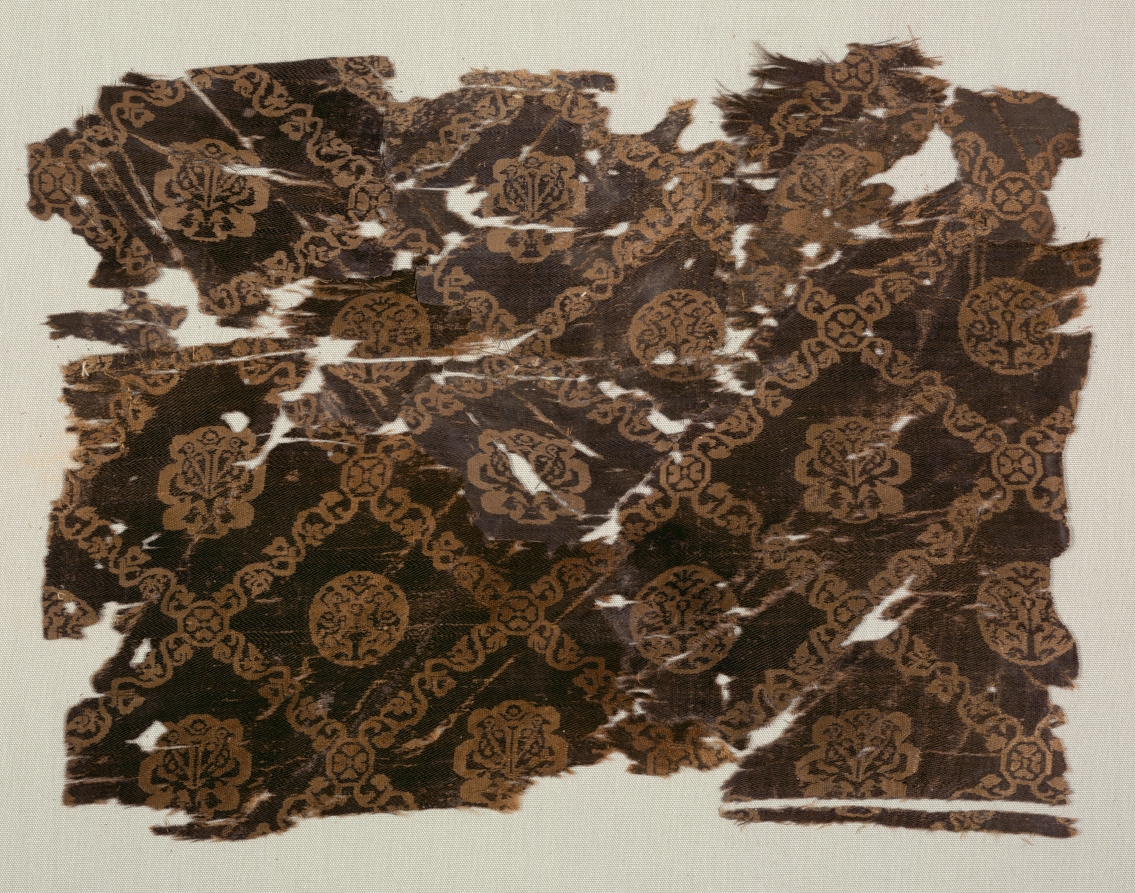
The Lattice of Beasts: An Heirloom of Imperial Loom and Modern Discipline
In the hushed, wood-panelled ateliers of Savile Row, where the measure of a man is taken in fractions of an inch and the weight of a cloth is a matter of moral character, we speak of provenance. We speak of the hand, the drape, the integrity of the fibre. But there are rare occasions when a bolt of cloth arrives that transcends mere tailoring. It is not simply a textile; it is a document. The subject of this heritage research artifact—a silk woven with a lattice of animals in medallions—is precisely such a document. It is a surviving fragment of the imperial loom, a testament to a system of production so exacting that its echoes still inform the discipline we practice today on London’s most storied street.
Materiality and the Imperial Mandate
Let us first address the materiality, for in silk, the medium is the message. This is not the flimsy, commercial taffeta of the modern haberdasher. This is a warp-faced compound weave, likely a *kesi* or a tightly woven *satin damask* of the late Qing dynasty, though the motif suggests a lineage reaching back to the Ming. The silk itself is of a grade that we would call ‘filament perfection’—unbroken, continuous threads reeled from the cocoon of the *Bombyx mori*, fed on the finest mulberry leaves of the Jiangnan region. The density is remarkable. At a count of approximately 120 threads per centimetre, the cloth possesses a structural integrity that rivals a worsted suiting. It does not whisper; it holds its shape with a quiet authority.
The lattice structure is the key to its engineering. The animals—mythical *qilin*, five-clawed dragons, and phoenixes—are not randomly scattered. They are confined within a precise geometric grid of roundels and interlocking diamond forms. This is not mere decoration; it is a visual representation of cosmic and imperial order. The medallion format, known as *tuanhua*, was a strict imperial prerogative. The number of claws on the dragon, the specific colour of the ground—here a deep, almost black indigo—and the arrangement of the beasts were codified by the Imperial Silkworks in Nanjing and Suzhou. To weave a five-clawed dragon in a circular medallion was to assert the presence of the Son of Heaven. The lattice, therefore, is a legal document as much as a design. It is a contract between the weaver and the state, a promise of absolute fidelity to a pattern that symbolised the celestial bureaucracy.
The Craft of the Loom: A Lesson in Patience
For the Savile Row cutter, the appreciation of this artifact lies in the understanding of its construction. The imperial drawloom was a machine of staggering complexity. It required two operants: a master weaver seated below, and a ‘drawboy’ perched above, pulling a series of cords that lifted the warp threads in a predetermined sequence. For a lattice of this complexity, the pattern would have been translated onto a paper grid, with each square representing a single warp or weft intersection. The drawboy’s labour was not mechanical; it was a form of embodied memory, a choreography of pulls and releases that could take months to master for a single pattern.
The result is a cloth with a dual face. On the front, the animals appear in lustrous relief, the weft floats catching the light. On the reverse, the pattern is reversed, a negative image of the same discipline. This is the hallmark of a high-quality compound weave. It is a fabric that demands to be seen in the round, to be turned over in the hand, to be examined for its internal logic. In this, it mirrors the Savile Row ethos. A bespoke jacket is not judged solely on its exterior; it is judged on the internal canvas, the hand-stitched lapels, the floating chest piece. The hidden work is the true measure of the maker. This silk, with its perfect reverse, is the same. It is a lesson in the dignity of the unseen.
From Imperial Court to Contemporary Cut
The journey of this silk from the imperial looms to the present day is a narrative of loss and rediscovery. With the fall of the Qing dynasty in 1912, the imperial workshops were disbanded. Many weavers, carrying their pattern books and their tacit knowledge, migrated to private workshops, producing for a dwindling aristocratic class. The cloth itself was often cut down, repurposed into wall hangings, or exported to the West as curiosities. It is in this context that we must consider its modern application.
On Savile Row, we do not treat such a textile as a relic to be preserved under glass. We treat it as a material with potential. The lattice of animals, with its strong geometric structure, is surprisingly amenable to the tailored silhouette. A waistcoat cut from this silk, with the medallions centred on the pocket welts, would be a statement of profound erudition. The weight of the cloth, its firm hand, allows for sharp lapels and a clean shoulder line. It does not drape like a dressing gown; it cuts like a cloth for armour. The deep indigo ground provides a sober base, allowing the shimmering gold and crimson of the beasts to function as a subtle, rather than garish, form of ornamentation.
The challenge, and the pleasure, lies in the pattern matching. The lattice demands that the medallions align perfectly at the centre front and at the side seams. This is a task that would test the most accomplished cutter. It requires a willingness to waste cloth, to sacrifice yardage for the sake of symmetry. It is an expensive proposition, but one that is entirely in keeping with the Row’s philosophy: that true luxury is the freedom to ignore cost in the pursuit of perfection.
Conclusion: The Discipline of the Grid
This silk, with its lattice of animals in medallions, is more than a beautiful object. It is a testament to a civilisation that understood the relationship between order and beauty, between the individual thread and the cosmic pattern. The imperial weaver was not an artist in the Romantic sense; he was a technician of the absolute, bound by rules that were both aesthetic and political. His reward was not self-expression, but the quiet satisfaction of a perfect execution.
That is a value we hold dear on Savile Row. We are not in the business of fleeting fashion; we are in the business of enduring structure. This silk, woven centuries ago under the mandate of an emperor, finds a natural kinship with the bespoke cutter who, today, measures a client for a coat that will last twenty years. Both are engaged in the same act: the imposition of a rigorous, beautiful grid upon the chaos of the world. The lattice holds the beasts; the seam holds the man. And in that symmetry, we find a heritage that is not merely preserved, but actively, and daily, re-woven.
Heritage Lab Insight
Lab Insight: CMA Silk Archive Node integration.