Material Memory: The Imperial Legacy Woven into Savile Row’s Silk
Provenance and the Weight of Thread
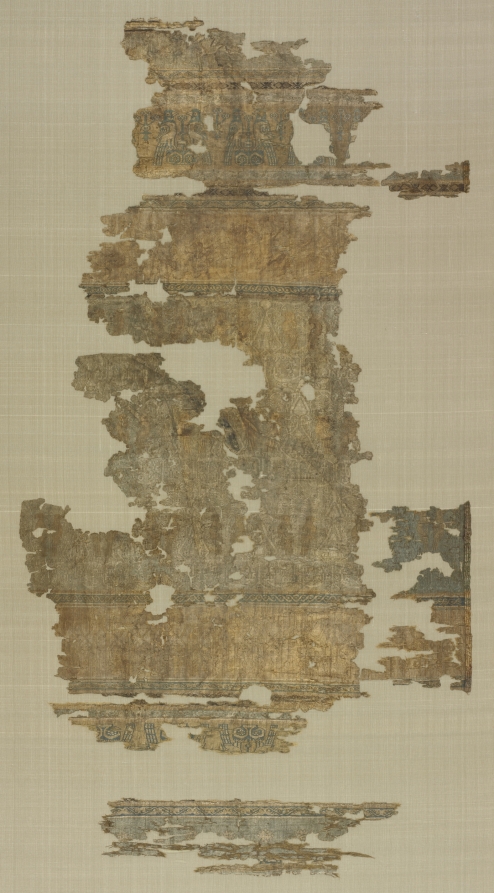
In the hushed ateliers of Savile Row, where chalk lines are drawn with the precision of a surgeon’s scalpel, silk is not merely a fabric. It is a document. A fragment of imperial silk, no larger than a calling card, carries within its lustrous weave the entire administrative apparatus of the Ming dynasty, the mercantile audacity of the East India Company, and the quiet, obsessive discipline of a Lyonese weaver. To hold such a fragment is to hold a compressed archive of global power, one that speaks not in the declarative tones of state papers, but in the supple, insistent language of materiality. This artifact—a scrap of patterned damask, its ground a deep, oxidized gold, its pattern a formalised pomegranate motif—is not a relic of a bygone era. It is a living specification, a benchmark against which contemporary tailoring must measure its own integrity.
The materiality of this silk is its primary text. The warp is a filament of raw, reeled silk, unbroken for its entire length—a testament to the sericulturist’s art, where a single cocoon yields upwards of a kilometre of continuous protein fibre. The weft, conversely, is a spun silk, shorter and softer, introduced to create a subtle, matte relief against the glossy ground. This interplay of lustre and texture is not decorative. It is functional. In imperial China, the degree of sheen was a sumptuary law; the emperor’s dragon robes demanded a twelve-symbol perfection, while lesser nobles were restricted to fewer. The pomegranate motif, a symbol of fertility and unity, was reserved for the highest echelons of the court. The fragment’s density—approximately 120 threads per centimetre—is a figure that modern industrial looms, operating at speed, rarely achieve. This is not a fabric for the impatient. It is a fabric for the connoisseur of time.
The Imperial Weave as a System of Governance
The legacy of imperial silk weaving is not a romantic narrative of artisan craft. It is a brutal, efficient system of logistics and quality control. The Imperial Silkworks in Nanjing, Suzhou, and Hangzhou were not quaint workshops; they were state-run factories employing tens of thousands of weavers, dyers, and pattern-drawers, all overseen by eunuch bureaucrats who reported directly to the throne. The production cycle was calibrated to the agricultural calendar, with silkworm eggs incubated in the warmth of the weavers’ own homes, their mulberry-leaf diet strictly rationed. The resulting cloth was not a commodity; it was a diplomatic currency, a form of tribute, and a marker of celestial mandate. When a Ming emperor gifted a bolt of imperial yellow silk to a tributary state, he was not giving a garment. He was giving a piece of his own cosmological authority, woven into a wearable form.
This administrative rigour is the silent partner in every Savile Row commission. When a client selects a silk for a dressing gown or a formal waistcoat, they are engaging with a lineage of specification that predates the British Empire itself. The British, who learned the intricacies of silk weaving through the Huguenot refugees in Spitalfields, understood this. They did not attempt to replicate the imperial Chinese system; they absorbed its principles of grading, its insistence on defect-free output, and its reverence for the long fibre. The 18th-century Spitalfields weaver, working on a handloom, was governed by the same laws of tension and twist that governed his counterpart in Suzhou. The difference was one of scale and patronage, not of skill. The imperial fragment, therefore, is not an exotic anomaly in the Savile Row archive. It is a foundational text, a proof of concept for the very idea of bespoke quality.
The Fragment as a Tailoring Specification
For the contemporary tailor, the silk fragment offers a lesson in drape and resilience that synthetic blends cannot replicate. The natural protein structure of silk is hygroscopic, meaning it absorbs and releases moisture without losing its shape. This is why a silk-lined jacket breathes in the summer and insulates in the winter. The imperial weavers understood this intrinsically. They did not have laboratory data, but they had centuries of empirical observation. The fragment’s edge, where the weft has begun to fray, reveals a clean, un-fuzzed break—a sign of a high-twist yarn that resists pilling and maintains its crispness. This is the hallmark of a cloth engineered for longevity, not for seasonal obsolescence. A Savile Row cutter, examining this fragment, would immediately note the cloth’s “hand”—its resistance to compression, its ability to return to a flat state after being crushed. This is the property that allows a silk waistcoat to retain its architectural front, even after a long evening of dining and debate.
The colour, too, is a specification. The deep gold is not a dyed hue in the modern sense; it is a result of the natural gum (sericin) that coats the raw silk, combined with a mordant of alum and a dye derived from the galls of the sumac tree. The imperial dyers were masters of colourfastness, using a multi-bath process that fixed the pigment at a molecular level. The result is a colour that has not faded in four centuries, a feat that modern aniline dyes often fail to match. This is not a matter of nostalgia; it is a matter of chemistry. The fragment’s colour is a testament to the fact that true luxury is not about novelty, but about permanence. It is a quiet rebuke to the fast-fashion ethos of disposable elegance.
Conclusion: The Unbroken Thread
The silk fragment is a reminder that the heritage of Savile Row is not a static museum piece. It is a living, iterative dialogue between the past and the present. The imperial weaver’s obsession with the unbroken thread, the perfect twist, and the colour that endures is the same obsession that drives a master tailor to re-cut a lapel three times until the roll is immaculate. The fragment does not offer a pattern to copy; it offers a standard to meet. It asks a simple, brutal question of every garment that leaves the Row: Does this cloth carry the weight of its own history? Does it possess the material integrity to be passed down, not as a vintage curiosity, but as a functional, beautiful object? If the answer is no, then the garment is merely clothing. If the answer is yes, it is a fragment of a new legacy, waiting to be woven into the next century. The imperial silk is not an ending. It is a beginning, a benchmark that remains, stubbornly and gloriously, out of reach.