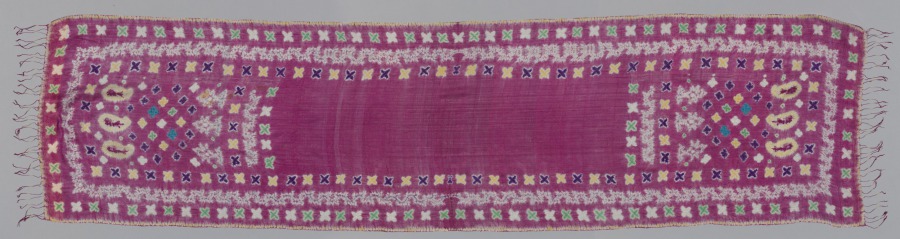
Category: Silk
The Silk Veil: An Heirloom of Imperial Craft and Modern Restraint
In the hushed ateliers of London’s Savile Row, where the language of cloth is spoken with the precision of a legal brief, the silk veil occupies a singular position. It is not merely an accessory; it is a testament to a lineage that stretches from the looms of imperial China to the disciplined shoulders of contemporary tailoring. To handle a silk veil of proper provenance is to hold a fragment of history that has been spun, dyed, and woven under the watchful eye of dynastic patronage. This artifact, ostensibly a simple square of fabric, is in fact a complex document of material culture, one that demands a nuanced reading of its physical properties and its enduring symbolic weight.
The materiality of the veil is its first and most compelling argument. Silk, unlike any other fibre, possesses a dual nature: it is at once the strongest natural filament known to man and the most delicate to the touch. This paradox is the essence of its imperial legacy. The sericulture that produced it was a state secret for millennia, guarded with the ferocity of a royal charter. The resulting cloth was not a commodity but a currency of power, a diplomatic gift that could seal alliances or signify submission. When we speak of a silk veil in the context of this heritage, we are not discussing a casual scarf. We are discussing a direct descendant of the *kesi* tapestries and the *gongjian* silks that adorned the courts of the Forbidden City. The weave itself—whether a diaphanous *gauze* or a more substantial *chiffon*—carries the memory of that imperial loom, where the tension of every warp and weft was a matter of ceremonial consequence.
From a tailoring perspective, the silk veil is a masterclass in controlled drape. Unlike the rigid structure of a worsted wool suiting, the veil offers a study in fluidity. Its behaviour is dictated by its *hand*—the tactile sensation it imparts. A high-grade mulberry silk, with its long staple fibres, will fall with a liquid grace, catching the light in a way that synthetic imitations can only approximate. The *slub* of a raw silk, conversely, introduces a textural irregularity that speaks of a more rustic, yet equally aristocratic, origin. In the Savile Row tradition, we understand that cloth is architecture for the body. The veil, however, is the exception: it is the one element that is permitted to defy structure, to move independently of the garment it accompanies. It is the counterpoint to the stiff canvas of a jacket, the soft exhale after the sharp intake of a tailored silhouette.
The historical context of imperial silk weaving is not a distant, academic concern; it is a practical influence on how we assess quality today. The imperial workshops, such as the *Jiangnan* weaving bureaus, operated under a system of exacting standards. A single flaw in the weave could result in the ruination of an entire batch and, in some eras, the punishment of the artisan. This legacy of perfectionism is encoded in the very DNA of the fabric. When a client brings a vintage silk veil to our studio for appraisal, we look for the same markers of that imperial discipline: the evenness of the twist, the absence of *slubs* in a fine *habutai*, the depth and permanence of the dye. A true imperial-grade silk will have a *scroop*—that characteristic, almost audible crunch when the fabric is compressed—that is unmistakable. It is the sound of history folding in on itself.
Yet, the silk veil’s journey from imperial court to the modern gentleman’s wardrobe is one of deliberate reinterpretation. The Victorians, with their penchant for global trade, brought these textiles to London, where they were often cut down and repurposed for cravats and pocket squares. This act of re-contextualisation was not a desecration but a translation. It took a ceremonial object and gave it a new, more intimate function. The veil became a private luxury, a secret indulgence worn close to the skin. In this, it mirrors the Savile Row philosophy: that true elegance is an internal affair, a matter of personal knowledge rather than public display. The silk veil is the ultimate insider’s garment. Its opulence is not shouted but whispered.
In contemporary practice, the silk veil serves as a bridge between the weight of heritage and the lightness of modern life. It is the finishing touch that elevates a simple ensemble of flannel and cashmere into a statement of considered taste. Its role is not to dominate but to harmonise. A well-chosen veil—perhaps in a deep, archival indigo or a muted, antique gold—can echo the lining of a bespoke jacket, creating a dialogue between the visible and the hidden. This is the essence of the London aesthetic: a profound respect for material integrity, a rigorous attention to detail, and an unwavering belief that the past is not a burden but a foundation. The silk veil, in its quiet, luxurious way, is the perfect emblem of that belief. It is a small, portable piece of imperial history, worn with the confidence of a man who knows that true authority requires no embellishment beyond the quality of his cloth.