← BACK TO ARCHIVES
Heritage-Black
Heritage Synthesis: Terracotta fragment of a closed shape
Curated on Aug 13, 2026 // Node: LDN-01
The Archaeology of Silence: Terracotta Fragments and the Architecture of Old Money Restraint
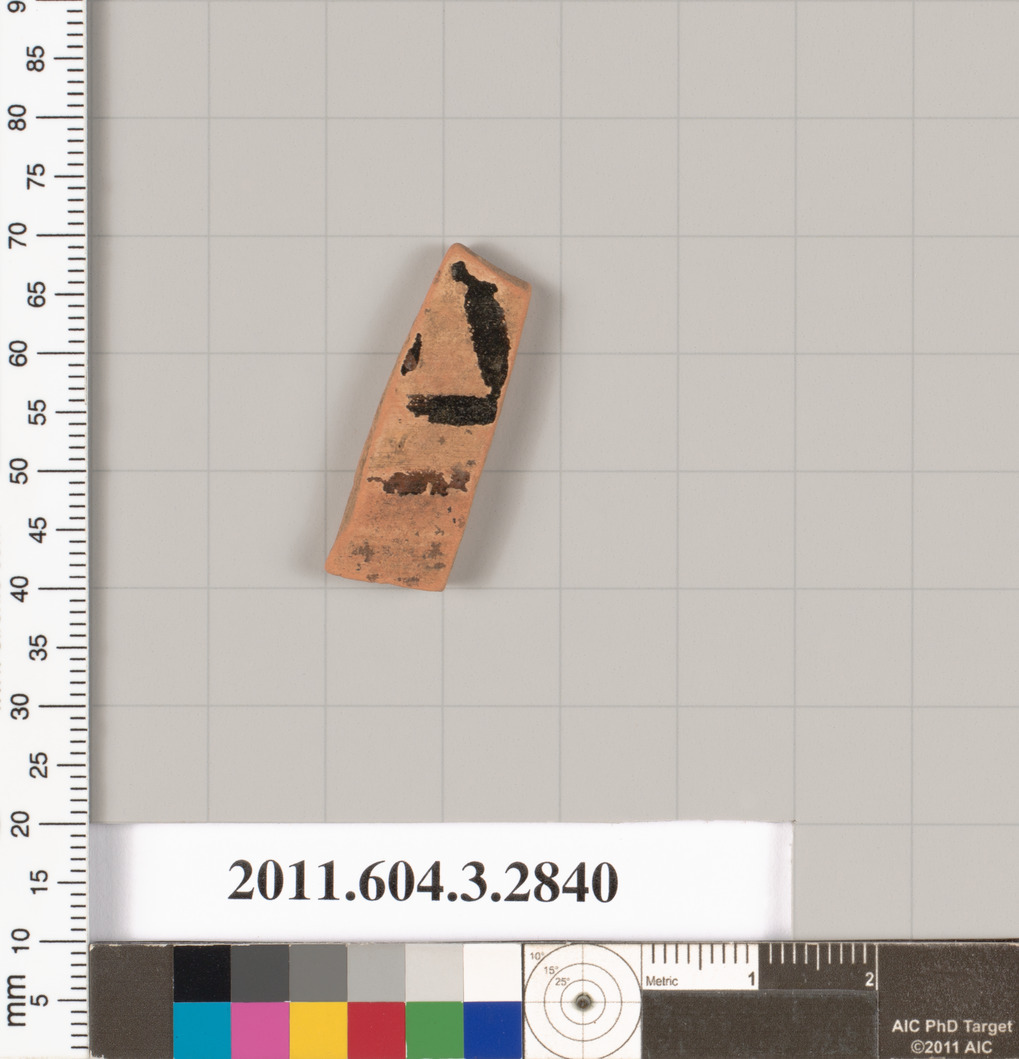
In the vast repository of Lauren Fashion Heritage Lab, we often speak of "genetic code"—the recurring aesthetic motifs that bind disparate objects across time and medium. The internal archive’s pairing of a Chinese *Mold Fragment with Musicians* and a *Mortuary Figure of the Zodiac Sign: Ox (Taurus)* has long served as our foundational meditation on transience and permanence. Yet when we place beside them the museum artifact—a **Terracotta fragment of a closed shape (Greek, Attic)**—a third, more austere dimension emerges. This Greek shard, broken from a vessel that once held oil, wine, or ash, does not depict musicians or zodiacal beasts. It is, in its surviving state, a study in pure negative space: a curve of fired earth, a hint of black-figure glaze, an absence of narrative. It is precisely this *silence* that speaks most profoundly to the 2026 Old Money silhouette.
The Fragment as a Moral Imperative
The Attic terracotta fragment operates on a principle that the Old Money aesthetic has long intuited but rarely articulated: **completion is a vulgarity**. Where the Chinese mold fragment uses its broken edges to invite auditory imagination, and the zodiac ox uses its solid mass to anchor cosmic order, the Greek shard refuses both sensuality and metaphysics. It is simply *there*—a remnant of a utilitarian object, its beauty contingent not on what it shows but on what it withholds. In 2026, as the fashion cycle accelerates toward ever-louder digital spectacle, the Old Money silhouette must respond with a counter-argument: the power of the unfinished, the elegance of the withheld.
This is not minimalism as a stylistic choice; it is minimalism as an ethical stance. The 2026 silhouette, informed by this terracotta, rejects the "complete look" in favor of the *suggested form*. Consider the jacket: not a sharply tailored, fully canvassed construction that announces its structure, but a softly draped, partially unstructured piece whose shoulder seam disappears into the sleeve—a deliberate "fragment" of tailoring. The trouser: not a crisp, creased line, but a silhouette that breaks at the ankle, as if the garment itself acknowledges its own incompleteness. The terracotta’s broken rim becomes a design principle: **edges are not finished; they are released**.
The Material Logic of Fired Earth
Terracotta—literally "baked earth"—is the humblest of materials, yet the Attic fragment’s survival across millennia grants it a paradoxical nobility. The clay was once wet, malleable, and utterly perishable; fire transformed it into a substance that outlasts empires. This alchemy mirrors the Old Money relationship with luxury: not the ostentatious display of new wealth, but the quiet endurance of materials that have been *tested*. For 2026, this translates into a renewed commitment to heritage fibers processed with ancient rigor—undyed wool, unbleached linen, and, most critically, **unfinished edges** that mimic the terracotta’s fracture lines.
The 2026 Old Money silhouette will not be constructed from fabrics that scream newness. Instead, it will favor cloth that carries the memory of its own making: slubs in the silk, irregularities in the cashmere, a slight unevenness in the twill that suggests hand-looming. These are not flaws; they are the *fragments* of the textile’s biography. The Greek shard’s surface, once smooth and glazed, now bears the patina of burial and excavation. Similarly, the 2026 garment should look as though it has already lived—not through artificial distressing, but through the honest wear of repeated use. The Old Money client does not buy a coat; she inherits it, even if she is the first owner.
Negative Space as Social Currency
The Attic fragment’s most radical lesson is its **refusal to narrate**. Unlike the Chinese mold’s musicians or the zodiac ox’s celestial symbolism, this shard tells no story. It is a closed shape—a belly, a shoulder, a curve—that once held something now gone. In the context of 2026, this translates into a silhouette that prioritizes *volume without content*. The Old Money aesthetic has always understood that true status is expressed not through what one displays, but through what one can afford to omit. The terracotta fragment is the ultimate expression of this: a vessel that no longer contains, a form that no longer functions, yet commands more reverence than any intact pot.
For the 2026 collection, this means designing garments that create *architectural voids*. A cape that falls from the shoulder without closure, leaving the body’s interior unseen; a skirt that wraps but does not fasten, suggesting a form it never reveals; a coat whose lining is deliberately absent, exposing the raw seam construction like the terracotta’s exposed clay body. These are not provocative deconstructions in the Rei Kawakubo sense; they are *quiet erasures*. The wearer does not invite scrutiny; she deflects it. The garment’s incompleteness is a form of armor—it says, "I do not need to prove my worth through completeness."
The Dialectics of Fire and Ash
Returning to the internal archive’s dialectic: the Chinese mold fragment preserves the *joy* of music; the zodiac ox confronts the *finality* of death. The Greek terracotta, however, sits between these poles—it is neither celebratory nor funerary, but simply *residual*. It is what remains after both the performance and the burial. This is the deepest resonance for 2026 Old Money: a fashion that acknowledges its own mortality. The silhouette is not designed for the Instagram moment or the runway flash; it is designed for the *longue durée*—for the secondhand market, the archive, the museum. The 2026 Old Money garment is a fragment of a future artifact, already aware that it will one day be broken, faded, and studied.
In practical terms, this yields a color palette drawn from the terracotta’s oxidized iron tones: burnt sienna, ochre, umber, and the deep black of Greek glaze. These are not "trend colors"; they are geological strata. The silhouette itself—broad at the shoulder, narrowing through the torso, flaring slightly at the hem—echoes the closed shape of the Attic vessel. It is a form that suggests containment, but its broken edges remind us that containment is always temporary.
Conclusion: The Generosity of Absence
The Attic terracotta fragment teaches us that beauty does not require wholeness. It is generous in its silence, offering the viewer the freedom to imagine what the vessel once held—oil for the athlete, wine for the symposium, ash for the dead. The 2026 Old Money silhouette, informed by this artifact, must similarly offer the wearer and observer the freedom of interpretation. It must be a *closed shape* that invites opening, a *fragment* that implies completion, a *silence* that resonates louder than any pattern or embellishment.
As we translate this ancient shard into contemporary dress, we do not replicate its form; we absorb its ethos. The 2026 Old Money garment is not a costume or a tribute; it is a *continuation* of the terracotta’s geological patience. It will outlast trends because it never fully participates in them. It will remain relevant because it never fully reveals itself. And in a world increasingly defined by noise, it will stand as a monument to the enduring power of what is left unsaid—and unworn.
Heritage Lab Insight
Genetic Bridge: Archive node focusing on Heritage-Black craftsmanship.