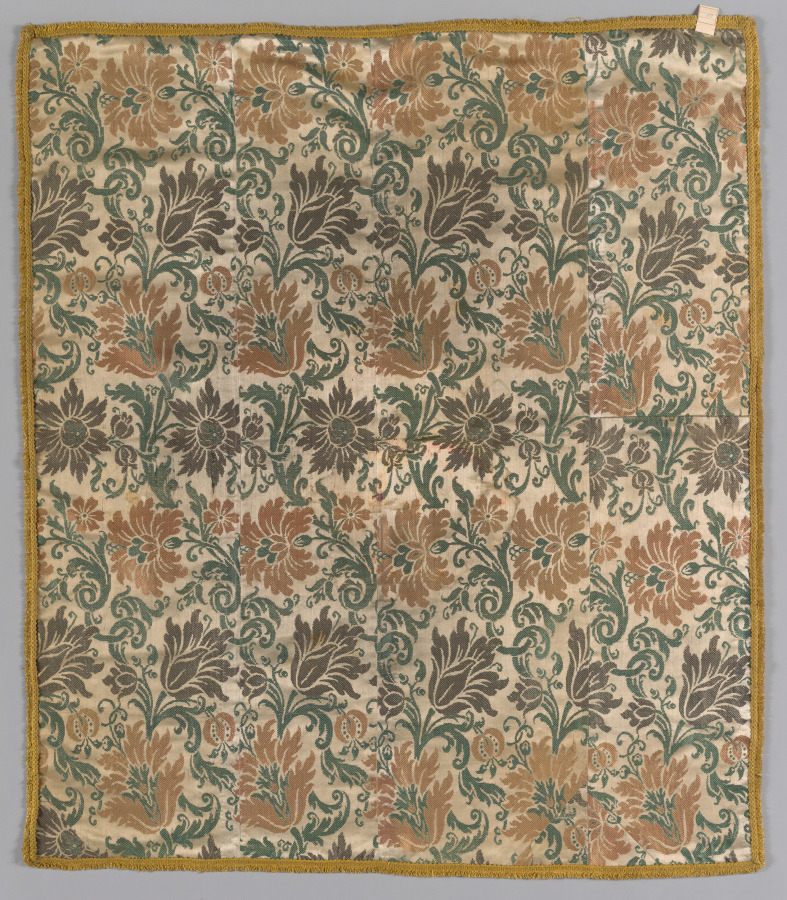
On the Material Supremacy of Imperial Silk
To consider silk is to engage with a material that has, for millennia, defined the very parameters of luxury, power, and cultural sophistication. It is not merely a textile; it is a testament to human ingenuity, a currency of empires, and the most eloquent of non-verbal communicators. Its legacy, particularly within the context of imperial weaving, establishes a standard of materiality against which all other luxuries are, consciously or not, measured. This examination concerns itself with that legacy—a confluence of biological marvel, technical mastery, and symbolic language, woven into a substance of unparalleled authority.
The Biological Imperative: A Filament of Singular Perfection
One must begin, as all serious considerations of provenance must, with the raw material. The silk filament, a continuous protein fibre extruded by the Bombyx mori silkworm, remains nature’s most extraordinary concession to the weaver’s art. Its triangular prism-like structure refracts light, granting silk its characteristic, depth-laden lustre—a subdued glow rather than a vulgar shine. Its tensile strength, remarkable for a fibre of such fineness, belies a supple hand and a graceful drape that conforms to the body without collapsing upon itself. This inherent contradiction—strength with softness, brilliance with subtlety—is the foundational virtue upon which imperial workshops built their lexicon. It is a material that commands respect in its raw state, demanding processes of handling, dyeing, and weaving that are as meticulous as they are time-honoured.
The Imperial Atelier: Where Protocol Meets the Loom
The imperial context—be it the Byzantine gynaeceum, the Ming Dynasty weaving bureaus of Suzhou and Hangzhou, or the French royal manufactories at Lyon—transformed this superb biological product into an instrument of state. Here, silk ceased to be a simple commodity and became a regulated, codified medium of power. Patterns were not mere decoration; they were heraldic, cosmological, and strictly hierarchical. The five-clawed dragon (long) was reserved for the Son of Heaven; the intricate palmette and ogival patterns of Byzantine samite conveyed a specific imperial theology; the fleur-de-lis on French brocade left no doubt as to the wearer’s divine sanction.
The workshops themselves were marvels of pre-industrial specialization and quality control. Draw-loom weaving, a complex and labour-intensive technique requiring a master weaver and a draw-boy, allowed for the creation of vast, seamless repeats of staggering complexity. The introduction of supplementary wefts of gold and silver thread—often real metal wound around a silk core—added a dimension of literal and metaphorical weight, capturing light in a manner that declared the wearer as a source of illumination. This was not fashion; it was a strategic deployment of splendour, a soft armour designed to overawe and legitimize.
The Grammar of Distinction: Pattern, Colour, and Hand
The language spoken by these textiles was precise and required fluency to interpret. Consider the kesi (silk tapestry) technique of the Song and Ming dynasties. Mimicking the brushed ink of scholarly painting, its discontinuous wefts created pictorial scenes of such refinement that they were considered fit for imperial robes and wall hangings of the highest order. The technique declared a conquest of the loom, a transcendence of the grid to achieve painterly subtlety.
Colour, too, was sovereign. The pursuit of fast, vivid dyes—the crimson from kermes insects, the profound purple from molluscs, the imperial yellow reserved for the Chinese emperor—was a state-sponsored scientific endeavour. A robe’s colour was its first and most immediate statement, readable across a throne room or a processional route. The hand, or tactile quality, of the finished cloth was the ultimate proof of mastery. A heavy damask, with its reversible play of matte and shine, conveyed solidity and permanence. A weightless, gauze-weave leno silk, often embroidered, spoke of ethereal grace and immense wealth—the ability to afford a fabric that offered scant protection but supreme beauty.
The Enduring Benchmark
The legacy of imperial silk weaving is not confined to museums, though its finest examples rightly reside there as benchmarks of human achievement. Its principles inform the contemporary understanding of true luxury in cloth. The Savile Row cutter, for instance, understands that the roll of a lapel, the fall of a trouser leg, and the structure of a chest piece are profoundly dictated by the intrinsic character of the cloth. A superior silk, with its innate body and resilience, will perform these tasks with an authority that lesser materials cannot counterfeit.
This heritage teaches that authentic luxury is a product of integrity—integrity of material, integrity of process, and integrity of purpose. The imperial workshops did not cut corners; they understood that the value was inextricably linked to the rigour of creation. In an age of rapid consumption and synthetic imitation, the silent testimony of a length of historic brocade or a fragment of antique damask reminds us that some standards are eternal. The whisper of silk, when it is of this calibre, will always carry the weight of empires, the diligence of countless unnamed hands, and the unassailable confidence of perfection achieved. It remains, quite simply, the sovereign of textiles.