← BACK TO ARCHIVES
Heritage-Black
Heritage Synthesis: Terracotta fragment of a kylix (drinking cup)
Curated on Aug 13, 2026 // Node: LDN-01
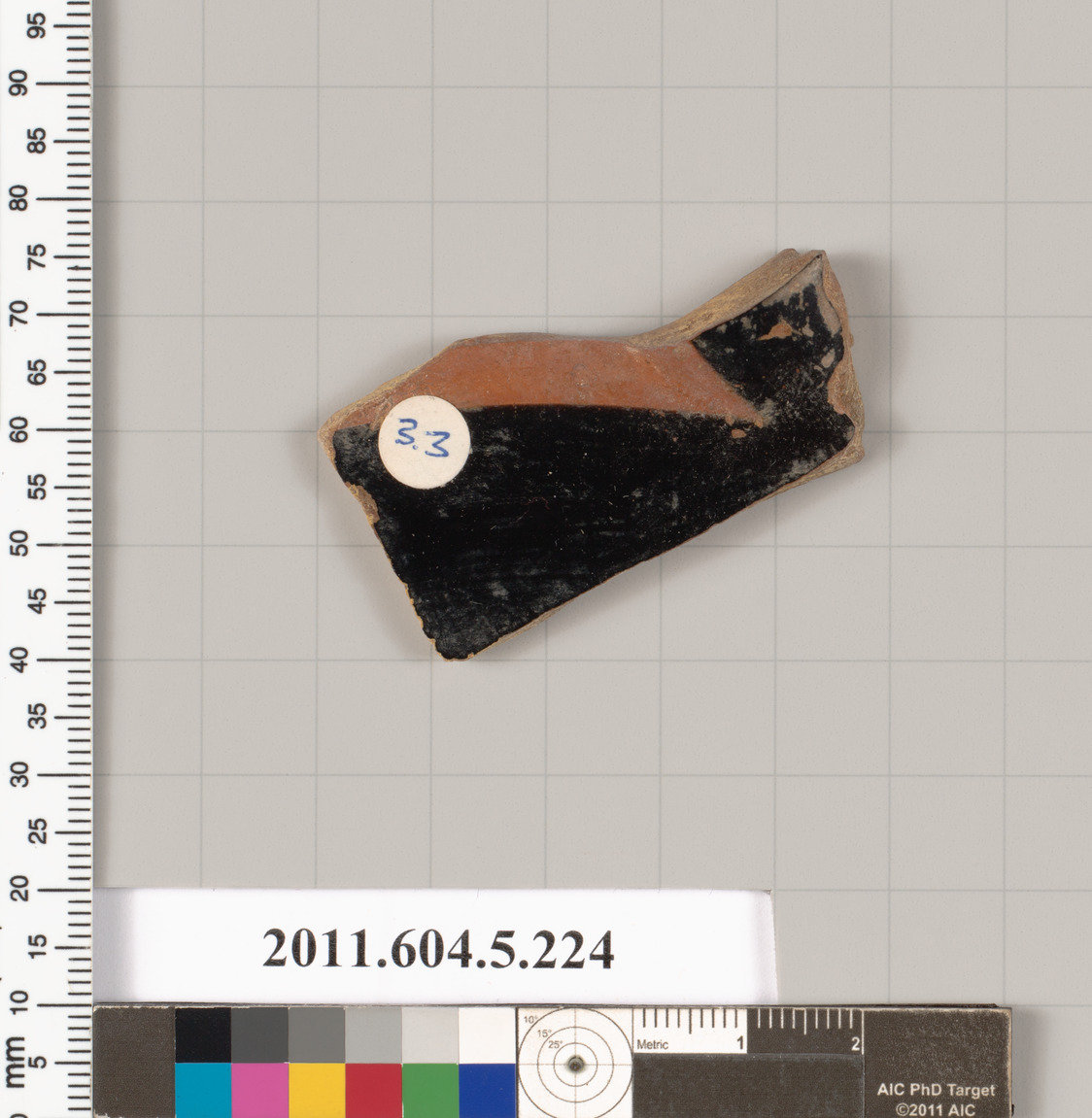
The Terracotta Kylix and the Architecture of Quiet Power: Re-Reading Greek Symposia for the 2026 Old Money Silhouette
The internal genetic code of Lauren Fashion—that dialogue between a Ming dynasty carved lacquer box and Caravaggio’s *The Musicians*—reveals a profound truth: the most enduring aesthetics are those that negotiate between tactile intimacy and theatrical presence, between linear narrative and frozen instant. This dialectic finds an unexpected, yet remarkably fertile, third term in a humble terracotta fragment of an Attic kylix (drinking cup) from classical Greece. At first glance, a broken shard of fired clay, painted with the black-figure or red-figure scenes of a symposium, seems worlds apart from the silk-weighed opulence of Old Money tailoring. Yet, as this paper will argue, the terracotta kylix is not merely an archaeological curiosity; it is a foundational architectural blueprint for the 2026 Old Money silhouette. Its material logic, its social function, and its visual program offer a lexicon of restraint, structural integrity, and performative discretion that directly informs the way we conceptualize heritage dressing for the coming year.
I. The Material Logic of Restraint: From Fired Earth to Fluid Wool
The kylix is, fundamentally, an object of controlled contingency. Its terracotta body—a composite of clay, water, and fire—is a study in elemental economy. Unlike the Ming lacquer box’s opulent accumulation of hundreds of resinous layers, or Caravaggio’s sumptuous impasto of oil and pigment, the kylix achieves its aesthetic through reduction and precision. The potter’s wheel and the kiln’s heat impose a strict discipline on the material; there is no room for excess. This ethos of *material restraint* is the first and most critical lesson for the 2026 Old Money silhouette. In an era of digital excess and fast-fashion noise, the Old Money aesthetic pivots away from overt display and toward the quiet authority of *fabric integrity*. The 2026 silhouette will not be defined by novelty of cut, but by the *gravitas* of its cloth. Think of a double-faced cashmere overcoat, whose weight and drape are its only ornamentation. Think of a worsted wool suit, woven so tightly that it holds a crease like a fired ceramic holds its form. The terracotta fragment teaches us that true luxury is not in the addition of material, but in the *mastery* of it—in the ability of a single, well-sourced fiber to carry the entire narrative of a garment, just as a single shard of clay can carry the entire narrative of a symposium.
II. The Symposium and the Social Silhouette: Dressing for the Reclined Gaze
The kylix’s function was inherently social and spatial. It was the vessel of the symposium—the Greek drinking party—where men reclined on couches, engaged in philosophical discourse, poetry, and music. The cup was designed to be held, passed, and examined from a reclined position. Its wide, shallow bowl and twin horizontal handles were ergonomically engineered for the *lateral gaze*. The painted scenes on its interior and exterior were not meant to be viewed head-on, like a Caravaggio altarpiece, but rather to be *discovered* through rotation, tilt, and the slow, deliberate gestures of pouring and drinking. This is a profoundly different mode of spectatorship than the theatrical, frontal confrontation of Baroque painting. It is a *haptic*, participatory viewing that unfolds in time and social space.
This directly informs the 2026 Old Money silhouette’s approach to *shoulder and sleeve architecture*. The contemporary suit jacket, in its most heritage-informed iteration, is not designed for the frontal, static pose of a boardroom portrait. Instead, it is cut for movement—for the reach across a table, the lean into a conversation, the subtle shift of weight while standing. The 2026 silhouette will therefore emphasize a *softly extended shoulder* and a *sleeve head with a gentle, rolled ease*, allowing for a full range of motion without sacrificing structure. This is the sartorial equivalent of the kylix’s handles: an invitation to engage, to move, to participate. The jacket becomes a vessel for social grace, not a carapace of status. The internal canvas and pad-stitching, much like the terracotta’s fired walls, provide an invisible architecture that supports the garment’s form while allowing it to yield to the body’s narrative.
III. The Black-Figure Aesthetic: Monochrome as a Language of Distinction
The most iconic kylikes are decorated in the black-figure or red-figure technique, where the contrast between the deep, glossy black of the slip and the warm, oxidized orange of the terracotta body creates a striking, two-tone visual language. This is not a palette of exuberance, but of *dialectical clarity*. The figures are rendered in silhouette, their contours defined by the negative space of the clay. This is a profound metaphor for the Old Money color philosophy. The 2026 palette will be dominated by what we might call *archaeological neutrals*: the deep, carbon black of the fired slip; the warm, burnt sienna of the clay body; the chalky white of the ground; and the muted bronze of aged metalwork. These are not the bright, saturated tones of contemporary fashion, but the *aged, patinated tones of heritage*. A charcoal flannel suit, a camel hair polo coat, a cream silk shirt—these are the modern equivalents of the kylix’s binary palette. They create a visual hierarchy through *tone and texture* rather than through color. The interplay between a matte wool and a polished leather, between a brushed cashmere and a smooth silk twill, echoes the dialogue between the kylix’s matte clay and its glossy slip. This is a language of distinction that speaks to those who understand the subtle grammar of *quiet luxury*—a grammar that is legible not to the masses, but to the discerning eye.
IV. The Fragment as a Design Principle: Curated Imperfection and the 2026 Garment
Finally, the terracotta fragment itself—broken, incomplete, yet utterly evocative—offers a radical design principle for 2026. The fragment is not a failure; it is a *synecdoche*, a part that stands for the whole. It invites the viewer to complete the narrative, to imagine the full cup, the full symposium, the full social world from which it was torn. This is the essence of *heritage dressing*: the garment as a fragment of a larger, imagined lineage. The 2026 Old Money silhouette will embrace this principle through *deliberate, subtle imperfections* that suggest a history of wear and inheritance. This is not the manufactured distress of fast fashion, but the *authentic patina of time*. A slightly faded herringbone tweed, a hand-rolled lapel that is not perfectly uniform, a mother-of-pearl button that has mellowed to a soft, iridescent glow—these are the sartorial equivalents of the kylix’s broken edge. They signal that the garment is not a new acquisition, but a *living heirloom*, a fragment of a family’s or an individual’s ongoing story. The 2026 silhouette will be designed to *age gracefully*, to develop a patina that enhances its value, much like the fired clay of the kylix, which has survived millennia to tell its story.
Conclusion: A Shared Symphony of Restraint and Narrative
In conclusion, the terracotta kylix, when placed in dialogue with the Ming lacquer box and Caravaggio’s canvas, reveals a unified theory of heritage aesthetics. The lacquer box offers the *tactile depth* of layered time; the Caravaggio offers the *theatrical power* of the frozen moment; the kylix offers the *structural economy* of the social vessel. For the 2026 Old Money silhouette, the kylix is the most instructive of the three. It reminds us that true elegance is not about spectacle, but about *function, material integrity, and social grace*. It teaches us to build garments that are *vessels for living*, not displays for viewing. It instructs us to use color with the restraint of a black-figure painter, and to embrace the fragmentary, imperfect, and deeply human quality of a well-worn, well-loved garment. The 2026 silhouette, therefore, is not a new invention, but a *re-excavation*—a return to the foundational principles of cut, cloth, and comportment that have defined quiet power for millennia. It is a symphony played not on instruments of gold, but on the enduring, resonant clay of our shared cultural memory.
Heritage Lab Insight
Genetic Bridge: Archive node focusing on Heritage-Black craftsmanship.