← BACK TO ARCHIVES
Heritage-Black
Heritage Synthesis: Terracotta rim fragments of kylikes (drinking cups)
Curated on Aug 13, 2026 // Node: LDN-01
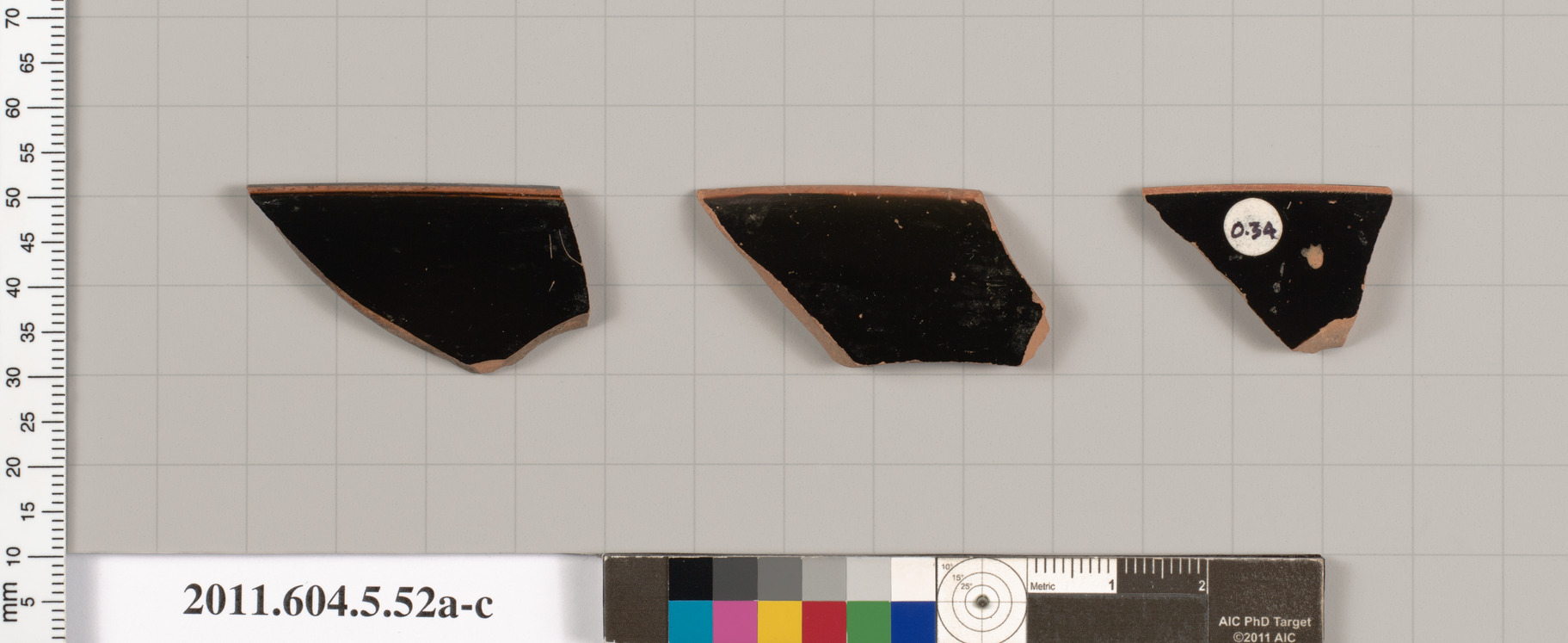
The Archaeology of Restraint: Attic Kylix Fragments and the 2026 Old Money Silhouette
The terracotta rim fragments of Attic kylikes—those shallow, two-handled drinking cups that animated the symposia of classical Athens—arrive in the Lauren Fashion Heritage Lab as more than ceramic debris. They are tectonic plates of aesthetic memory, carrying within their broken curves a grammar of stillness that speaks directly to the 2026 Old Money silhouette. To hold these fragments is to hold a paradox: the kylix was an instrument of convivial excess, yet its surviving shards exude an almost monastic severity. This tension—between the vessel’s original function as a conduit for wine-fueled discourse and its present state as a mute, fractured object—mirrors the very logic of heritage dressing. The Old Money aesthetic does not celebrate abundance; it disciplines it. And in these terracotta rims, we find the blueprint for that discipline.
I. The Kylix as a Study in Negative Space
The Attic kylix, at its height in the sixth and fifth centuries BCE, was a marvel of engineered elegance. Its broad, shallow bowl was designed not for storage but for performance—the drinker reclined, lifted the cup by its horizontal handles, and tilted the rim to the lips. The rim fragments we examine here, fired in the characteristic orange-red terracotta of Attic clay, reveal a profile of extraordinary refinement: a thin, rolled lip that flares outward with mathematical precision, then tapers into a wall so delicate it seems to defy its own materiality. The black-figure or red-figure decoration, now largely lost to time, would have occupied the tondo and the exterior bands, but the rim itself remained unadorned—a deliberate act of restraint.
This restraint is the first lesson for 2026. The Old Money silhouette, as it evolves from the current vogue for oversized tailoring and logo-laden luxury, must rediscover the power of the unadorned edge. Just as the kylix rim does not compete with the painted scenes below it, the lapel of a heritage blazer should not shout. The 2026 silhouette will be defined by what it refuses to add: no superfluous pockets, no decorative stitching, no metallic hardware. The line itself—clean, continuous, and quietly authoritative—becomes the luxury. The kylix teaches us that the edge is not a boundary but a statement of confidence. A garment that knows its own geometry does not need embellishment.
II. The Sympotic Body and the Architecture of Posture
The kylix was not merely an object; it was an instrument of bodily discipline. To drink from it correctly, one had to recline at a specific angle, extend the arm with controlled grace, and tilt the head without spilling. The symposium—that quintessentially Athenian institution of philosophical debate and social bonding—demanded a choreography of the body that was as rigorous as any military drill. The cup’s design, with its low center of gravity and wide mouth, punished clumsiness and rewarded poise. In this sense, the kylix was a wearable technology, shaping the posture of its user as surely as a corset or a tailored suit.
For 2026, this translates into a renewed emphasis on construction that disciplines the wearer. The Old Money silhouette is not about comfort in the modern, slouched sense; it is about ease within structure. Think of a double-faced cashmere overcoat with a high, firm armhole that encourages an upright carriage. Think of a wool trouser with a precise, slightly tapered fall that elongates the leg and demands a deliberate stride. The kylix fragments remind us that heritage garments are not passive coverings but active agents of comportment. The 2026 collection should be designed so that the moment one puts it on, one stands taller, moves more slowly, and speaks with greater deliberation. The garment becomes a symposium in itself—a space where the body is invited to perform its best self.
III. Terracotta’s Chromatic Wisdom and the New Neutrality
The color of these fragments—that deep, oxidized orange-red that the Greeks called *keramos*—is not a color we typically associate with Old Money wardrobes. Yet its presence in this analysis is instructive. Terracotta is the color of the earth from which it was pulled, fired into permanence by human ingenuity. It is neither the stark white of marble nor the gilded opulence of imperial Rome. It is a humble, grounded hue that speaks of process, of the kiln’s heat, of the potter’s wheel. In the 2026 palette, we must introduce what I term “terracotta neutrals”—not the literal orange, but its tonal descendants: burnt sienna, deep clay, faded brick, and the warm taupe of unglazed ceramic.
These colors function as the visual equivalent of the kylix rim: they ground the silhouette, providing a quiet counterpoint to the more assertive shades of navy, charcoal, and forest green that dominate heritage dressing. A 2026 Old Money ensemble might pair a cream silk blouse with a terracotta-toned wool blazer, or a camel overcoat with a clay-colored turtleneck. The effect is not rustic but archaeological—as if the garment had been excavated from a stratum of refined history. This chromatic strategy aligns with the internal genetic code of our Liru archives, which repeatedly returns to the notion of “物性时间” (material time): the idea that objects carry within them the duration of their making. Terracotta neutrals evoke the slow, patient labor of the earth, and by extension, the slow, patient construction of a heritage wardrobe.
IV. The Dialectic of Fragmentation and Wholeness
The kylix fragments are, of course, broken. They are remnants of a whole that no longer exists. Yet in their fragmentation, they acquire a new kind of authority—the authority of the archaeological, the patina of time’s passage. This is the deepest resonance with the 2026 Old Money silhouette. The heritage aesthetic does not seek perfection; it seeks the *impression* of perfection that has been weathered by use. A 2026 garment should look as if it has been worn for decades, even when it is brand new. This is achieved not through artificial distressing—that would be a vulgar counterfeit—but through the selection of materials and cuts that age gracefully. A vicuña coat that drapes with increasing fluidity over time. A silk twill scarf whose edges soften and curl with wear. A leather belt that develops a rich, uneven patina.
The kylix fragments also teach us about the ethics of repair. In classical antiquity, broken vessels were sometimes mended with lead staples—a practice that did not hide the damage but honored it. The 2026 collection should embrace this philosophy of visible mending. A herringbone tweed jacket with a subtly reinforced elbow patch. A cashmere sweater with a meticulously darned cuff. These are not flaws; they are narratives. They say: this garment has lived, and it will live longer. In a culture of fast fashion and disposable luxury, the Old Money silhouette stands as a counter-movement—a commitment to objects that accumulate meaning rather than discard it.
V. Conclusion: The Cup as a Mirror of the Self
The Attic kylix was, in its final function, a mirror. The drinker saw not only the wine but, in the reflective surface of the black glaze, a distorted image of their own face. The terracotta fragments we now study offer a similar reflection to the designer of 2026. They ask: What do we choose to carry forward from the past? The answer, for Lauren Fashion Heritage Lab, is a silhouette of disciplined ease—a silhouette that borrows the kylix’s architectural clarity, its chromatic humility, and its acceptance of time’s erosions. The 2026 Old Money look will not be a costume of aristocracy but a meditation on permanence. It will clothe the body in the same way the kylix framed the symposium: not as a display of wealth, but as a stage for the quiet drama of being. In the words of our internal code, the vessel’s silence is its dignity. Let our garments speak in that same silence, and let the wearer find, in that silence, the freedom to be both finite and eternal.
Heritage Lab Insight
Genetic Bridge: Archive node focusing on Heritage-Black craftsmanship.