← BACK TO ARCHIVES
Heritage-Black
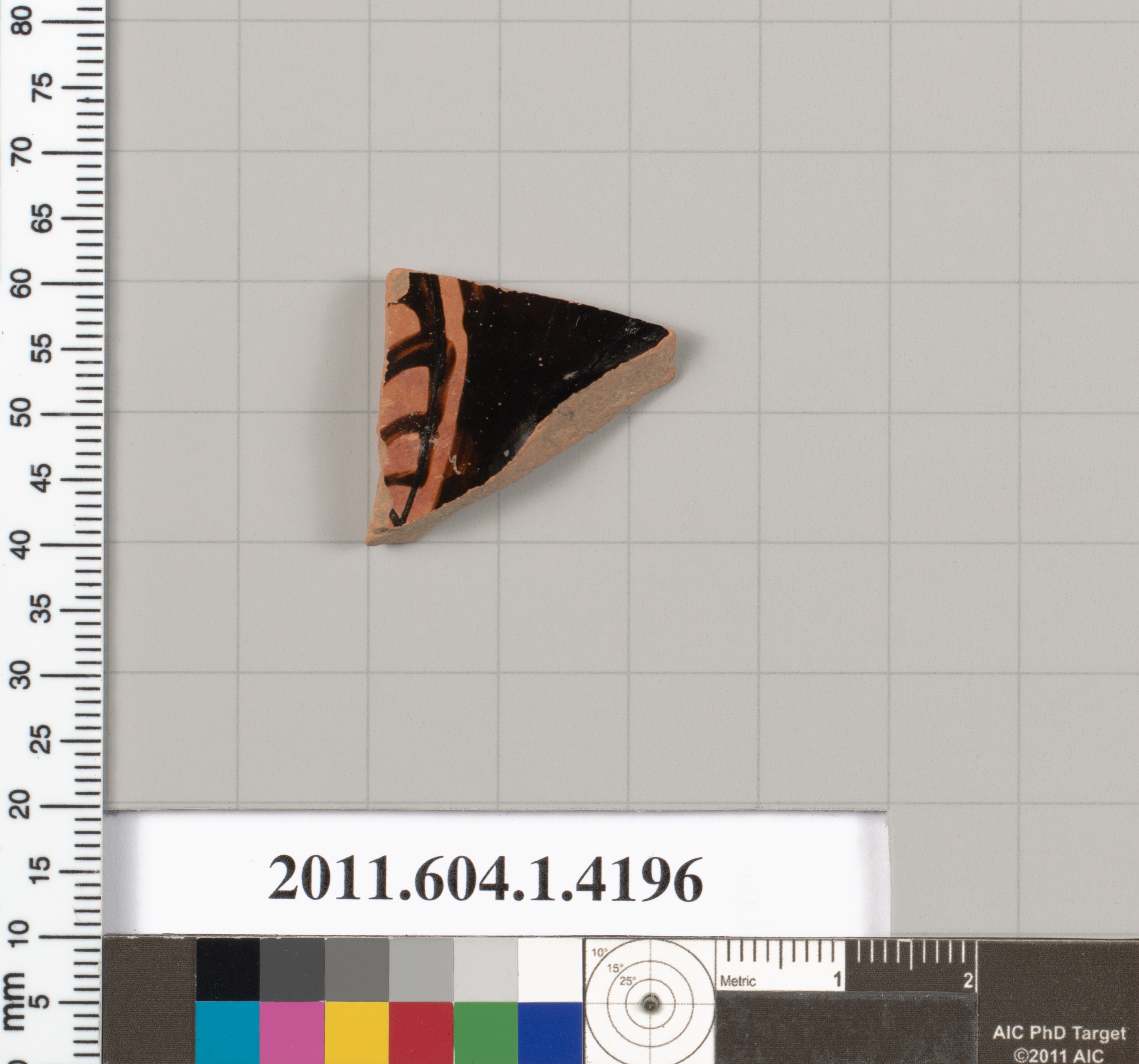
Heritage Synthesis: Terracotta fragment of a kylix (drinking cup)
Curated on Aug 14, 2026 // Node: LDN-01
The Terracotta Kylix and the Architecture of Restraint: Informing the 2026 Old Money Silhouette
The internal genetic code of Lauren Fashion—that dialectical tension between *filled overflow* and *empty invitation*—finds an unexpected, yet profoundly apt, material interlocutor in the Attic terracotta kylix fragment. At first glance, a broken shard of a Greek drinking cup seems remote from the theological weight of a *Christ Bearing the Cross* or the meditative void of a *Roundback Armchair: Lohan Type*. Yet, when read through the lens of our heritage, this fragment is not merely an archaeological relic; it is a masterclass in the very principles that underwrite the 2026 Old Money silhouette: the poetics of imperfection, the authority of negative space, and the quiet luxury of a form that has endured.
I. The Fragment as a Carrier of Time: Wabi-Sabi in the Western Canon
The kylix fragment, like the weathered surface of the *Christ Bearing the Cross*, is a testament to time’s transformative agency. Its broken edges are not failures of craft but the *patina of narrative*. In the context of Old Money aesthetics—which has always privileged inheritance over acquisition—this fragment embodies the crucial distinction between *newness* and *renewal*. The 2026 silhouette cannot be a pristine, untouched form; it must carry the memory of its own construction, the subtle evidence of a hand that shaped it, and the passage of seasons that have softened its original intent.
This is where the kylix fragment directly informs our cut. The Greek symposion, where such cups were used, was a ritual of measured excess—a space where the body reclined, where wine was diluted, and where discourse was the true currency. The kylix’s shallow, wide bowl was designed for the reclining posture, not the upright stance. For the 2026 Old Money silhouette, this translates into a radical rethinking of the shoulder and the torso. We are not designing for the rigid, armored power suit of the 1980s, nor the minimalist sheath of the 1990s. Instead, we are designing for the *reclining attitude*—a posture of ease that does not slouch but *reposes*. The jacket’s shoulder line, therefore, softens into a slight, almost imperceptible drop, echoing the kylix’s rim. The lapel, instead of a sharp notch, adopts a gentler, rolled curve that mimics the cup’s continuous, unbroken circumference. The body of the garment is cut with a subtle *drape* that allows the fabric to fall in a manner reminiscent of the kylix’s tondo—the central, often decorated, interior. This is not a silhouette of assertion but one of *containment* and *poised availability*.
II. The Tondo and the Lohan Void: Negative Space as Luxury
The most profound dialogue, however, occurs between the kylix’s interior tondo and the *Roundback Armchair: Lohan Type*. The tondo, a circular painted scene, is the focal point of the cup, visible only when the wine is drained. It is a hidden world, a moment of revelation contingent upon the completion of a ritual. This is the *empty invitation* made tangible. The 2026 Old Money silhouette borrows this principle not through literal circular motifs, but through the strategic deployment of *interior space*.
Consider the construction of a double-faced cashmere overcoat. Its exterior is a study in monochromatic restraint—a deep, undyed black or a weathered charcoal, reminiscent of the kylix’s black-glaze. But the interior, the lining, is where the tondo resides. Here, we place a hidden pattern: a jacquard weave that references the Greek meander, but reinterpreted with the organic, asymmetrical rhythm of the Lohan chair’s curve. This is not for the public eye; it is for the wearer alone, a private luxury that echoes the symposiast’s solitary glimpse of the painted tondo. The silhouette itself, then, is defined by what it *does not* do. It does not cinch at the waist (no kylix stem), it does not flare at the hem (no kylix foot). Instead, it falls in a continuous, columnar line, creating a *void* within the garment that the body inhabits. This is the Lohan principle: the garment as a *prepared emptiness*, a space that does not cling to the body but allows the body to exist as the *absent presence* that gives the form its meaning.
III. The Dynamics of Weight: From Christ’s Burden to the Kylix’s Balance
The *Christ Bearing the Cross* presents a sacredness born of *filled overflow*—the body contorted under weight, the drapery heavy with sorrow. The kylix, in contrast, is a study in *weightlessness achieved through balance*. Its two handles, often broken off in fragments like ours, were designed for a single finger to hold the cup by its stem, allowing the bowl to swing freely. This is a profound engineering of *counterpoint*: the weight of the wine is countered by the lightness of the stem; the fullness of the bowl is balanced by the emptiness of the handles.
For the 2026 silhouette, this informs our approach to fabric weight and garment construction. We reject the *heavy* as a signifier of luxury. Instead, we seek *density without mass*. A wool crepe, for instance, is chosen not for its thickness but for its *drape and recovery*—its ability to fall and then return to its original line, much like the kylix’s swing. The trousers are cut with a slight taper, echoing the kylix’s stem, while the jacket’s vent—a deep, single vent—acts as the handle, providing a point of visual and functional release. The overall effect is a silhouette that feels *buoyant* even in its most structured forms. This is the Old Money paradox: to appear effortless is to have mastered the physics of balance. The wearer does not carry the garment; the garment is *suspended* around them, a modern-day kylix poised for the ritual of daily life.
IV. The Threshold of the Broken: Imperfection as the Ultimate Status Marker
Finally, the fragment itself—its broken state—offers the most radical directive for 2026. In a culture obsessed with the seamless and the perfect, the Old Money aesthetic has always found its power in the *slightly undone*: a frayed cuff, a faded dye, a re-stitched seam. The terracotta fragment legitimizes this instinct. It is not a ruin; it is a *threshold*. It marks the point where the object transitions from functional vessel to symbolic artifact. The 2026 silhouette must therefore incorporate this *threshold logic*.
We achieve this through deliberate *finishing techniques* that mimic the fragment’s edge. A hem is not machine-stitched but hand-felled, with the slight irregularity of human labor. A buttonhole is cut and bound in a contrasting, slightly darker thread, drawing the eye to the point of *stress*—the place where the garment, like the kylix, might break. This is not deconstruction for its own sake; it is the acknowledgment that true luxury is not about resisting time but about *negotiating* with it. The garment, like the fragment, becomes a *carrier of memory*, a physical testament to the wearer’s own history. It is the *filled overflow* of personal narrative, balanced against the *empty invitation* of future possibility.
Conclusion: The Eternal Tension
The terracotta kylix fragment, in its silent, broken dignity, synthesizes the dialectic of our internal code. It is neither the heavy, suffering body of Christ nor the empty, waiting chair of the Lohan. It is the *cup*—the vessel that holds the potential for both. It is the form that, in its incompleteness, completes the ritual. For the 2026 Old Money silhouette, this means a departure from the literal and a return to the *essential*. We are not designing clothes; we are designing *vessels for presence*. The silhouette is a fragment of a larger, unspoken narrative—a shoulder that suggests a gesture, a drape that hints at a movement, a void that awaits a life. It is in this eternal tension between the filled and the empty, the heavy and the light, the broken and the whole, that our heritage finds its most potent expression. The kylix, like the cross and the chair, is not an object of the past but a *blueprint for the future*—a future where luxury is measured not by what is seen, but by what is *felt* in the space between the fabric and the soul.
Heritage Lab Insight
Genetic Bridge: Archive node focusing on Heritage-Black craftsmanship.