← BACK TO ARCHIVES
Heritage-Black
Heritage Synthesis: Terracotta fragment of a kylix (drinking cup)
Curated on Aug 15, 2026 // Node: LDN-01
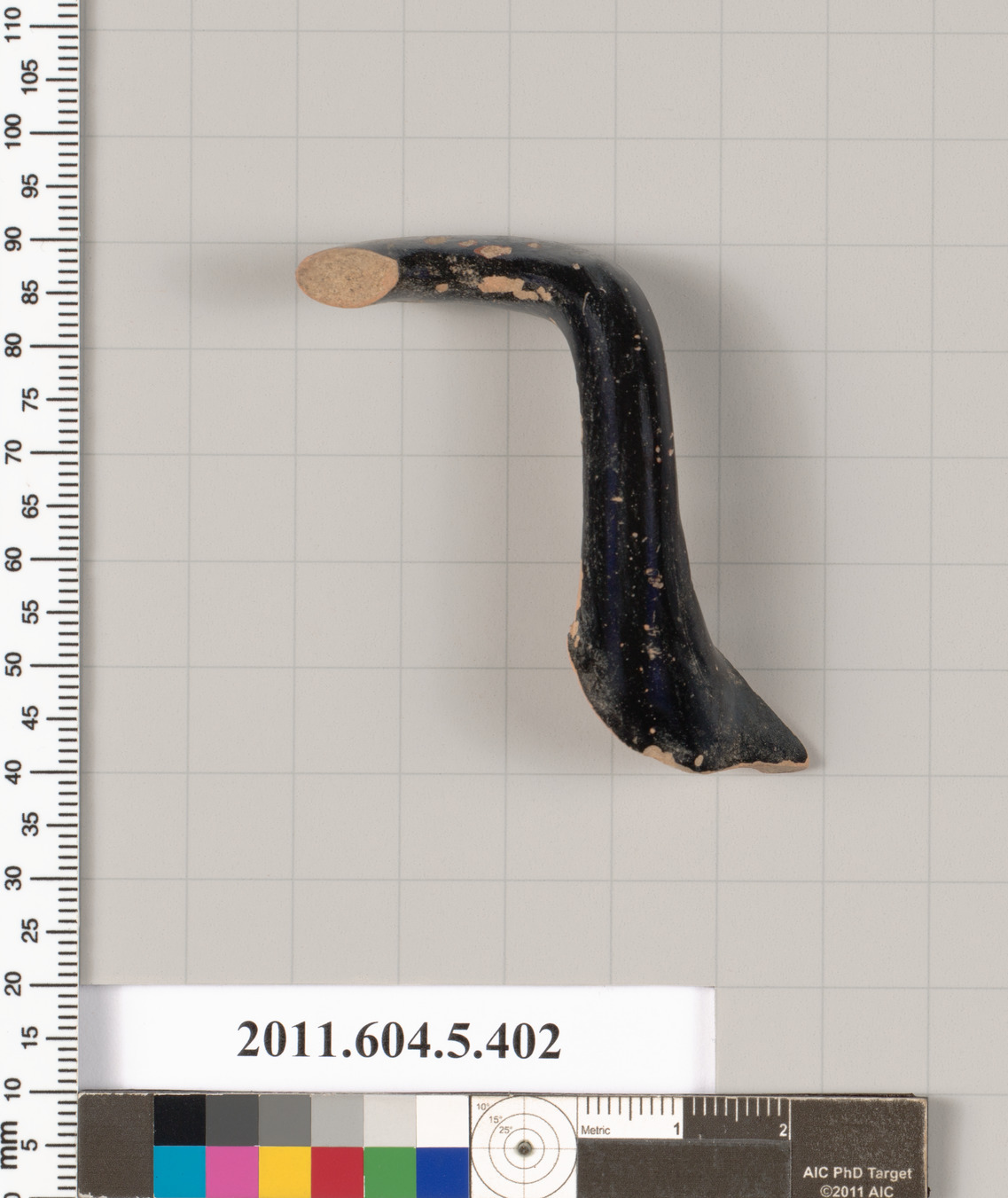
The Aesthetics of the Unadorned: How a Terracotta Kylix Fragment Informs the 2026 Old Money Silhouette
The internal archives of Lauren Fashion Heritage Lab often return to a singular, almost obsessive question: what constitutes *authentic* luxury in an age of hyper-visible branding? The answer, we have found, rarely resides in opulence. It lies, instead, in the philosophical weight of restraint. Our recent examination of a terracotta fragment of an Attic kylix—a humble drinking cup, broken and time-worn—alongside Jacques-Louis David’s 1787 masterpiece *The Death of Socrates*, has yielded a profound revelation for our 2026 Old Money collection. The fragment, though silent and shattered, speaks to a deeper genetic code within our design philosophy: the subordination of the transient self to an enduring, rational order.
David’s painting, as our internal analysis notes, is a study in the “poeticization of death.” It is a violent act of aesthetic sublimation, where the philosopher’s body is rendered luminous, robust, and almost athletic, even as he reaches for the hemlock. The geometry is rigid, the light is cold and clarifying, and the composition forces a narrative of noble sacrifice. It is, in essence, a masterclass in *control*—the control of chaos, of fear, and of the body’s inevitable decay. The painting does not depict death; it conquers it through the sheer force of ideal form.
The kylix fragment offers a radical counterpoint. It does not attempt to conquer. It simply *is*. Its value is not derived from a depicted narrative but from its material truth—the coarse, unglazed terracotta, the curve of the bowl, the faint trace of a handle. It is an object of use, not of spectacle. Where David’s Socrates points to the heavens, the kylix points to the earth, to the hands that held it, to the lips that touched its rim. It embodies what our analysis calls an “aesthetic of reconciliation” with impermanence. It does not fight the crack; it becomes the crack.
For the 2026 Old Money silhouette, this dialectic between the *controlled ideal* and the *authentic fragment* is not merely academic; it is the blueprint for construction. The Old Money aesthetic has long been misread as mere conservatism or inherited wealth. In truth, it is a philosophical stance against the ephemeral noise of trend. It is the *Jar* against the *Painting*. It chooses the quiet dignity of the kylix over the dramatic declaration of the canvas. Therefore, our 2026 collection is not designed to be seen; it is designed to be *recognized*—a subtle distinction that informs every cut, seam, and fabric choice.
From Philosophical Tension to Sartorial Structure
The first translation of this tension appears in our approach to the shoulder and the torso. David’s Socrates possesses a heroic, sculpted chest—a symbol of rational fortitude. To emulate this without falling into ostentatious tailoring, we employ a technique we internally call the “Invisible Corset.” It is not a garment of constraint, but a structural underlay within a double-faced cashmere or a heavy wool twill. The silhouette does not cling to the body; it provides a column of quiet strength. The shoulder line is precise, almost architectural, but it is achieved through the drape of the fabric rather than aggressive padding. This mirrors the kylix’s curve—a shape that is structurally sound yet appears effortless. The goal is a form that suggests the *potential* for action, not the performance of it, much like the cup is ready to be lifted, not displayed.
Furthermore, the color palette for 2026 is directly extracted from the fragment’s patina. We have moved away from the stark, cold whites of David’s neoclassical light. Instead, we introduce “Terracotta Umbra”—a deep, earthy brown-black that is not flat but possesses the granular depth of fired clay. This is our new Heritage-Black. It is not the black of mourning or formality, but the black of the earth, of the shard, of the thing that has endured. This shade is paired with “Hemlock Fade,” a muted, sage-like green that references the poison’s herbal origin, but muted to the point of near-invisibility. These are not colors that announce themselves; they are colors that absorb light, creating a silhouette that recedes rather than advances, allowing the wearer’s presence, not the garment, to command the room.
The Fragment as a Design Principle: Wabi-Sabi in Wool and Silk
The most radical application of the kylix’s philosophy, however, is in our acceptance of imperfection. The Old Money ethos has historically been associated with pristine, unblemished luxury. But the 2026 collection, guided by the fragment, introduces the concept of the “Curated Flaw.” This is not a distressed or deconstructed look in the contemporary streetwear sense. Rather, it is a deliberate acknowledgment of the garment’s journey. A herringbone wool jacket may feature a hand-finished seam that is slightly visible, a nod to the artisan’s hand. A silk blouse might have a subtle, almost imperceptible variation in its weave, reminiscent of the kylix’s uneven surface. These are not defects; they are signatures of authenticity. They are the cracks in the cup that tell the story of its use.
This principle extends to our accessories. We are introducing a line of leather goods tanned with a vegetable process that leaves the natural grain and occasional scar visible. The hardware is not polished to a high shine but brushed to a matte, almost archaeological finish. This is a direct counter to the logo-heavy, high-gloss accessories of the contemporary market. It is a statement that true heritage is not about newness, but about the patina of time. It is the difference between the painted, idealized Socrates and the real, weathered stone of the Athenian agora.
Conclusion: The Wisdom of the Shard
In the final analysis, the 2026 Old Money silhouette is a meditation on mortality and meaning. David’s painting asks us to look up, toward the eternal. The kylix fragment asks us to look down, at the cup in our hand. Our collection chooses the latter. It is a wardrobe for those who understand that immortality is not found in a grand gesture, but in the quiet, dignified acceptance of one’s own temporality. It is for the individual who, like the kylix, does not need to be a masterpiece to be essential.
The garment, like the terracotta shard, is a vessel. It holds the body, not as a spectacle, but as a presence. It facilitates life—the raising of a glass, the walk through a room, the hand extended in greeting—without demanding to be the subject of the conversation. This is the ultimate luxury: the confidence to be the container, not the contained. The 2026 collection, therefore, is not about clothing. It is about the philosophical space the clothing creates. It is the space between the ideal and the real, the space where a modern, fragile individual can exist with grace. And in that space, we find not the death of style, but its quiet, enduring life.
Heritage Lab Insight
Genetic Bridge: Archive node focusing on Heritage-Black craftsmanship.