← BACK TO ARCHIVES
Heritage-Black
Heritage Synthesis: Terracotta fragments of a lekythos (oil flask)
Curated on Aug 15, 2026 // Node: LDN-01
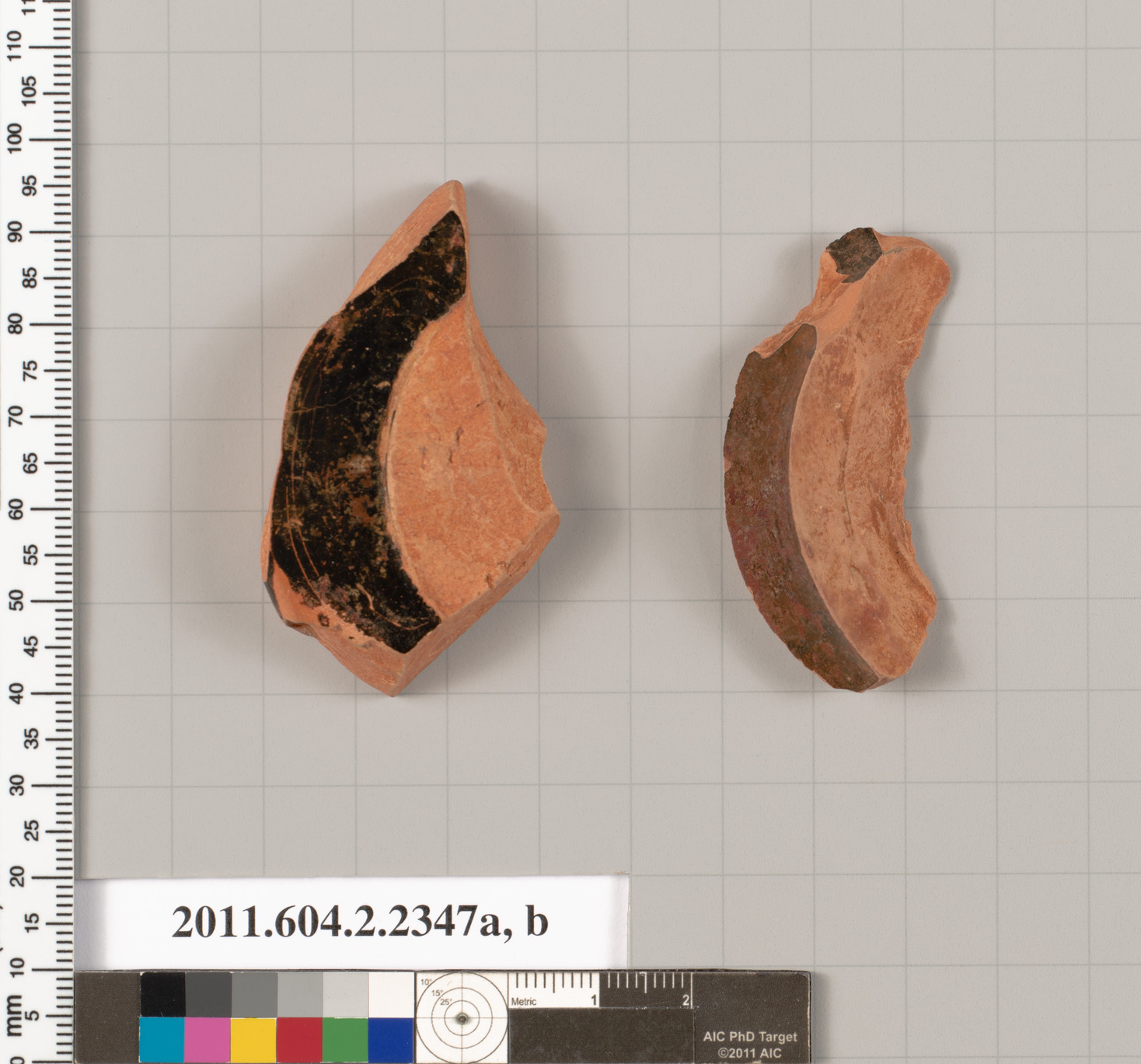
The Archaeology of Endurance: Terracotta Fragments and the 2026 Old Money Silhouette
The internal genetic code of Lauren Fashion Heritage Lab—the dialectic between the *Mold Fragment with Musicians* and the *Mortuary Figure of the Zodiac Sign: Ox (Taurus)*—finds an unexpected yet profound external analogue in the terracotta fragments of a Greek Attic lekythos. This oil flask, shattered and reassembled across millennia, is not a mere relic of funerary ritual; it is a tectonic plate of aesthetic philosophy. When read against the 2026 Old Money silhouette, these fragments do not offer a pattern to copy but a structural principle to internalize. The lekythos teaches us that true luxury is not the absence of damage, but the architecture of composure *within* damage. For the 2026 collection, this translates into a silhouette that rejects the ephemeral allure of novelty in favor of a gravitas derived from material memory, negative space, and the quiet authority of permanence.
I. The Fragment as Foundational Grammar
The Attic lekythos, typically used to hold oil for funerary offerings, was a vessel of transition—its contents anointed the dead, its form bridging the terrestrial and the chthonic. Its terracotta body, now fractured, reveals a crucial truth: the fragment is not a failure of the whole, but the purest expression of its essence. In the internal code, the *Mold Fragment with Musicians* operates on the principle of *以残见全*—seeing the whole through the fragment. The missing sections are not voids; they are catalysts for imagination, the "negative space" that allows the observer to hear the ancient melody. This is the foundational grammar for the 2026 Old Money silhouette.
In practical terms, this rejects the contemporary fashion obsession with surface perfection—the relentless pursuit of a seamless, digitally-rendered finish. The 2026 silhouette, instead, will be constructed with a deliberate sense of *archaeological layering*. Jackets are not merely cut; they are excavated from fabric. Seams are not hidden but articulated as structural fissures, akin to the cracks in the terracotta. Shoulder pads, when used, are not soft suggestions but firm, architectural corbels, echoing the weight of the earthenware. The silhouette’s power derives from its *incompleteness*—a hem that stops at a deliberate, historically-informed point; a lapel that folds with the gravity of a broken shard. This is not deconstruction in the postmodern sense, but a classical reconstruction of presence through absence. The wearer of this 2026 silhouette does not present a finished persona, but a curated, dignified fragment of a larger, untold lineage.
II. The Ox, Materiality, and the Weight of Time
The *Mortuary Figure of the Zodiac Sign: Ox (Taurus)* provides the second pillar: the compression of cosmic order into a tactile, sculptural mass. The ox is not a naturalistic animal; it is a vessel for stellar force, a symbol of the immutable cycles that govern life and death. Its aesthetic power lies in its *density*—the way its form holds the tension between the mundane (soil, labor) and the celestial (constellation, fate). For the 2026 Old Money silhouette, this translates into a profound emphasis on *material weight and drape*.
We are not speaking of mere heaviness, but of a *gravitas* that is felt before it is seen. The terracotta’s fired clay, with its porous, mineral texture, informs a fabric palette that prioritizes tactile authenticity over visual flash. Think of double-faced cashmere with the dry, suede-like hand of unglazed pottery; of virgin wool woven so tightly it feels like a ceramic shell; of silk faille that rustles with the sound of ancient parchment. The silhouette itself—the long, columnar coat; the structured, high-waisted trouser; the severe, unadorned sheath—mirrors the ox’s stoic, forward-facing stance. It is a silhouette that *endures*, that does not flinch under the weight of its own history. The color palette, drawn from the terracotta’s oxidized iron tones, moves from deep umber and burnt sienna to the stark, chalky white of a sun-bleached bone, and finally to the Heritage-Black of the category tag—a black that is not the void of nihilism, but the dense, fertile darkness of the earth after rain, the shadow cast by a monumental sculpture.
III. The 2026 Silhouette: A Synthesis of Transience and Permanence
The synthesis of these two internal codes—the fleeting melody of the mold fragment and the eternal stare of the zodiac ox—finds its external confirmation in the lekythos. The flask was made to hold oil, a substance that is both life-giving and ephemeral, yet its terracotta body was designed to outlast the very rituals it served. This is the ultimate lesson for the 2026 Old Money silhouette. It must be designed for a life of use, not a season of display. The goal is not to create a garment that looks new, but one that will *age with nobility*.
This demands a radical shift in construction. The 2026 silhouette will feature hand-finished edges, not for the sake of visible craftsmanship, but to ensure the garment’s internal structure remains intact as the outer shell wears. Buttons will be carved from horn or bone, echoing the organic materials of antiquity, and will be attached with leather or silk thread, designed to be replaced rather than to fail. The silhouette itself will be slightly oversized, not for comfort, but to allow for the natural "settling" of the fabric over time, creating a personal patina that is as unique as the cracks on a Grecian urn. The line will be long, unbroken, and columnar—a direct descendant of the classical *chiton* and the Han dynasty robe, yet rendered with a modern, severe precision. This is a silhouette that understands the *transience* of fashion trends and the *permanence* of style. It is a garment that will be worn, mended, and passed down, not as a vintage curiosity, but as a functional heirloom.
IV. Conclusion: The Silent Gaze of Luxury
The terracotta fragments of the lekythos, the broken mold of musicians, and the solemn zodiac ox all share a common aesthetic proposition: that beauty resides not in the pristine, but in the *existential*. Their power is not in their original function, but in their survival. They are "silent, generous, ancient gazes" that have witnessed the passage of time and have chosen to remain. The 2026 Old Money silhouette, informed by this archaeological aesthetic, must embody this same silent gaze. It is a form of dress that does not shout for attention but commands respect through its sheer, unyielding presence. It is a declaration that true wealth is not measured in acquisition, but in the ability to endure, to hold one’s shape and one’s dignity against the erosions of time. The collection will not be a nostalgic revival, but a philosophical statement: that the most profound luxury is the confidence to be a fragment of history, carrying the weight of the cosmos in the drape of a shoulder, and the memory of a melody in the fall of a seam. This is the 2026 Old Money silhouette—an artifact of the future, built on the immutable grammar of the past.
Heritage Lab Insight
Genetic Bridge: Archive node focusing on Heritage-Black craftsmanship.