On the Articulation of Power: A Treatise on the Medallion Silk
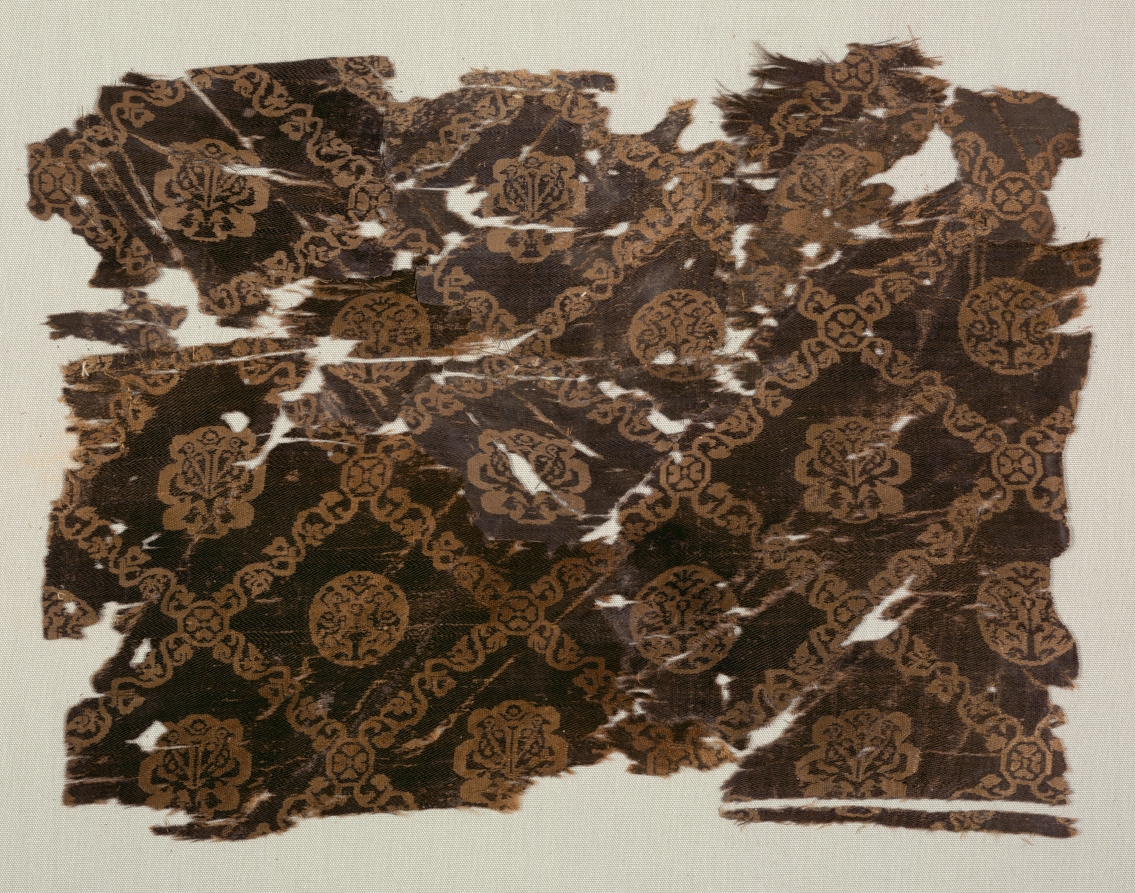
To engage with a length of silk patterned with a lattice of animals enclosed within medallions is not merely to assess a textile. It is to handle a manifest of sovereignty, a portable assertion of order imposed upon the natural world. This is not decoration; this is governance rendered in thread. The very materiality of silk establishes the first principle of its authority. A filament of such fineness, strength, and latent brilliance does not arrive by accident. Its production—from the meticulous cultivation of the mulberry grove to the silent, voracious industry of the Bombyx mori, and onward to the mastery of the throwster’s wheel and the dyer’s vat—represents a triumph of controlled systems. It is, in essence, the original luxury supply chain, a centuries-old exercise in vertical integration demanding agrarian planning, sericultural science, and artisanal rigour of the highest order. To clothe oneself in its result is to announce one’s command over these complex, silent machinations.
The Architecture of the Pattern: A Heraldry of Dominion
The pattern itself—a lattice framework punctuated by roundedels containing fauna—is a study in structured hierarchy. Consider the lattice: an interlocking, geometric grid. It is the armature of civilisation, a visual metaphor for the administrative grid of the empire, the ordered pathways of the capital city, the very framework of law and celestial concord. It provides the rule. Within this established order reside the medallions, circular realms of contained vitality. The circle, a shape without beginning or end, speaks of eternity, of the heavens, of perfected, boundless authority. It is the seal of state, the tonda of imperial portraiture.
Within these circular theatres, the animals perform their symbolic duties. These are not the creatures of a disordered wilderness. They are appointed ambassadors, each bearing a portfolio. The lion signifies unassailable martial courage; the elephant, unwavering stability and memory; the phoenix, the cyclical renewal of dynastic mandate; the dragon, the protean, generative power of the sovereign himself. Even the humble hare or duck, when admitted to this silken court, is transformed into an emblem of longevity or marital fidelity. They exist not as individuals but as types, as ideals. Their arrangement within the lattice is never haphazard; it is procession, it is council, it is a bestiary of statecraft. The message is unequivocal: the natural world, with all its untamed power and symbolic potency, has been identified, catalogued, and neatly filed within the administrative circles of imperial ideology.
The Loom as Legislative Chamber
The execution of this vision was a matter of state. Imperial weaving ateliers—the Shangfang in China, the gynaecea of the later Roman Empire, the royal tiraz workshops of the Islamic caliphates—were less factories and more legislative chambers for visual language. Here, the design was codified. The translation of the medallion-and-lattice scheme into the binary language of the loom—each warp lifted or depressed—required a prior act of supreme intellectual abstraction. The pattern was committed to a system of heddles or, later, to the punched-card programming of the draw-loom, a proto-computational device of astonishing sophistication. This mechanisation of genius ensured repeatability without degradation, consistency across vast bolt lengths. It turned inspiration into statute.
The technical prowess required to render a curvilinear medallion and a naturalistic beast within the strict, rectilinear logic of the warp and weft cannot be overstated. It is the sartorial equivalent of composing a flawless sonnet within a rigid metrical scheme: the constraints do not inhibit artistry but elevate it, demanding and revealing supreme skill. The weaver, an anonymous master, operated as a civil servant of aesthetics, his personal expression sublimated to the flawless execution of the imperial cipher. The resulting silk was thus triply authenticated: by the excellence of its raw material, the authority of its iconography, and the unimpeachable quality of its regulated manufacture.
A Currency of Distinction
The utility of such textiles extended far beyond the royal wardrobe. They constituted a primary currency of diplomacy and patronage. A robe of honour (khil'a) fashioned from such silk was not a gift; it was an investiture, weaving the recipient literally into the fabric of the ruler’s favour. To bestow it was to extend the lattice of one’s influence; to wear it was to display one’s sanctioned place within the hierarchy. In death, as in life, these silks served as a final, definitive statement of status, lining the innermost coffins of the elite, a hidden assurance of continued rank in the afterlife.
The legacy of this imperial weaving project is enduring. It established a grammar of power-dressing that resonates still. The crisp geometry of a pinstripe suit, the regimented repeat of a regimental tie, the heraldic device on a blazer badge—all are distant, tailored echoes of the medallion-and-lattice scheme. They are all attempts to use patterned cloth to signal belonging, authority, and a place within a sanctioned order.
Therefore, to examine a fragment of this silk is to conduct an audit of historical authority. One assesses the fineness of the filament (the health of the imperial sericulture), deciphers the clarity of the beast within the roundel (the stability of the symbolic order), and analyses the precision of the lattice (the rigidity of the state apparatus). It is, in the final estimation, a superb and silent articulation of the oldest principle: that true luxury is never merely about ornament. It is about the demonstrated capacity to impose one’s will—upon worms, upon weavers, upon the very world itself—and to wear the evidence with effortless command.