← BACK TO ARCHIVES
Silk
Heritage Synthesis: Poem on Imperial Gift of an Embroidered Silk: Calligraphy in Running-Standard Script (xingkaishu)
Curated on Aug 15, 2026 // Node: LDN-01
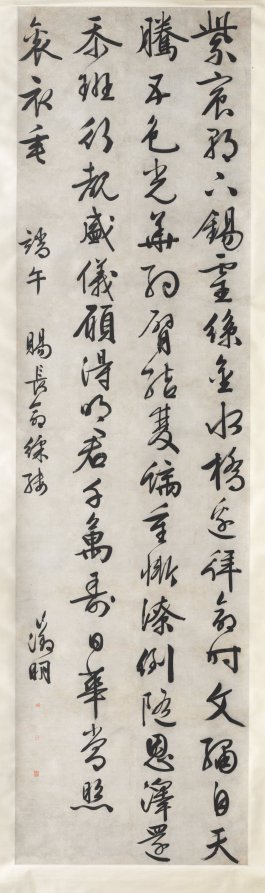
The Imperial Gift: An Heirloom of Thread and Ink
In the rarefied atmosphere of a Savile Row atelier, where cloth is not merely cut but composed, one develops an acute sensitivity to the language of material. A bolt of worsted wool speaks of discipline; a length of cashmere whispers of quiet luxury. But a fragment of imperial Chinese silk, inscribed with the fluid grace of running-standard script, speaks in a voice that transcends mere tailoring. It is a document of statecraft, a relic of dynastic power, and a testament to the profound artistry of the loom. This heritage research artifact examines such a piece: a poem rendered in calligraphy upon an embroidered silk ground, a gift of immense political and aesthetic consequence.
The Materiality of Power: Silk as a Political Instrument
The substrate itself is the first declaration. Silk, for millennia, was not simply a textile; it was a currency of empire, a symbol of celestial mandate, and a closely guarded state secret. The production of fine silk, particularly the lustrous varieties reserved for the imperial household, was a monumental undertaking. The mulberry groves, the sericulture houses, and the vast weaving workshops of the Imperial Silk Factory in Nanjing, Suzhou, and Hangzhou were managed with the precision of a military campaign. The resulting fabric was not a commodity but a statement of absolute sovereignty. To receive a gift of such silk was to be drawn into the emperor’s orbit, to be bound by the threads of his beneficence. The materiality of this piece—its weight, its sheen, its almost liquid drape—is the first verse of the poem it bears.
The choice of embroidery, rather than woven patterning, adds another layer of significance. While the drawloom could produce intricate polychrome designs, embroidery is an additive, deliberate act. Each stitch is a considered mark, an individual gesture of the hand. In the context of an imperial gift, this suggests not only the output of a vast atelier but also a more personal, albeit still highly formalized, act of creation. The needle becomes a brush, the silk thread a line of ink, and the fabric a canvas for a message of singular importance.
Calligraphy in Running-Standard Script: The Voice of the Scholar-Emperor
The poem itself, executed in *xingkaishu*—a hybrid of running and standard script—is the intellectual heart of the artifact. This particular calligraphic style is significant. Standard script (*kaishu*) is the formal, legible hand of official documents and stone inscriptions, representing order and law. Running script (*xingshu*), by contrast, is a more fluid, cursive form, expressive and personal, the hand of poetry and private correspondence. The fusion, *xingkaishu*, is a masterful balance. It conveys authority and erudition while simultaneously offering a glimpse of the emperor’s individual temperament. It is the script of a ruler who is both legislator and poet, a figure who commands the empire with one hand and composes verses with the other.
The poem’s content, while specific to its historical moment, would have been carefully chosen. Such gifts were often composed by the emperor himself, celebrating a military victory, a bountiful harvest, or a seasonal festival. The verses would serve to articulate the emperor’s benevolence, his connection to the cosmos, and his role as the father of his people. The calligraphy, therefore, is not merely decorative. It is the emperor’s voice made visible, a direct transmission of his will and wisdom. For the recipient—a high-ranking official, a loyal general, or a tributary king—the gift was a profound honour, a tangible connection to the Son of Heaven. The object was to be treasured, displayed, and, crucially, understood as a sign of continued favour.
The Legacy of Imperial Weaving: From Loom to Legacy
The legacy of imperial silk weaving is one of extraordinary technical achievement and cultural continuity. The techniques developed in the imperial workshops—the complex jacquard mechanisms, the mastery of dyeing, the intricate embroidery stitches—represented the pinnacle of global textile production for centuries. These skills were passed down through generations of artisans, their knowledge held in the highest esteem. The legacy is not merely one of technique, however. It is a legacy of meaning. Silk was the medium through which the empire communicated its power, its aesthetics, and its philosophy. It adorned the throne, dressed the court, and was sent as the ultimate diplomatic gift across Asia and beyond, shaping perceptions of Chinese civilisation for the world.
This particular artifact, the embroidered poem, sits at the confluence of these legacies. It embodies the technical mastery of the silk workshops, the literary and artistic sophistication of the imperial court, and the political acumen of the emperor himself. It is a three-dimensional document, a piece of history that can be held, touched, and felt. In its threads, we read the labour of the sericulturist, the skill of the weaver and embroiderer, the genius of the calligrapher, and the authority of the throne.
An Enduring Artifact for the Modern Eye
For the contemporary observer, the piece offers a profound connection to a distant world. It is a reminder that luxury has always been about more than mere opulence. True luxury, as this artifact demonstrates, is the fusion of exceptional material, masterful craft, and profound meaning. It is an investment in permanence, a creation intended to outlast its maker and to carry a message across time. In an age of mass production and fleeting digital communication, the deliberate, painstaking creation of this imperial gift stands as a powerful counterpoint. It speaks to a time when a gift was not a transaction but a testament, and when a single piece of silk could carry the weight of an empire. The poem, in its elegant script, is not just an inscription; it is the very soul of the object, a silent, enduring voice from the heart of a magnificent and complex civilisation.
Heritage Lab Insight
Lab Insight: CMA Silk Archive Node integration.