The Woven Horizon: Brocade, the Cataract, and the Architecture of Old Money Silhouettes
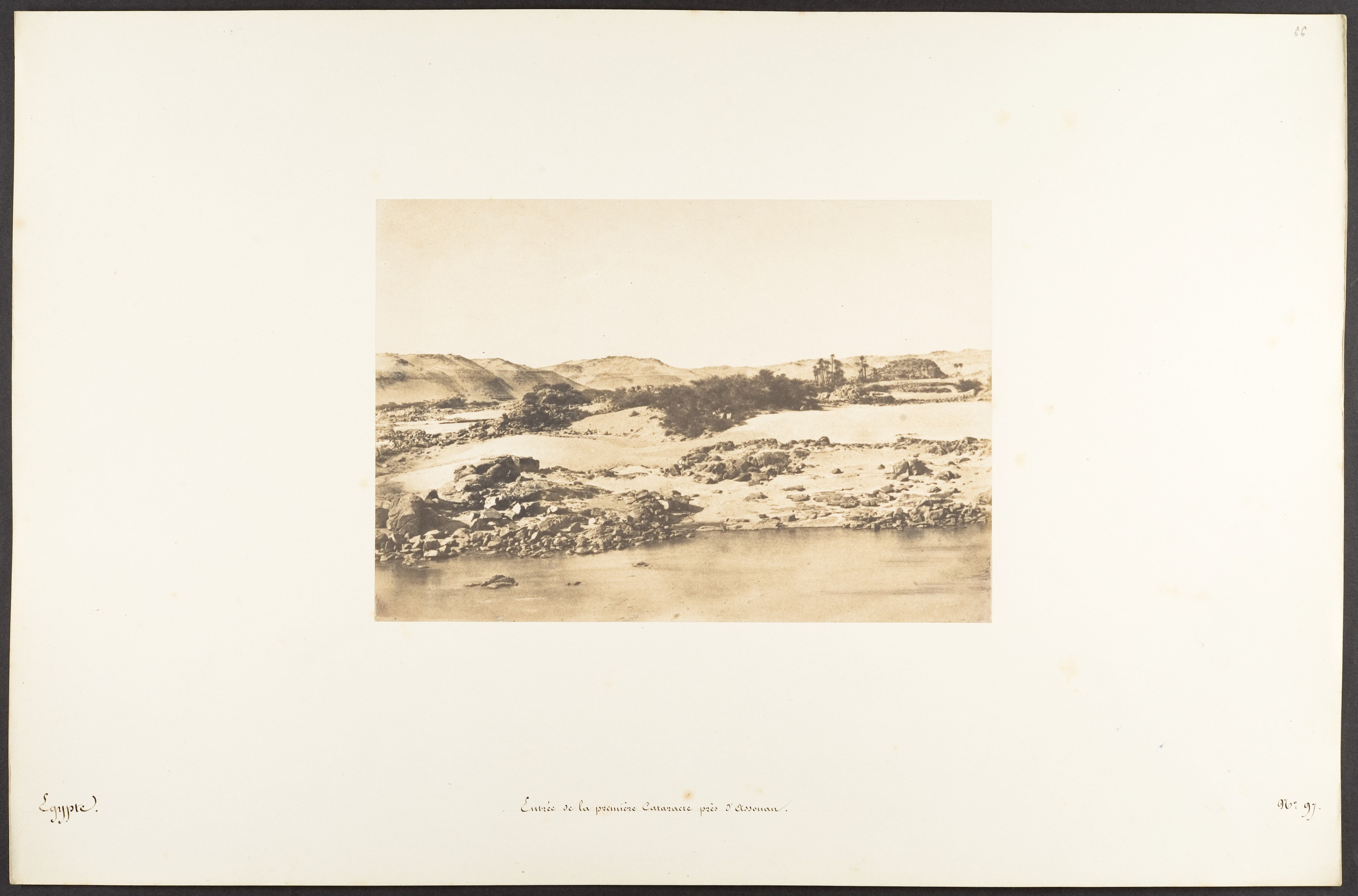
The internal genetic code of Lauren Fashion Heritage Lab posits a foundational truth: profound aesthetic and cultural meaning is generated not in isolation, but at the dynamic confluence of traditions, a process of creative "translation" and "transplantation." This analysis synthesizes that core principle with a pivotal visual source—Maxime Du Camp's 1850 salted paper print Entrée de la première Cataracte près d'Assouan—to architect the philosophical and sartorial foundations for the 2026 Old Money silhouette. Du Camp’s photograph, far more than a topographic record, serves as a master text on permanence, layered power, and the sublime dialogue between natural structure and human passage, directly informing a contemporary expression of inherited elegance.
The Cataract as Foundational Silhouette: Mass, Stratification, and Endurance
Du Camp’s image presents the Nile cataract at Aswan not as a chaotic rush of water, but as a monumental, geological architecture. The composition is dominated by vast, tiered plates of granite, their surfaces textured by millennia of elemental flow. The water itself carves channels through this stone, creating defined, powerful pathways. This is the primal silhouette: an embodiment of mass that is neither heavy nor brutish, but strategically carved, channeled, and enduring. The silhouette speaks of weight that has been edited by time and force into an inevitable, authoritative form.
This directly informs the 2026 Old Money approach. The silhouette moves away from fleeting, body-conscious trends toward this architecture of enduring form. Think of a single-breasted wool-cashmere overcoat where the cut is not merely oversized, but geologically considered—the shoulder a broad plateau, the waist subtly channeled like water-worn stone, the hemline falling with the decisive weight of a stratified cliff face. The fabric, a dense brocade or wool melton, holds its shape, mirroring the granite’s resistance. The aesthetic is one of substantiality, where presence is built through considered volume and impeccable structure, not ornament. Like the cataract rocks, the garment becomes a timeless, territorial assertion in space.
Brocade as Sedimentary Layer: The Patina of History and Restrained Opulence
The internal code celebrates the Textile with crowned double-headed eagles for its "orderly majesty" and "symbolic grandeur," achieved through metallic threads and complex weaves. Du Camp’s photograph offers a parallel language of layered opulence. The cataract rocks are not monochromatic; they are a complex sedimentation of tones, from stark highlights to deep, impenetrable shadows, with striations and mineral deposits creating a natural "brocade." The salted paper process itself, with its subtle tonal range and textured surface, adds another layer of historical patina. This is opulence defined not by glitter, but by depth, texture, and the accumulated narrative of process and time.
For 2026, this translates into the material intelligence of Old Money. The brocade—our categorical anchor—is reimagined. It is not the blatantly figurative damask of a past era, but a geological or abstract brocade. Imagine a jacquard weave that mimics the striations in Du Camp’s granite, or a silk-wool blend where the pattern is a subtle, tonal variation in weave, like light playing on rock. Metallic threads, akin to those in the double-headed eagle textile, are used with extreme restraint—a single, sparse thread catching the light like a fleck of mica in stone, not a field of gold. The opulence is intrinsic, earned, and revealed only upon close inspection, mirroring the Old Money virtue of quiet, assured substance over loud display.
The Passage Through: Negative Space and the Performance of Ease
A critical element in Du Camp’s composition is the human and architectural scale provided by the figures and the small dhow navigating the water channel. They are not the subject, yet they are essential. They illustrate the passage through the monumental form. The silhouette of the dhow’s sail, the static figures observing—they create dynamic negative space, highlighting the wearable, navigable nature of even the most imposing landscape. This is the essence of true elegance: the mastery of environment, the ease of movement within a powerful structure.
This principle is paramount for the 2026 silhouette. The architectural, cataract-inspired forms must be engineered for this "passage through." A formidable brocade blazer, with its substantial shoulder and clean lines, is cut with a precise, ergonomic sleeve pitch and a hidden ease across the back to allow for unimpeded movement. The negative space—the glimpse of a simple silk shell neckline, the drape of tailored trousers against a boot—is as carefully composed as the figures in Du Camp’s frame. The wearer does not struggle under the weight of the garment; they command it, navigating their world with the assured ease of a vessel on a charted, timeless course. It is performance as privilege, engineered invisibly.
Conclusion: A Silhouette of Granite and Brocade
Informed by Du Camp’s Entrée de la première Cataracte and decoded through our internal heritage lens, the 2026 Old Money silhouette emerges as a study in architectural permanence, stratified opulence, and navigable power. It draws from the cataract’s geological majesty and the brocade’s historic symbolism, synthesizing them into a modern sartorial language. The result is a wardrobe that functions as a personal landscape: structured like granite, rich with the sedimentary layers of brocaded texture, and designed for sovereign passage. It is an aesthetic that, like the silent dialogue between the double-headed eagle and the南蛮屏风, finds its deepest meaning at the confluence—where the enduring forms of nature and history are translated into the elegant, human art of dressing. This is not fashion as trend, but as cultivated, inherited terrain.