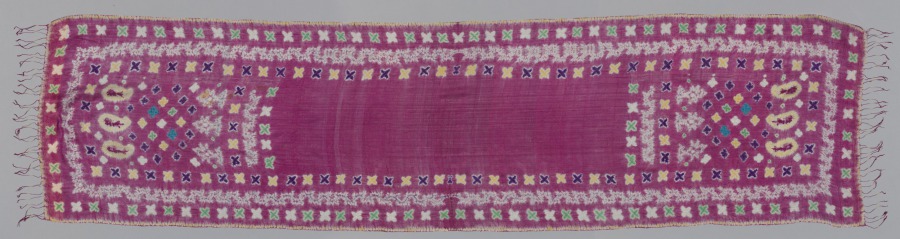
Heritage Research Artifact: The Silk Veil
I. Material Provenance and the Imperial Thread
In the hushed ateliers of London’s Savile Row, where cloth is treated with the reverence of scripture, the silk veil is not merely an accessory. It is a material testament to a lineage of imperial craftsmanship that spans two millennia. The very word ‘silk’ derives from the Greek *Seres*, the people of the East, yet the fabric’s true aristocracy lies in its Chinese provenance. For over 3,000 years, the mulberry silkworm (*Bombyx mori*) was a state secret, guarded with the ferocity of a crown jewel. The imperial weaving houses of Hangzhou and Suzhou were not factories; they were sacred precincts where the Empress herself performed the first ceremonial harvest of cocoons each spring.
This veil, in its gossamer lightness, carries the weight of that imperial legacy. Its materiality is not a passive quality but an active agent of history. The filament, drawn from a single cocoon in an unbroken strand of up to 900 metres, is a marvel of biological engineering. To the discerning eye of a Savile Row cutter, this continuous thread signifies structural integrity—a fabric that drapes with a liquid fall, yet possesses a tensile strength that belies its fragility. The imperial looms, operated by master weavers whose apprenticeships lasted decades, produced a cloth with a density and lustre that modern power-looms cannot replicate. The veil’s subtle, irregular sheen is the hallmark of hand-reeled silk, a surface that catches light not uniformly, but with the gentle, shifting poetry of water.
II. The Weave of Power and Diplomacy
Beyond its tactile perfection, the silk veil functioned as a diplomatic currency in the imperial courts. To gift a veil of exceptional weave was to confer honour, to seal an alliance, or to demonstrate the boundless reach of the throne. The patterns woven into the silk—the *shou* (longevity) motif, the five-clawed dragon, the phoenix—were not decorative whims. They were coded declarations of rank and cosmic authority. A veil bearing the dragon was reserved for the Empress; a phoenix motif signified the Empress Dowager. To wear such a veil was to inhabit a role of immense political and spiritual significance.
This tradition of silk as a tool of statecraft found its echo in the West, particularly in the mercantile and aristocratic circles of London. The East India Company’s trade in Chinese silks in the 17th and 18th centuries brought these imperial textiles to the British elite. The veil, often re-purposed as a neckerchief or a ceremonial drape, became a symbol of cosmopolitan sophistication. Yet, the British understanding of silk was filtered through a lens of imperial rivalry and industrial ambition. While the Chinese prized the veil for its ethereal, almost immaterial quality, the British sought to master its production, leading to the establishment of silk mills in Spitalfields. This tension—between reverence for the original and the urge to replicate—is central to the veil’s heritage.
III. Craftsmanship and the Art of the Hand
In the context of Savile Row, the silk veil is a study in restraint. Unlike the structured tailoring of a suit, which relies on canvas, horsehair, and precise seam allowances, the veil demands a different kind of mastery: the mastery of *letting go*. The artisan’s skill lies not in forcing the fabric into shape, but in allowing its natural drape to speak. The rolled hem, a hallmark of fine veil-making, is executed by hand, each tiny roll of silk secured with an invisible stitch. This process, which can take a skilled seamstress several hours for a single edge, is a meditation on patience. It is the antithesis of mass production—a quiet rebellion against the tyranny of speed.
The imperial legacy is also preserved in the dyeing process. Traditional Chinese silk veils were coloured with natural dyes derived from indigo, madder root, and the secretions of the *Kerria lacca* insect. These dyes, unlike their synthetic counterparts, do not sit on the surface of the fibre; they bond with the protein structure of the silk, creating a depth of colour that seems to glow from within. A heritage veil in a deep imperial yellow or a muted cinnabar red is not merely coloured; it is *infused* with pigment, its hue shifting subtly under different lighting conditions. This chromatic complexity is a signature of authenticity, a quality that a Savile Row connoisseur would recognise instantly.
IV. The Veil’s Modern Resonance
Today, the silk veil occupies a curious position in the heritage landscape. It is simultaneously a relic of imperial opulence and a contemporary accessory of quiet luxury. In an era of fast fashion and disposable textiles, the veil’s insistence on slowness and permanence is a radical statement. It asks the wearer to consider the lineage of the thread, the hands that spun it, and the centuries of tradition that inform its creation. To drape a silk veil over one’s shoulders is to engage in a dialogue with history—a history that is not static but living, evolving with each new interpretation.
For the Lauren Fashion Heritage Lab, this artifact serves as a pedagogical cornerstone. It challenges the modern designer to consider materiality as a form of cultural memory. The silk veil is not a blank canvas; it is a palimpsest, inscribed with the codes of imperial power, the artistry of anonymous weavers, and the enduring human desire for beauty that transcends utility. Its legacy is not confined to a museum vitrine. It lives on in the careful hand of the tailor who understands that a garment’s true value lies not in its novelty, but in its connection to a deeper, more profound narrative of human achievement.
In conclusion, the silk veil is a masterclass in the marriage of material and meaning. Its imperial origins remind us that luxury has always been intertwined with power and politics. Its craftsmanship reminds us that true skill is invisible, manifesting in a perfect edge or a flawless drape. And its enduring presence in the modern wardrobe reminds us that heritage is not about preservation alone, but about the continuous, respectful reinterpretation of the past. This is the essence of the Savile Row ethos: not to imitate, but to honour the source, and in doing so, to create something that is both timeless and utterly of its moment.