← BACK TO ARCHIVES
Heritage-Black
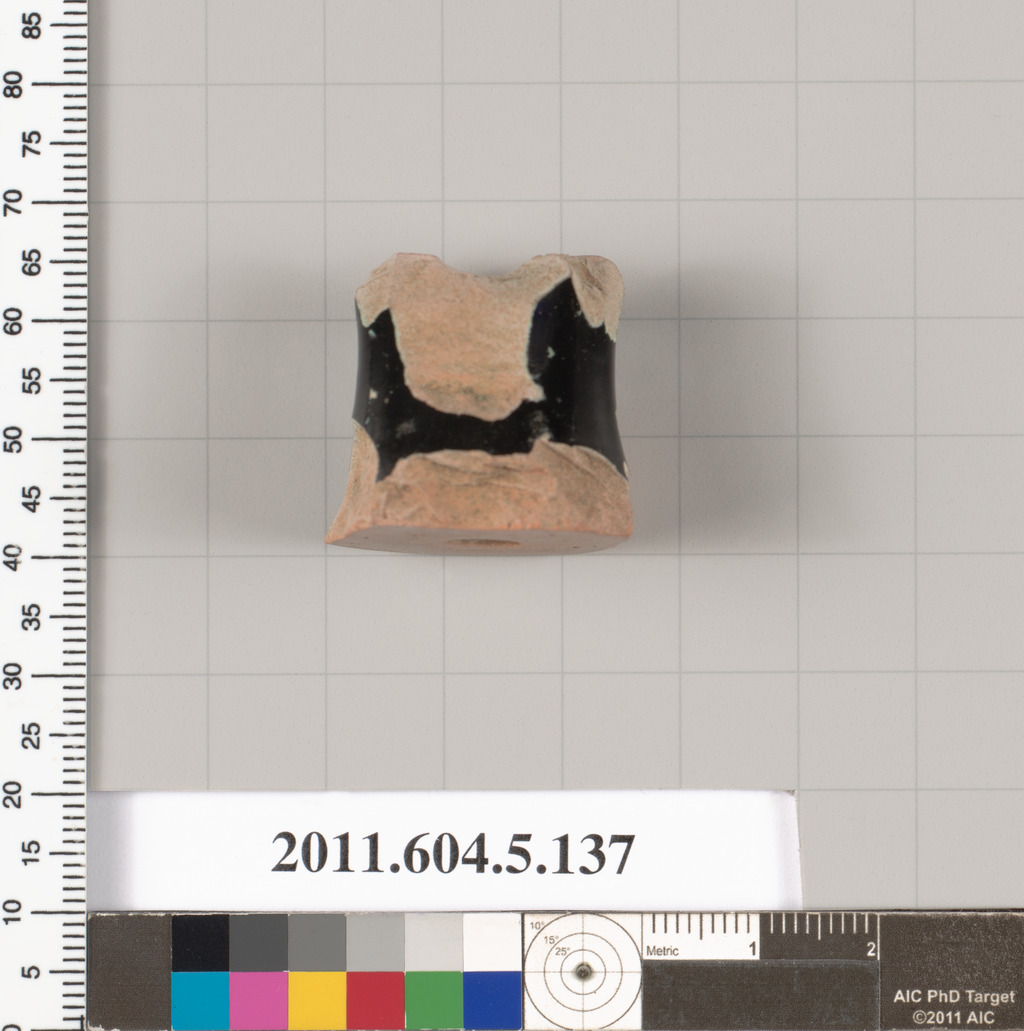
Heritage Synthesis: Terracotta fragment of a kylix (drinking cup)
Curated on Aug 16, 2026 // Node: LDN-01
The Archaeology of Silence: Terracotta Fragments and the 2026 Old Money Silhouette
The internal genetic code of Lauren Fashion Heritage Lab often returns to a singular paradox: that the most profound expressions of luxury are not found in opulence, but in the disciplined restraint of absence. The museum artifact under examination—a terracotta fragment of an Attic kylix (drinking cup), Greek, circa 5th century BCE—offers a startlingly precise visual and philosophical antecedent for the 2026 Old Money silhouette. At first glance, a broken drinking vessel seems an unlikely muse for contemporary tailoring. Yet, when we decode its material memory, its fractured geometry, and its social function, we uncover a blueprint for an aesthetic that privileges permanence over novelty, and quiet authority over spectacle.
I. The Fragment as a Grammar of Restraint
The Attic kylix fragment is not merely a broken object; it is a deliberate study in negative space. The surviving shard retains the curve of the vessel’s bowl, the faint incised line of a musician’s himation, and the ghost of a symposium’s revelry. Crucially, what remains is not the whole—but the *suggestion* of the whole. This is the first lesson for 2026: the Old Money silhouette does not announce itself through volume or excess. It operates through the *cut*, the seam, the subtle drop of a shoulder that implies structure without demanding attention. Just as the kylix fragment’s broken edge creates a dynamic tension between the depicted scene and the void beyond it, the modern tailored jacket employs a high armhole and a suppressed waist to create a silhouette that is *felt* rather than seen. The garment’s power lies in what it withholds—a lapel width that is neither narrow nor wide, a trouser break that is precisely one inch, a fabric weight that drapes with the gravity of centuries.
This is the aesthetic of the “negative gesture.” In the fragment, the musician’s fingers are frozen mid-pluck, but the sound is absent. In the 2026 Old Money suit, the pocket square is folded in a presidential puff—not to add color, but to signal that the wearer understands the language of *not trying*. The terracotta’s ochre and umber tones, fired and then broken, teach us that true heritage color is not a bright statement but a weathered patina. Hence, the 2026 palette shifts from the stark whites and electric blues of the past decade to a spectrum of *archaeological neutrals*: burnt sienna, clay, faded oxblood, and the deep, almost-black green of aged bronze. These are not colors that shout; they are colors that have survived.
II. The Symposium and the Boardroom: Rituals of Exclusion
The kylix was not a solitary object. It was the vessel of the *symposium*—a closed, male-dominated ritual of philosophical discourse, wine, and music. Its fragments, therefore, carry a social DNA of exclusivity. The Old Money aesthetic of 2026 is not about democracy; it is about *selective inheritance*. The silhouette must communicate that its wearer belongs to a lineage of taste that cannot be purchased off a trend cycle. The terracotta’s broken state is crucial here: it suggests that the object has been used, passed down, and survived. Similarly, the 2026 Old Money garment must show *evidence of use*—not through distressing (which is a counterfeit), but through the natural drape of a heavy wool-cashmere blend that has been cut to mold to the body over years, or the subtle sheen of a silk-linen twill that has been worn in the same boardroom for a decade.
The fragment’s iconography—musicians—adds another layer. Music in the symposium was not entertainment; it was a form of *paideia* (education), a marker of civic virtue. In the 2026 Old Money wardrobe, this translates to the *investment in invisible craft*. The interior of a jacket, unseen by the observer, must feature a hand-finished buttonhole, a floating canvas, and a sleeve head that is rolled by hand. These are the “musicians” of the garment—silent, but essential to its harmony. The wearer knows they are there; the observer only perceives the result: an effortless posture, a shoulder line that never collapses, a back that moves like water yet holds its shape like stone.
III. The Mortuary Figure and the Zodiac of Status
The internal code references the *Mortuary Figure of the Zodiac Sign: Dog (Aquarius)*—a funerary image that bridges the terrestrial and the celestial. This is not a tangent; it is the philosophical core of the 2026 silhouette. The Old Money aesthetic is fundamentally *thanatopic*—it dresses for the legacy, not the moment. The zodiac dog, guiding the soul across the stars, mirrors how the 2026 garment guides the wearer through the social constellations of power. The silhouette must have a *verticality* that echoes the figure’s upward gaze: a longer jacket line, a high-waisted trouser, a coat that falls to the mid-calf without breaking. This is not fashion; it is *funerary architecture* for the living. The garment becomes a threshold—between the individual and the institution, between the ephemeral self and the enduring family name.
The terracotta fragment’s surface, once painted with slip and now reduced to bare clay, teaches us about *material honesty*. In 2026, Old Money rejects the synthetic sheen of fast fashion. It embraces the *unfinished finish*—a wool flannel that retains its mill’s watermark, a linen that wrinkles with dignity, a leather that develops a patina only after a decade of rain. This is the aesthetic of the *mold fragment*: the acceptance that beauty is not in perfection, but in the trace of the maker’s hand and the wearer’s life. The 2026 silhouette, therefore, is not a single garment but a *system of wear*—a wardrobe that is deliberately small, deliberately heavy, and deliberately slow.
IV. From Fragmentation to Synthesis
How does this translate to concrete design directives for Lauren Fashion’s 2026 collection? First, the *shoulder*. The Attic kylix’s curve is not sharp; it is a continuous, gentle arc. The 2026 jacket shoulder must echo this: a soft, un-padded roll that follows the natural deltoid, creating a line that is neither aggressive (Italian) nor boxy (British), but *archaeological*—as if the garment has been excavated from a classical ideal. Second, the *waist*. The fragment’s interior curve suggests a containment that is not restrictive. The 2026 trouser, therefore, sits at the natural waist, with a slight taper that does not cling but *suggests* the leg beneath—much as the incised lines on the terracotta suggest the musician’s form without anatomical detail. Third, the *length*. The kylix’s stem, though broken, implies elevation. The 2026 overcoat, in a heavy vicuña or double-faced cashmere, must fall to 42 inches for a 6-foot wearer—a length that creates a continuous, unbroken column, echoing the zodiac figure’s ascent.
Finally, the *color story*. The terracotta’s fired clay—ranging from pale buff to deep rust—must inform the collection’s foundational tones. But the true innovation is in *textural contrast*. Just as the fragment juxtaposes the smooth interior of the drinking bowl with the rough, broken edge, the 2026 silhouette will pair a brushed, matte flannel with a crisp, dry poplin, or a polished calfskin with a raw, unlined suede. This is the *dialogic* dressing of the future: not matching, but *conversing* across surfaces.
Conclusion: The Eternal Silence
The Mold Fragment with Musicians and the Mortuary Figure of the Dog are, in the end, both *memento mori*—reminders of mortality that paradoxically celebrate the enduring human need to create meaning. The 2026 Old Money silhouette, distilled from this terracotta, is not a trend. It is a *re-assertion of the classical* in an age of digital noise. It is a garment that speaks in the language of the fragment: incomplete, yet whole; broken, yet eternal. The wearer of this silhouette does not enter a room; they *arrive*—as if they have always been there, as if the room itself has been waiting for their quiet, terracotta-toned presence. In this, Lauren Fashion does not merely dress the body; it dresses the *inheritance of silence*—the most luxurious fabric of all.
Heritage Lab Insight
Genetic Bridge: Archive node focusing on Heritage-Black craftsmanship.