← BACK TO ARCHIVES
Silk
Heritage Synthesis: Silk Fragment
Curated on Aug 16, 2026 // Node: LDN-01
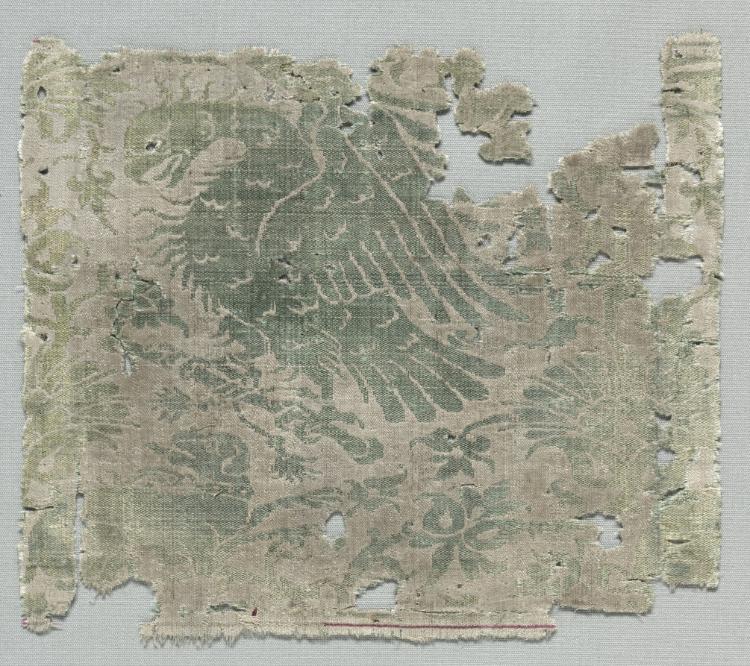
An Heirloom of the Loom: Deconstructing the Imperial Silk Fragment
In the hushed, wood-panelled ateliers of Savile Row, where the cut of a jacket is a matter of quiet, absolute conviction, we understand that true luxury is never loud. It is felt. It is the weight of a cloth, the precision of a stripe, the provenance of a thread. Today, we turn our attention to a singular artifact that embodies this principle with an almost monastic severity: a fragment of imperial silk. This is not merely a piece of fabric; it is a ledger of power, a testament to a lost art, and a benchmark against which all modern notions of quality must be measured. Its materiality is not a simple fact of fibre, but a complex narrative of ecology, economy, and empire, woven into a substrate of unparalleled refinement.
Materiality as a Manifestation of Mandate
The fragment in question, likely dating from the High Qing Dynasty (circa 18th century), presents a materiality that is both immediately sensual and intellectually demanding. The silk itself is not the coarse, utilitarian tussah of the common market, but the product of the domesticated silkworm, *Bombyx mori*, reared under conditions of obsessive control. The filament, unbroken for nearly a mile in its original cocoon, was spun with a precision that modern machinery struggles to replicate. The resulting yarn is impossibly fine, with a tensile strength that belies its delicate appearance. When held to the light, the cloth possesses a subtle, internal luminosity—a depth of sheen that is not a surface gloss but a refractive quality born from the triangular prism structure of the fibre itself. This is the "imperial sheen," a soft, liquid lustre that speaks of a controlled environment, a meticulous hand, and a patience that borders on the sacred.
The weave structure is where the materiality truly asserts its authority. This is not a simple tabby or twill. The fragment reveals a complex, compound weave—likely a *kesi* (cut silk) or a highly figured satin damask. In *kesi*, the weft threads are not carried across the full width of the cloth but are individually woven into the warp to create the pattern, resulting in a tapestry-like structure where the design is literally "carved" into the silk. The tactile sensation is extraordinary: a smooth, almost glassy surface interrupted by subtle, deliberate changes in texture where the weft threads turn. This is not a printed pattern; it is a structural one. The design—perhaps a stylised dragon amid clouds, or a medallion of auspicious floral motifs—is not applied to the fabric; it *is* the fabric. The integrity of the material and the integrity of the design are one and the same, a concept that resonates deeply with the Savile Row philosophy of construction over decoration.
Context: The Imperial Silk Weaving Legacy
To understand this fragment is to understand the machinery of the Chinese imperial state. For millennia, silk was not merely a commodity; it was a currency of power, a diplomatic tool, and a symbol of cosmic order. The imperial weaving workshops, particularly those in Nanjing, Suzhou, and Hangzhou, were not factories in the modern sense. They were vast, state-run ateliers, often employing tens of thousands of artisans, each with a hereditary role. They were governed by a strict hierarchy and an even stricter code of aesthetic law. The patterns, colours, and even the number of threads per inch were dictated by imperial decree, with sumptuary laws reserving specific motifs—the five-clawed dragon for the emperor, the four-clawed for princes—for the exclusive use of the court.
This fragment, therefore, is a piece of political propaganda, woven with a level of technical mastery that was designed to instil awe and affirm the divine mandate of the Son of Heaven. The sheer cost of production was astronomical. It is estimated that a single imperial robe could require the labour of a skilled weaver for over a year. The silkworms were fed on mulberry leaves from specific groves, the water used for dyeing was sourced from particular springs, and the dyes themselves—indigo, madder, and the precious imperial yellow derived from the *Sophora japonica* bud—were processed with alchemical secrecy. The result was a cloth that was not only beautiful but also possessed an almost supernatural durability, a quality that has allowed this very fragment to survive for centuries. This is the legacy of imperial silk weaving: a pinnacle of human achievement where art, industry, and statecraft are fused into a single, flawless yard of cloth.
Critical Analysis: The Fabric of Authority
From a heritage perspective, the fragment demands we move beyond mere aesthetic appreciation and engage in a critical analysis of its role as a signifier of power. The materiality is not innocent. The fineness of the thread, the complexity of the weave, and the exclusivity of the pattern all function as a form of encoded communication. The cloth is a text, and its grammar is one of control. It speaks of a society that could command immense resources and organise vast, specialised labour forces toward a single, non-utilitarian end: the creation of an object of pure symbolic value.
This is the antithesis of the modern, democratised luxury market, where a logo can be printed on a t-shirt. Here, the value is intrinsic, embedded in the very molecular structure of the fibre. The fragment challenges our contemporary understanding of quality. We are accustomed to speed, to efficiency, to the relentless pursuit of novelty. This artifact offers a counter-narrative: a world where slowness was a virtue, where repetition was a form of mastery, and where the ultimate expression of creativity was found not in radical innovation but in the perfect, iterative execution of a sacred tradition. For the connoisseur, this is the true definition of heritage—not a static relic of the past, but a living standard against which we can measure the integrity of our own work. It is a reminder that true luxury is not about what you add, but what you have the discipline to leave out—and the skill to perfect what remains.
Heritage Lab Insight
Lab Insight: CMA Silk Archive Node integration.