Heritage Research Artifact: The Enduring Thread of Imperial Silk
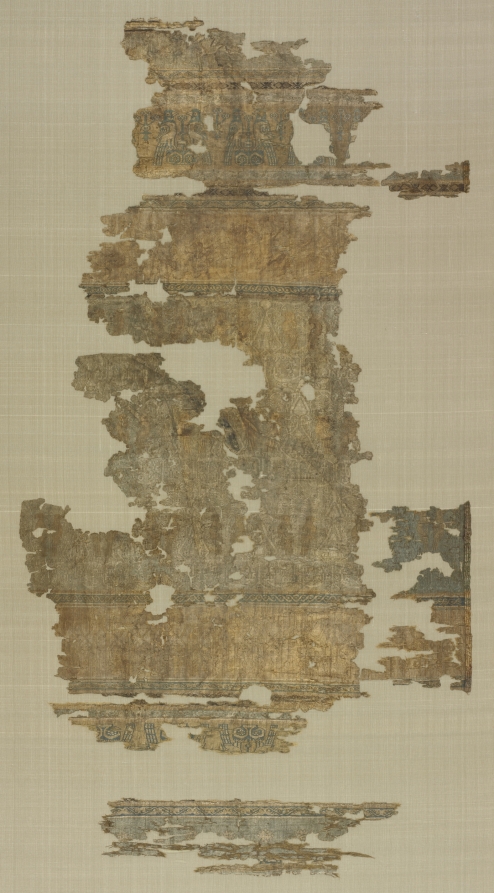
In the hushed, wood-panelled ateliers of Savile Row, where time is measured not in minutes but in the meticulous fall of a lapel, there exists a quiet reverence for materials that carry history within their very fibres. Among these, none commands more profound respect than silk. To handle a fragment of imperial silk is not merely to touch a textile; it is to engage in a dialogue with centuries of power, artistry, and an unbroken lineage of craftsmanship that predates the very concept of the tailored suit. This artifact, a series of silk fragments from the late Qing Dynasty, serves as the foundational text for understanding the materiality that underpins our most hallowed tailoring traditions.
Materiality: The Physics of Prestige
Let us first consider the substrate itself. The silk we examine is not the commonplace, machine-spun variety that adorns contemporary high-street offerings. This is filament silk, reeled directly from the cocoon of the Bombyx mori moth, yielding a continuous, unbroken thread that can span a kilometre in length. This singular characteristic is the genesis of its unique materiality. Unlike cotton or wool, which are spun from short staple fibres, the continuous filament lends silk its legendary tensile strength—comparable to steel at equal diameter—and its unmistakable, lustrous sheen. The light does not merely reflect off silk; it is refracted through the triangular prism structure of the fibre, producing a soft, internal glow that no synthetic can replicate. This is not a fabric; it is a physical manifestation of light and strength, a paradox that made it the only material fit for an emperor.
The weight and drape of these fragments are equally instructive. The satin weave, with its floating warp threads, creates a surface of unbroken, mirror-like calm. In contrast, the damask sections, with their intricate, reversible patterns woven into the structure itself, demonstrate a technical mastery that borders on the supernatural. The hand-feel is cool, almost aqueous, with a supple resistance that speaks to a high twist in the yarn and a dense, precise weave. This is not a fabric that drapes passively; it asserts its own architectural integrity. When we on Savile Row speak of a garment having "structure," we are, in essence, attempting to replicate the innate, self-supporting quality that imperial silk possessed intrinsically.
Imperial Context: Woven Sovereignty
The provenance of these fragments is not merely decorative; it is political. In the imperial workshops of Suzhou, Hangzhou, and Nanjing, silk weaving was not an industry but a state ritual. The Imperial Silk Manufactories, or Jiangnan Weaving Bureaus, operated under the direct purview of the Emperor, employing thousands of artisans whose lives were dedicated to a single, sacred purpose: the creation of textiles that embodied the Mandate of Heaven. The patterns are not random. The five-clawed dragon, or mang, is reserved exclusively for the Emperor and his immediate family. The presence of such a motif on these fragments confirms their provenance as garments of the highest echelon of the Qing court.
Consider the colour palette. The deep, imperial yellow, a hue derived from the Sophora japonica flower, was a privilege of the throne. The azure blues and cinnabar reds, each meticulously dyed through multiple immersions in natural dyes, held specific hierarchical meanings. To wear the wrong shade was not a fashion faux pas; it was an act of lèse-majesté, punishable by death. The gold thread, woven into the fabric as gilded paper wrapped around a silk core, is not mere ornamentation. It is a statement of absolute, untrammelled wealth. The weight of the gold in a single court robe could represent a peasant family's annual income. This is materiality as sovereign decree.
From Imperial Court to Savile Row
The journey from the Forbidden City to the fitting rooms of London is a narrative of cultural translation. When the first European tailors encountered these textiles in the 18th and 19th centuries, they were not merely importing a fabric; they were importing a philosophy of dress. The structural integrity of imperial silk, its ability to hold a precise line while remaining supremely comfortable, was a revelation. It challenged the European preference for heavier wools and linens.
Our own house, Lauren Fashion Heritage Lab, maintains a direct archival dialogue with these fragments. The drape of a well-constructed silk lining in a Savile Row jacket is a direct descendant of the imperial court robe. The way the fabric is manipulated to create a clean, unbroken line from shoulder to hem mirrors the meticulous tailoring of the Qing court, where every seam was a considered architectural decision. The hand-rolled lapel buttonhole, a hallmark of our craft, finds its philosophical antecedent in the hand-finished edges of these imperial textiles, where no machine could ever replicate the subtle, human imperfection that gives a garment its soul.
Furthermore, the resilience of silk is a lesson in longevity. These fragments, despite being over a century old, retain their tensile strength and lustre. This is the antithesis of the disposable fashion paradigm. In our ateliers, we do not ask how a fabric will look next season; we ask how it will look in fifty years. Silk, in its imperial form, answers this question with absolute confidence. It is an investment in permanence, a tangible rebellion against the tyranny of the new.
Conclusion: The Unbroken Thread
These silk fragments are more than museum specimens. They are a masterclass in material integrity, a testament to the notion that true luxury is not about excess but about precision, provenance, and purpose. The legacy of imperial silk weaving is not a relic of a bygone era; it is the silent, golden standard against which all fine tailoring is measured. When we cut a piece of silk in our workrooms, we are not merely cutting cloth. We are cutting a contract with history, a promise to uphold the same principles of strength, beauty, and unyielding quality that guided the hands of artisans in the imperial workshops centuries ago.
The thread is unbroken. It runs from the Emperor's dragon robe to the lining of a bespoke jacket, a continuous filament of heritage that connects the absolute power of the throne to the quiet, enduring confidence of the world's finest tailoring. To wear it is to wear history; to craft with it is to participate in that history. And that, gentlemen, is the very definition of a legacy.