An Examination of the Imperial Silk Poem: A Confluence of Material Authority and Artistic Subversion
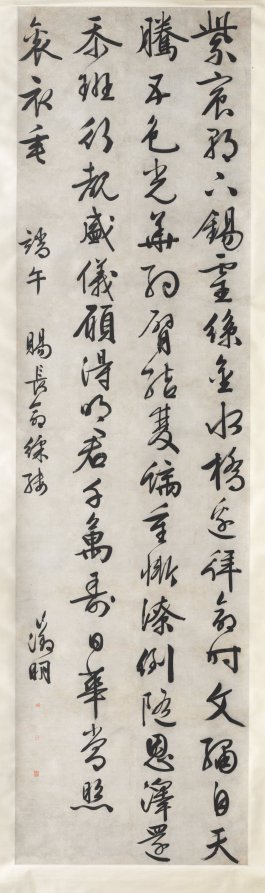
To the discerning eye, accustomed to the precise drape of a Super 150s wool or the subtle sheen of a rare Sea Island cotton, the very mention of imperial silk commands an immediate and profound respect. It is, one might posit, the original bespoke cloth. Its legacy is not merely one of luxury, but of a meticulously enforced material hierarchy, a tangible manifestation of power woven thread by thread. The artifact under consideration—a poem commemorating an imperial gift, executed in running-standard script (xingkaishu) upon a ground of the finest silk—presents a formidable case study. It represents not a simple document, but a complex transaction of prestige, where the medium is inext least as critical as the message.
The Foundation: Weaving the Fabric of Authority
Before a single character of ink was applied, the authority of this piece was established at the loom. Imperial silk production was a state monopoly of staggering complexity and ruthlessness. The workshops of Suzhou, Hangzhou, and Nanjing operated under draconian supervision, their patterns and techniques guarded secrets. The resulting cloth was defined by an almost impossible density of threads, a flawless surface, and a depth of colour achievable only through mastery of dyeing and the application of pure, beaten gold and silver thread. This was not mere fabric; it was a regulated technology of power. To be gifted such material was to be drawn into the celestial orbit of the throne, to have one's person or one's offering deemed worthy of a substrate that was, in itself, a symbol of the empire's divine order and unparalleled craftsmanship. In our terms, it is the equivalent of receiving a bolt of cloth woven exclusively for a reigning monarch, with the explicit permission—nay, command—to have it tailored.
The Hand: The Calligraphic Cut of *Xingkaishu*
Upon this rarefied ground, we encounter the cut and style of the script: xingkaishu, or running-standard. This is where the bespoke nature of the piece truly reveals itself. The formal, monolithic regularity of standard script (kaishu) conveys unquestioned authority, much like the severe lines of a military uniform or a morning coat. The cursive script (caoshu) is its antithesis: a private, expressive, and often deliberately obscure shorthand. Xingkaishu masterfully occupies the sartorial middle ground—the informed choice of the connoisseur.
It retains the legibility and structural integrity of the standard form but introduces the flowing, connective strokes of the cursive. The result is a script of controlled elegance and rhythmic vitality. It suggests a certain relaxed confidence, an authority so assured it can afford a measure of personal flourish. In executing the imperial poem in this style, the calligrapher (often the emperor himself, or a premier academician) was performing a delicate balance. He was adhering to the protocol demanded by the medium—the silk—while imbuing the text with a grace that elevated it above a mere bureaucratic edict. It is the sartorial equivalent of a perfectly tied cravat with a slightly idiosyncratic knot: tradition acknowledged, yet personality asserted.
The Composition: The Verse as a Tailored Gesture
The content of the poem itself operates within a tightly prescribed framework. As an "imperial gift," the verse is a performative act of benevolence, a literary-martial bestowal of favour. Its themes would typically extol virtue, loyalty, or celebrate a harmonious natural order that mirrors the perfect governance of the throne. The language, allusive and refined, was a further filter, accessible only to the educated elite. However, when such conventional sentiments are rendered in the fluid xingkaishu upon imperial silk, the effect is transformed.
The combination creates an object of immense relational weight. The recipient is not simply reading a compliment; they are holding the physical proof of their sovereign's esteem. The silk validates the poem, and the poem animates the silk. Every element—the cost of the material, the skill of the weaver, the learning of the poet, the artistry of the calligrapher—is compounded into a single, potent symbol. It is a gift that obligates, a honour that binds. In the ledger of courtly relations, this artifact was a non-negotiable credit of the highest order.
Legacy and Concluding Appraisal
The legacy of this imperial silk weaving and calligraphic tradition is one of an integrated system of value, where aesthetics, material science, and politics were inextricably fused. It established a paradigm where the finest material was the rightful canvas for the highest expressions of cultural and political authority. This paradigm echoes in the enduring codes of Savile Row and haute couture, where heritage fabrics, time-honoured techniques, and a subdued, confident execution continue to signify a distinct form of power and belonging.
To conclude, this embroidered silk poem is far more than a historical curio. It is a masterclass in composed symbolism. The imperial silk provides the unassailable foundation—the ultimate "cloth of record." The xingkaishu calligraphy delivers the tailored execution—authoritative yet fluid, correct but infused with character. Together, they transform a conventional verse into a multifaceted instrument of statecraft and personal accolade. It reminds us that true luxury, in any culture, resides not in ostentation alone, but in the seamless, authoritative integration of the finest material with the most discerning artistic hand. The result is an artifact that, like the best bespoke garment, carries its authority quietly, assured in the knowledge that those who know, will understand.