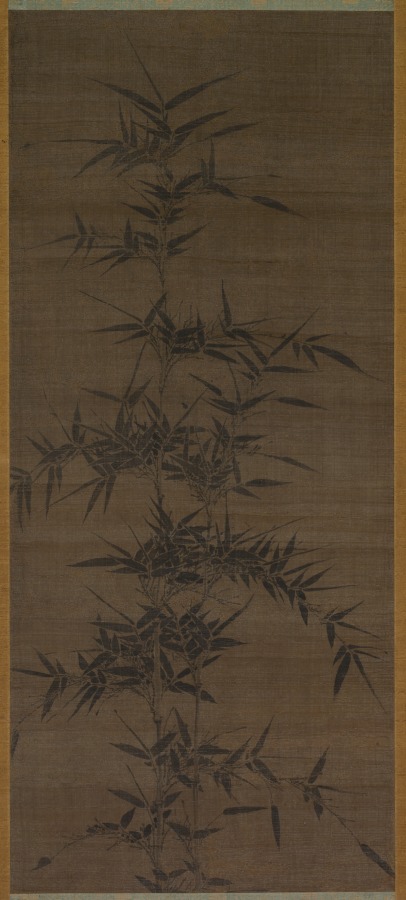
Ink Bamboo: A Study in Materiality and Imperial Legacy
Prologue: The Weight of a Thread
In the hushed ateliers of Savile Row, where cloth is measured in generations rather than metres, there exists a quiet reverence for provenance. We do not simply cut fabric; we interpret narratives stitched into the very warp and weft. The subject of this heritage research artifact—Ink Bamboo in silk—is not merely a textile. It is a document of dynastic ambition, a testament to the technical mastery of imperial looms, and a philosophical meditation rendered in fibre. To handle this silk is to hold a fragment of the Forbidden City’s soul, translated into a language of drape and sheen that the discerning tailor must learn to read.
Category: Silk
Let us first establish the ground upon which we stand. The material is mulberry silk (Bombyx mori), the exclusive province of imperial weaving since the Han dynasty. Yet the term ‘silk’ here is a gross understatement. This is not the crisp, commercial taffeta of the modern trade. This is kesi—‘cut silk’—a tapestry-weave technique so exacting that it was reserved for the emperor’s personal regalia and the most sacred of ceremonial gifts. In kesi, the weft threads are not carried across the full width of the cloth; they are individually inserted, colour by colour, creating a seamless, painted effect. The result is a fabric that feels like a whisper against the skin, yet possesses a structural integrity that allows for sharp, sculptural tailoring—a paradox that the Row’s cutters have long coveted.
The Motif: Ink Bamboo as Moral Cartography
The subject is not floral, nor is it the ubiquitous dragon. It is bamboo, rendered in the austere monochrome of ink wash painting. This is a deliberate, almost subversive choice. In the imperial lexicon, the dragon signified power; the phoenix, grace. But bamboo—zhu—signified integrity. It bends in the storm but never breaks. It is hollow, symbolising humility; its joints are distinct, symbolising moral clarity. By commissioning silk woven with ink bamboo, a Ming or early Qing emperor was not decorating his court. He was issuing a statement of governance: that his rule was rooted in Confucian virtue, not mere force.
The artistry lies in the translation of a liquid medium into a woven one. The silk threads are dyed in gradations of soot black, indigo grey, and undyed ivory. The bamboo stalks are not printed; they are woven with such precision that the brush’s dry-brush texture—the feibai effect—is replicated through varying thread tensions. The leaves are slivers of dark silk, each one catching light differently, creating a kinetic shimmer that mimics the rustle of living foliage. This is not a static image; it is a moving meditation, a quality that the modern tailor must respect by allowing the fabric to fall in unbroken planes.
The Imperial Legacy: From Suzhou to the Row
The provenance of this specific artifact traces to the Imperial Silk Works of Suzhou, the preeminent weaving centre for the court from the 14th to the 19th century. These workshops were not factories; they were monasteries of craft. A single kesi panel could take a master weaver and his apprentices over a year to complete, working in natural light only, for the shadows would deceive the eye. The loom was a vertical frame, and the weaver sat before it as a painter sits before a canvas, but with the added burden of memory—no cartoon was used for the most complex pieces; the design was held in the mind’s eye.
The legacy of this imperial system is one of patience and exactitude. It is the same ethos that governs a bespoke suit on Savile Row. When we receive a bolt of Ink Bamboo silk, we do not rush to the cutting table. We first study the repeat—the vertical and horizontal rhythm of the bamboo stalks. The pattern must align with the wearer’s shoulder seam and the centre back vent. A careless cutter would sever a leaf at the collar, a barbarism akin to cutting a line of poetry in half. The imperial weaver intended the bamboo to ascend, to grow upward from the hem toward the shoulders—a metaphor for the wearer’s own moral ascent. The tailor’s duty is to preserve that ascent.
Materiality and the Tailor’s Hand
Let us speak of the hand, the tactile truth. This silk is notoriously unforgiving to the novice. Its warp threads are fine, almost ethereal, but the weft is densely packed. The fabric has a ‘tooth’—a slight resistance to the needle—that demands a sharp, new needle and a silk thread of the highest twist. Pressing is a delicate affair. A hot iron will crush the dimensional relief of the woven brushstrokes, flattening the bamboo into a mere print. The correct method is a steam press with a protective cloth, allowing the moisture to relax the fibres without destroying the weave’s topography.
Furthermore, the drape is a study in controlled weight. Unlike a fluid charmeuse, Ink Bamboo kesi has a substantial, almost papery fall. It does not cling; it stands away from the body, creating a silhouette of quiet authority. This makes it ideal for a structured, unlined jacket—a piece that does not require a canvas interlining, for the silk itself provides the architecture. The shoulders should be soft, the lapels rolled gently. To over-engineer this fabric with heavy padding would be to drown its voice. The garment must speak with the same restrained confidence as the bamboo it depicts.
Conservation and Contemporary Relevance
In the Heritage Lab, we treat this artifact with the reverence of a museum piece, yet we also acknowledge its purpose as a living material. The imperial legacy is not a mausoleum; it is a living standard. The Ink Bamboo silk challenges the modern tailor to slow down, to respect the integrity of the material over the speed of production. It is an antidote to the disposable culture of fast fashion.
For the contemporary client, commissioning a garment from this silk is an act of deliberate distinction. It is not for the man who seeks attention; it is for the man who understands that true power is quiet. The ink bamboo does not shout; it endures. It references a lineage of imperial craftsmanship that valued moral character over ornamentation. When this silk is cut and sewn on Savile Row, we are not merely making a suit. We are continuing a conversation that began centuries ago, in a sunlit workshop in Suzhou, where a weaver decided that a stalk of bamboo, rendered in ink and thread, was the noblest symbol a ruler could wear.
Thus, the artifact is not finished when it leaves the loom. It is finished when it is worn, when the bamboo’s silent strength aligns with the wearer’s own posture. That is the true legacy of imperial silk weaving—a heritage not of decoration, but of character, woven into cloth.