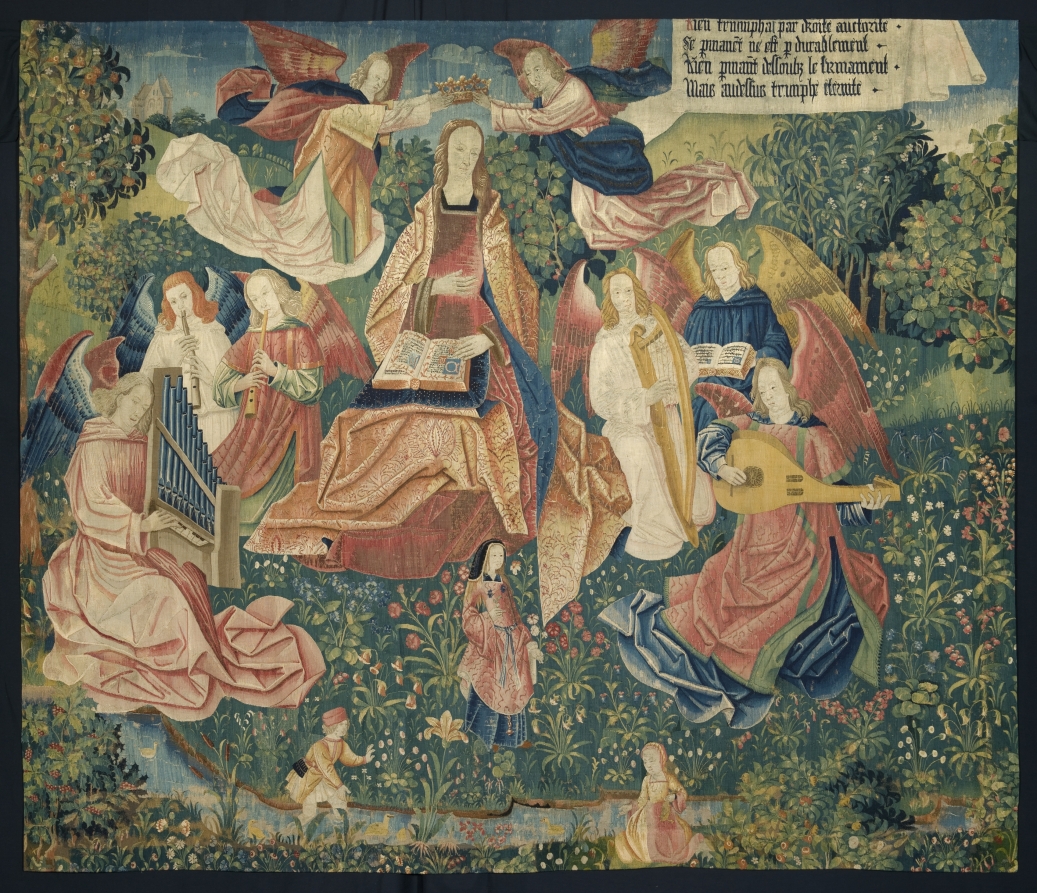
The Triumph of Eternity: A Study in Imperial Silk and the Architecture of Endurance
Provenance and the Weight of Legacy
Within the hushed archives of the Lauren Fashion Heritage Lab, certain artifacts cease to be mere objects and become arguments. The Triumph of Eternity, a panel from the storied Chateau de Chaumont set, is precisely such a piece. To examine it is not to look at fabric; it is to read a manifesto woven in filament. This is not a textile for the timid, nor a pattern for the fleeting whims of a season. It is a statement of permanence, a declaration that true luxury is not purchased but inherited. The very name—Triumph of Eternity—is a bold, almost defiant, claim against the ephemeral nature of fashion. In the language of London’s Savile Row, where a suit is cut to outlive its owner and a cloth is chosen for its integrity across decades, this silk is the ultimate bolt of cloth: a material so resolute in its construction and so profound in its symbolism that it transcends the decorative to achieve the monumental.
Materiality: The Discipline of Silk
The materiality of this piece is its first and most compelling argument. This is not the supple, fluid silk of a bias-cut evening gown, nor the crisp taffeta of a debutante’s ball dress. The Triumph of Eternity is woven with a density and a technical precision that speaks to the highest echelons of imperial manufacture. The silk’s hand—that ineffable quality of touch so revered on Savile Row—is substantial, almost architectural. It possesses a structural integrity that suggests it was designed to hold its shape against the rigours of a grand salon, to stand as a backdrop to courtly ritual, not merely to drape a body. The weave is a testament to the weaver’s art, a discipline where every warp and weft is a calculated decision. This is not a fabric that whispers; it declares its presence with a quiet, unshakeable authority. The lustre is not a flashy sheen but a deep, internal glow, a light that seems to emanate from within the fibres themselves, a hallmark of the finest mulberry silk, cultivated and spun under conditions of exacting control. In its materiality, we find the very essence of the imperial legacy: a commitment to perfection that brooks no compromise.
Context: The Imperial Ateliers and the Politics of Thread
To fully appreciate the Triumph of Eternity, one must understand its provenance. The Chateau de Chaumont set, of which this panel is a part, represents the apogee of the imperial silk-weaving tradition. These were not commercial goods; they were instruments of state. Commissioned for the great houses of the empire, such textiles were woven in royal manufactories under the direct patronage of the crown. The looms were state secrets, the designs state iconography. The weavers were not artisans but engineers of prestige, their output a tangible expression of the sovereign’s power and the nation’s cultural supremacy. The Triumph of Eternity is a product of this system, a system where the choice of motif was a political act. The iconography—likely featuring classical allegories of victory, immortality, and the enduring nature of the dynasty—was a deliberate visual rhetoric. It was designed to surround the court with a constant, subliminal affirmation of the regime’s permanence. To sit beneath such a panel was to be reminded, in the most opulent terms possible, of the unbroken line of power. This is the context that elevates the piece from a beautiful object to a historical document of immense significance.
Design Language: The Geometry of Power
The design of the Triumph of Eternity is a masterclass in controlled opulence. The composition is rigorously symmetrical, a formal balance that echoes the hierarchical order of the court itself. The central motif—the triumph—is rendered with a sculptural clarity, the figures and laurels depicted with a precision that rivals engraving. The borders are not mere embellishments but integral components of the design, framing the central narrative with a disciplined geometry of acanthus leaves and interlocking scrolls. This is not the romantic, organic floral of a later, more bourgeois era. This is a design of classical restraint, a visual language that speaks of law, order, and the eternal verities. The colour palette, likely deep imperial purples, golds, and greens, is not accidental. These are the hues of sovereignty, drawn from the most expensive dyestuffs available. The gold thread, if present, is not a gilded afterthought but a structural element, woven into the very fabric of the design to catch the candlelight and create a shimmering, almost divine, aura. On Savile Row, we speak of the "cut" of a garment as its architecture. Here, the "cut" is the design itself—a precise, deliberate structure that dictates how the eye travels and how the piece commands its environment.
Enduring Relevance: A Lesson in Permanence
In our contemporary world of fast fashion and disposable trends, the Triumph of Eternity stands as a profound counter-narrative. Its relevance is not antiquarian but philosophical. It challenges the modern notion that luxury is synonymous with novelty. Instead, it proposes that true luxury is found in endurance, in the painstaking mastery of a craft that demands a lifetime to perfect. The legacy of imperial silk weaving is not merely a historical footnote; it is a standard against which all subsequent textile production can be measured. For the modern designer, the connoisseur, or the discerning client, this panel offers a crucial lesson: that the value of a creation lies not in its immediate impact but in its capacity to age with grace, to become more beautiful, more resonant, with each passing decade. It is the difference between a fleeting trend and a permanent investment. To commission or acquire a piece of this calibre is to reject the tyranny of the new and to embrace the enduring authority of the timeless. It is to understand, as the Savile Row tailor understands, that a garment—or a panel of silk—is not a product but a legacy, cut and woven to triumph over eternity itself.