← BACK TO ARCHIVES
Heritage-Black
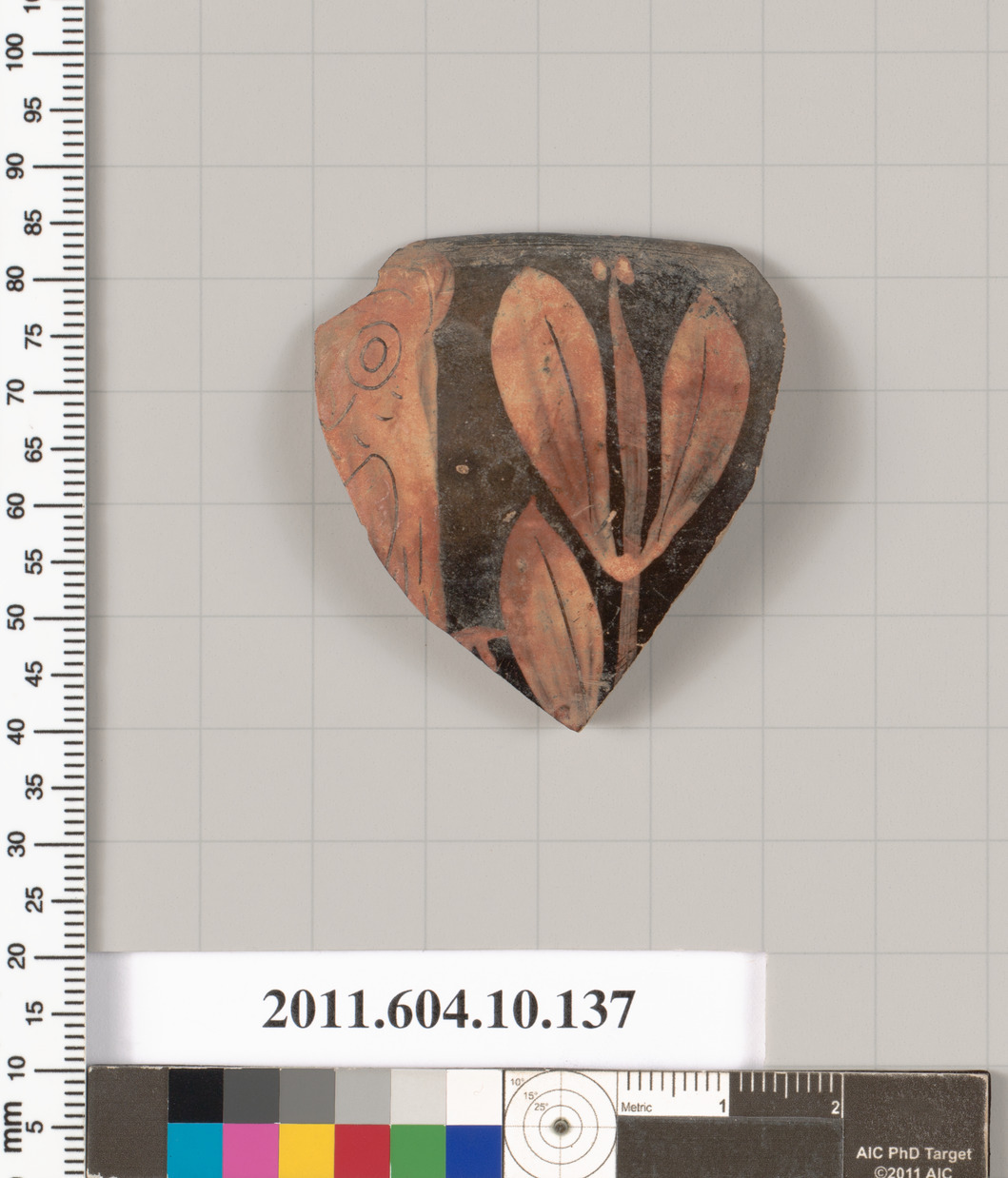
Heritage Synthesis: Terracotta fragment of a skyphos (deep drinking cup)
Curated on Aug 19, 2026 // Node: LDN-01
The Eternal in the Fragment: Etruscan Terracotta and the 2026 Old Money Silhouette
The internal genetic code of Lauren Fashion—rooted in the dialectic between the transient and the eternal, the void and the substantial—finds an unexpected yet profound resonance in a humble Etruscan artifact: the terracotta fragment of a skyphos. This shard of a deep drinking cup, broken and weathered, is not merely an archaeological remnant; it is a philosophical artifact that speaks directly to the 2026 Old Money silhouette. Where the *Udonge* temple plaque whispers of Buddhist emptiness and the Han bronze mirror thunders with cosmic dynamism, this Etruscan fragment offers a third path: the aesthetic of *material memory*. It teaches that true luxury is not the pristine surface, but the integrity of form that persists through decay. For the 2026 Old Money wardrobe, this translates into silhouettes that prioritize structural permanence over fleeting trend, and a fabric language that honors the patina of time as the ultimate marker of heritage.
I. The Terracotta’s Aesthetic Grammar: Imperfection as Authority
The Etruscan skyphos fragment, likely from the 4th–3rd century BCE, is a study in controlled imperfection. Its terracotta body—a fired clay of deep ochre, burnt sienna, and muted umber—bears the fingerprints of its maker, the irregular wheel-thrown ridges, and the accidental scorch marks of the kiln. Unlike the polished perfection of Greek black-figure ware or the gilded opulence of Roman silver, this fragment celebrates the *process* of becoming. Its broken edges are not wounds but witnesses; they record centuries of use, burial, and excavation. In the lexicon of Old Money aesthetics, this translates to a rejection of the “new” as a virtue. The 2026 silhouette does not chase the crisp, the starched, or the untouched. Instead, it embraces the *broken-in*: a cashmere overcoat with a natural drape that softens over decades, a wool twill suit whose shoulders settle into the wearer’s posture, a silk blouse whose sheen mellows into a quiet luster. The terracotta fragment teaches us that authority in heritage fashion comes not from resisting time, but from *absorbing* it.
II. Structural Silence: The Architecture of the 2026 Silhouette
The skyphos’s form—a deep, stable bowl with two horizontal handles—is an exercise in functional gravitas. Its proportions are grounded, low-slung, and unapologetically solid. This is the antithesis of the ephemeral, body-conscious silhouettes of fast fashion. For 2026, the Old Money silhouette borrows this *chthonic stability*. We see it in the return of the dropped shoulder, the elongated torso, and the A-line coat that skims the body without clinging. The terracotta’s vertical ridges, created by the potter’s fingers, suggest a ribbed texture that we translate into *piqué* wovens, *cable-knit* merino, and *corded* silk. These textures are not decorative; they are structural, echoing the clay’s inherent strength. The silhouette becomes a vessel—not for wine, as the skyphos was, but for the wearer’s presence. It holds space, much like the Buddhist “emptiness” of the *Udonge* plaque, but with a distinctly Etruscan pragmatism: this is a vessel meant to be held, used, and passed down.
III. The Palette of Earth and Ash: Color as Provenance
The terracotta fragment’s palette is not chosen but *earned*. The deep umber of the clay body, the ochre of the slip, and the blackened carbon deposits from its funerary context form a chromatic narrative of earth, fire, and time. For the 2026 Old Money collection, this dictates a move away from stark whites and saturated jewel tones toward a *terrestrial spectrum*: burnt sienna, raw umber, taupe, graphite, and a deep, almost-black brown that we term “Heritage-Black.” This is not the black of mourning or minimalism; it is the black of fertile soil, of ancient kilns, of the shadowed interiors of Etruscan tombs. This palette functions as a silent signal of provenance. A woman in a Heritage-Black wool coat with terracotta-toned leather gloves does not announce her wealth; she *embodies* it, like the fragment’s patina announces its age without a label.
IV. The Mirror and the Shard: A Dialogue on Transience
Returning to the internal code, the Han bronze mirror (with its deities, chariot, and white tiger) represents the *cosmic* view—a dynamic, outward-facing assertion of eternal order. The Etruscan skyphos fragment, by contrast, is the *intimate* view—a broken piece of a daily object, once held by lips and hands, now silent in a museum case. The mirror reflects the universe; the shard *is* a universe. For 2026, this duality resolves into a single design philosophy: the Old Money garment must function as both mirror and shard. It must reflect the wearer’s status through impeccable lineage (the mirror’s cosmic order), yet also carry the tactile, human imperfections that make it unique (the shard’s material memory). This is achieved through details like hand-stitched seams that slightly pucker, horn buttons that vary in grain, and linings of raw silk that wrinkle naturally. These are not flaws; they are the Etruscan fingerprints left in the clay.
V. The 2026 Silhouette: A Manifesto of Restraint
Concretely, the 2026 Old Money silhouette informed by this terracotta fragment comprises three key archetypes. First, the *Skyphos Coat*: a knee-length, double-faced wool wrap coat with a deep, unconstructed armhole and a single, low-set closure—echoing the vessel’s stable, grounded form. It is cut with a slight A-line, allowing for movement without volume. Second, the *Fragment Trousers*: a high-waisted, wide-leg pant in a heavy, brushed cotton-twill, with a crease that softens over time, mimicking the potter’s ridges. The hem is finished with a raw, hand-rolled edge, a deliberate nod to the broken rim of the skyphos. Third, the *Udonge Shirt*: a fluid, bias-cut blouse in sand-washed silk, with a neckline that drapes asymmetrically, referencing the Buddhist “emptiness” but grounded by the terracotta’s earthy hue. These pieces are not designed for a season; they are designed for a *lifetime*. They are meant to be worn, stained, repaired, and re-worn—each mark adding to their narrative, just as the Etruscan fragment’s breaks add to its historical weight.
Conclusion: The Fragment as the Future
The Etruscan terracotta skyphos fragment is not a relic of a dead civilization; it is a blueprint for a living aesthetic. In its brokenness, we find the ultimate luxury: the confidence to be incomplete, the wisdom to value process over product, and the grace to let time be the final designer. For Lauren Fashion’s 2026 Old Money line, this artifact is not a source of motifs but a source of *ethics*. It commands us to design with the humility of the potter, the patience of the kiln, and the acceptance of the shard. The result is a silhouette that is neither nostalgic nor futuristic, but *eternal*—a garment that, like the fragment, will be more beautiful in a hundred years than it is today. This is the true heritage of the Old Money: not the accumulation of new things, but the stewardship of enduring forms. And in that stewardship, we find the deepest expression of the “Heritage-Black”—a color that is not the absence of light, but the presence of all time.
Heritage Lab Insight
Genetic Bridge: Archive node focusing on Heritage-Black craftsmanship.