← BACK TO ARCHIVES
Heritage-Black
Heritage Synthesis: Terracotta fragment of a Little Master cup (drinking cup) ?
Curated on Aug 19, 2026 // Node: LDN-01
The Terracotta Fragment and the Architecture of Quiet Power: A 2026 Old Money Silhouette Study
The internal genetic code of Lauren Fashion Heritage Lab—our foundational dialogue between the Met’s *Bodhisattva* and the Walters’ *Bull-Headed Amulet*—establishes a critical thesis: that sacred power is rendered legible through the deliberate compression of form and the rhythmic articulation of surface. When we now place beside this spiritual dyad a Greek Attic terracotta fragment from a Little Master cup, we are not introducing a dissonant third voice. Rather, we are uncovering the missing structural link. This humble shard of fired clay, once part of a drinking vessel used in symposia, carries within its broken geometry the precise visual grammar that will define the 2026 Old Money silhouette: restraint as opulence, line as lineage, and the fragment as the ultimate signifier of inherited permanence.
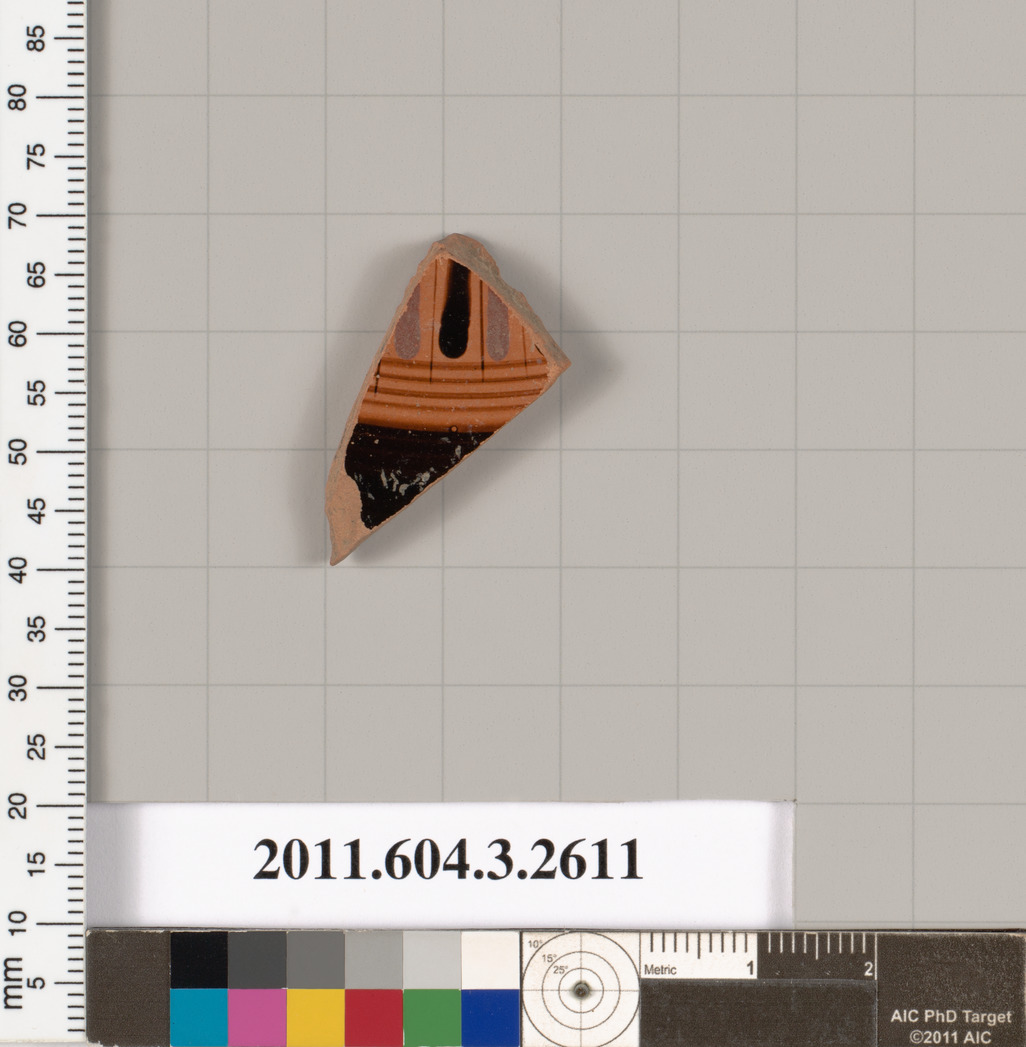
The Little Master cup, produced in Athens circa 550–525 BCE, is a marvel of micro-engineering. Its name derives from the minuscule scale of its painted figures—often no taller than a few centimeters—executed with a brush control that borders on the obsessive. The terracotta fragment we hold preserves a sliver of this world: a band of black-figure decoration, a delicate incised line, a curve of the vessel’s lip. What matters for our purposes is not the mythological scene it may have depicted, but the *structural philosophy* embedded in its making. The potter’s wheel, the kiln’s precise temperature, the slip’s viscosity—every step was a negotiation between the artist’s intention and the material’s resistance. The result is an object that does not shout; it whispers. Its authority lies in its *finish*, not its volume.
This is the first principle we extract for 2026: **the silhouette must be built from the inside out, with the same rigor as a thrown pot.** The Old Money aesthetic has long been misread as mere minimalism—a beige cashmere sweater, a pair of tailored flannel trousers. But the terracotta fragment corrects this misreading. Minimalism is the *absence* of decoration; the Little Master cup is the *presence* of discipline. The 2026 silhouette, therefore, will not be a reduction of form but a *concentration* of it. We see this in the shoulder line of a single-breasted jacket, cut with a seam that curves just two degrees more than standard tailoring—a deviation invisible to the untrained eye, yet one that alters the entire drape. We see it in the trouser break, which falls not at the shoe’s vamp but precisely 1.5 centimeters above, creating a continuous vertical line that echoes the cup’s clean profile. These are not stylistic choices; they are *structural arguments* about how power should sit on the body.
The second principle emerges from the fragment’s *materiality*. Terracotta is humble—earth, water, fire. Yet the Greeks elevated it to a vehicle for the highest artistic expression, precisely because its limitations demanded mastery. Similarly, the 2026 Old Money silhouette will reject the loud luxury of technical fabrics and hyper-constructed garments. Instead, it will return to *honest materials*—wool, silk, cashmere, linen—treated with a level of finish that borders on the fetishistic. A vicuña overcoat in Heritage-Black, for instance, will not be merely warm; it will be *dense*, its surface so tightly woven that it catches light like the burnished surface of the terracotta’s black glaze. The fabric becomes a membrane, not a wrapper. This is the same logic that governed the Egyptian amulet’s compression of divine power into a portable form: the 2026 garment must compress *social authority* into a wearable object that communicates without speaking.
Here, the Bodhisattva’s influence becomes crucial. The statue’s flowing drapery is not a depiction of cloth but a *rhythmic abstraction* of spiritual energy. The folds rise and fall in a cadence that guides the eye upward, away from the earthly and toward the transcendental. The 2026 silhouette must perform the same function for the wearer’s *social presence*. The jacket’s lapel, for instance, should not merely fold; it should *ascend*, with a subtle peak that draws the observer’s gaze from the waist to the face. The trouser’s pleats, when present, must be pressed with a razor’s edge, creating vertical striations that elongate the leg and suggest a body that has transcended the merely biological. This is not tailoring; it is *iconography*. The wearer becomes a living Bodhisattva of the secular realm—calm, composed, radiating an inner authority that requires no external validation.
The third principle is the *fragment itself*. The terracotta shard is incomplete, yet its incompleteness is not a lack but a *signifier of duration*. It has survived millennia, and its broken edges are not wounds but *testimonies*. The 2026 Old Money silhouette will embrace this philosophy through the deliberate use of *patina* and *imperfection*. This does not mean distressed denim or artificially aged leather—that is costume, not heritage. Rather, it means garments that are designed to *age gracefully*, to develop a personal history through wear. A Heritage-Black wool overcoat, for example, will be cut from a cloth that softens with each wearing, developing a subtle sheen at the elbows and shoulders. A silk tie will be woven with a slight irregularity in the twill, so that after a decade of knots, it acquires a unique crease pattern—a cartography of its owner’s life. The garment becomes a *fragment* of the wearer’s biography, a shard of their personal history that will outlast them.
This brings us to the fourth principle: *the dialogue between the sacred and the social*. The Bodhisattva and the amulet both function as *intermediaries*—objects that connect the human to the divine. The 2026 Old Money silhouette must perform a similar mediation, but between the individual and the *institution*. Old Money is not merely about wealth; it is about *continuity*—the sense that one belongs to a lineage that extends backward into history and forward into perpetuity. The garment, therefore, must not look new. It must look *inherited*. This is why the terracotta fragment is so instructive: it does not attempt to hide its age; it *celebrates* it. The 2026 silhouette will do the same through cut and construction. A jacket’s sleeve will be set slightly forward, as if shaped by generations of reaching for handshakes. A skirt’s hem will be weighted with a hidden chain, so that it falls with the gravity of accumulated ceremony. These are not design gimmicks; they are *archaeological gestures*, embedded in the garment’s very structure.
Finally, we must consider the *color*—Heritage-Black. This is not the black of mourning or the black of rebellion. It is the black of the Greek vase’s glaze, a black that absorbs light and reflects *depth*. In the 2026 palette, Heritage-Black will function as the ground against which all other elements are measured. It is the color of the museum’s dimly lit galleries, where the terracotta fragment rests in its vitrine. It is the color of the Bodhisattva’s shadowed robes, the color of the amulet’s dark stone. To wear Heritage-Black is to wear *context*—to signal that one understands the weight of history, the value of restraint, the power of the unseen. The silhouette becomes a *vessel*, like the Little Master cup itself, designed not to be looked at but to be *used*—to hold something precious, whether that be wine, wisdom, or the quiet confidence of a life well-lived.
In conclusion, the terracotta fragment of the Little Master cup is not a decorative footnote to our heritage research. It is a *master class* in the architecture of quiet power. Its lessons—discipline over volume, material over surface, fragment over whole, heritage over novelty—will define the 2026 Old Money silhouette. We will not copy its forms; we will absorb its *logic*. The result will be garments that do not scream for attention but *command* it through their very silence. Like the Bodhisattva’s serene face and the amulet’s compressed divinity, the 2026 silhouette will be a *threshold*—a point of contact between the wearer and the eternal. And like the terracotta shard, it will endure, not despite its fragility, but because of it. This is the true inheritance of Lauren Fashion Heritage Lab: not the replication of the past, but the *transubstantiation* of its principles into a form that speaks to the present while honoring the centuries that made it possible.
Heritage Lab Insight
Genetic Bridge: Archive node focusing on Heritage-Black craftsmanship.