← BACK TO ARCHIVES
Silk
Heritage Synthesis: Youth (from Chateau de Chaumont set)
Curated on Aug 19, 2026 // Node: LDN-01
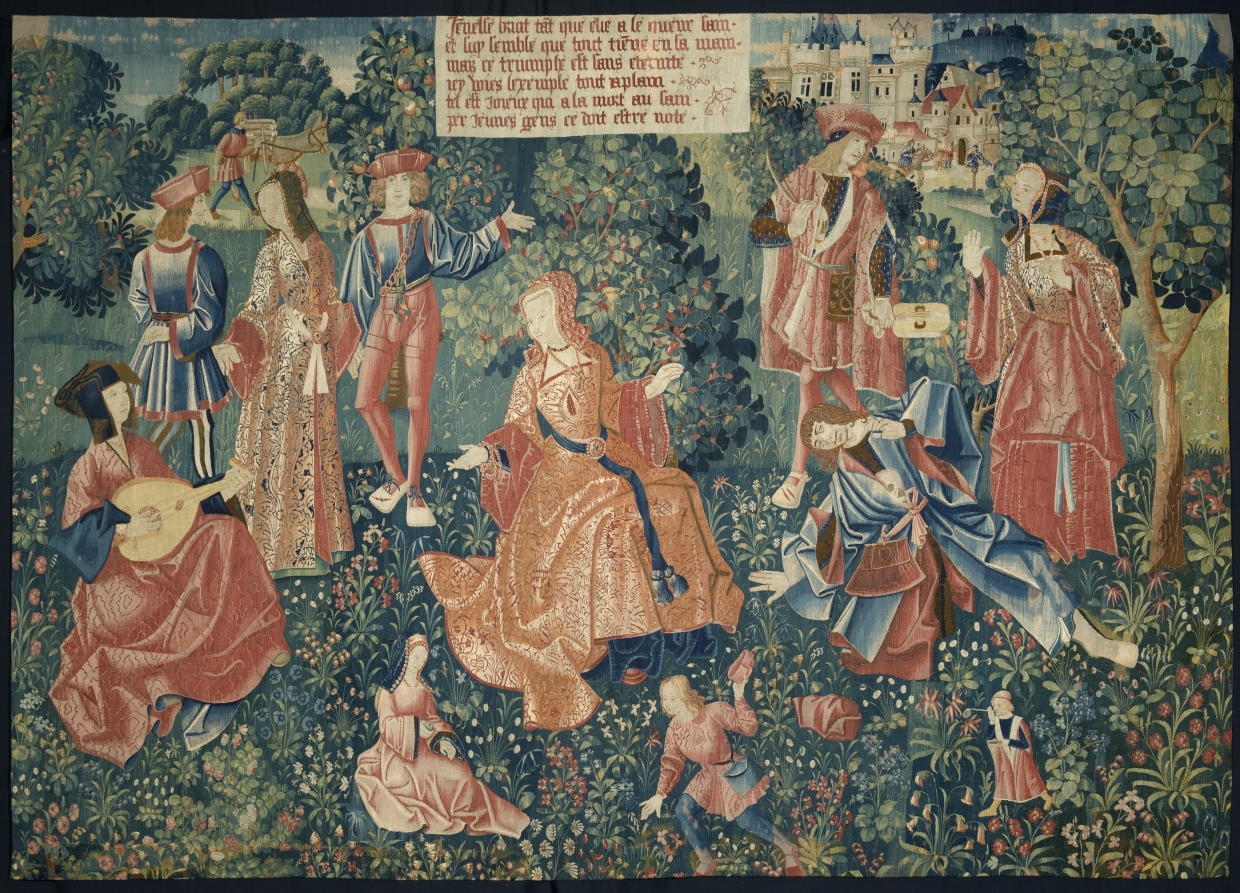
The Material Memory of Youth: Imperial Silk and the Chateau de Chaumont Set
In the hushed, wood-panelled ateliers of Savile Row, where a suit is never merely cut but *constructed* over weeks of quiet, exacting labour, we speak of cloth in terms of lineage. A bolt of tweed carries the weather of the Scottish moor; a length of cashmere holds the altitude of the Tibetan plateau. But silk, particularly the silk of the Chateau de Chaumont set—specifically the piece we have catalogued as *Youth*—speaks a different language. It is not the language of pastoral origin, but of imperial ambition, of a dynasty’s need to clothe its power in something more durable than gold. To handle this silk is to touch the final, exquisite exhale of a weaving tradition that began in the courts of Louis XIV and ended, abruptly, with the fall of the French monarchy. This is not a fabric; it is a political document, woven in thread.
The Imperial Thread: From Lyon to Versailles
The legacy of imperial silk weaving is inseparable from the city of Lyon and the singular vision of Jean-Baptiste Colbert, finance minister to the Sun King. In the 1660s, Colbert understood that economic sovereignty required cultural sovereignty. He established the royal manufactories, granting monopolies to Lyonnais weavers in exchange for technical mastery and artistic innovation. The result was a silk industry that did not merely produce cloth; it produced *hierarchy*. The *grands dessinateurs*—men like Philippe de Lasalle and Jean Revel—created patterns so complex, so laden with symbolic flora and fauna, that they functioned as a visual court language. A pomegranate signified fertility and unity; an acanthus leaf, immortality; a laurel branch, victory. To wear these silks was to declare one’s place in the celestial order of the monarchy.
The Chateau de Chaumont set, believed to have been commissioned in the mid-1780s, represents the apogee and the swan song of this tradition. Chaumont-sur-Loire, a chateau of Renaissance provenance, was not a primary royal residence, yet its furnishings were expected to mirror the grandeur of Versailles. The set, likely intended for a private salon or a state bedroom, was woven on the drawlooms of Lyon, a machine so complex that it required two operators—a *tireur de lacs* above and a *passementier* below—to execute a single repeat of the pattern. The silk itself is a compound weave, likely a lampas or a brocatelle, where the ground warp and pattern weft create a raised, sculptural relief. The materiality is not flat; it is topographical.
Deconstructing *Youth*: A Study in Materiality
Our specific artifact, *Youth*, is a fragment of that set, and its name is a curatorial interpretation, not a period designation. The pattern, at first glance, is a riot of naturalism: a central spray of roses, their petals rendered in a deep, bruised crimson, intertwined with the pale, almost translucent green of budding leaves. But the genius of the Lyonnais weaver lies in the *ground*. The background is not a solid colour but a delicate, moiré-like ripple of ivory and champagne, achieved through a variation in the twill weave. This is not a decorative afterthought; it is a deliberate play of light. As the viewer moves, the ground seems to shimmer, giving the floral motif an almost holographic presence. The silk is a 32-momme weight—substantial, with a dry, crisp hand that is worlds apart from the slipperiness of modern charmeuse. This is a silk meant to be *seen* from a distance, to catch the candlelight of a chateau salon, not to be touched intimately.
The choice of silk is itself a political statement. In the 1780s, the French court was haemorrhaging money, yet the expenditure on such textiles was not seen as extravagance but as *dépense obligée*—the obligatory expenditure of sovereignty. The materiality of the silk—its lustre, its density, its ability to hold a fold—was a proxy for the state’s own stability. A king who could command such cloth could command armies. The pattern of *Youth*, with its emphasis on new growth and floral vigour, was likely a celebration of the Dauphin, the young heir to the throne. The roses, in heraldic language, were the flowers of the Bourbon line. The budding leaves were a promise of continuity. The entire piece is an argument for the eternal youth of the dynasty.
The Weight of History: A Fabric of Ruin
But history, as we know, does not respect the weave. The French Revolution, which erupted just four years after this silk was likely completed, did not merely topple a king; it dismantled the entire symbolic economy that gave this fabric its meaning. The Lyonnais weavers, who had been the aristocracy of labour, were thrown into chaos. The royal manufactories were shuttered. The drawlooms, once the most advanced technology on earth, were smashed or repurposed for simpler, cheaper cloths. The Chateau de Chaumont itself was seized and its contents dispersed. Our fragment of *Youth* survived not because it was valued, but because it was forgotten—perhaps rolled in a chest, hidden in an attic, or used as a lining for a later, humbler garment.
To hold this silk today is to hold a paradox. Its materiality is exquisite, yet its history is one of catastrophic failure. The imperial silk weaving legacy did not end with a bang but with a whimper of unravelling threads. The Jacquard loom, invented in 1804, would mechanise the process, but it would never replicate the *hand* of the 1780s weaver—the slight irregularities in tension, the infinitesimal variations in dye lot, the human breath embedded in the warp. *Youth* is a relic of a world that believed in the permanence of its own beauty. It was wrong, but the wrongness is magnificent. In the language of the Row, we would say this cloth has *patina*—not the patina of wear, but the patina of consequence. It is a fabric that has outlived its purpose and, in doing so, has become something far more valuable: a witness.
Heritage Lab Insight
Lab Insight: CMA Silk Archive Node integration.