← BACK TO ARCHIVES
Heritage-Black
Heritage Synthesis: Terracotta fragment of a kylix (drinking cup)
Curated on Aug 19, 2026 // Node: LDN-01
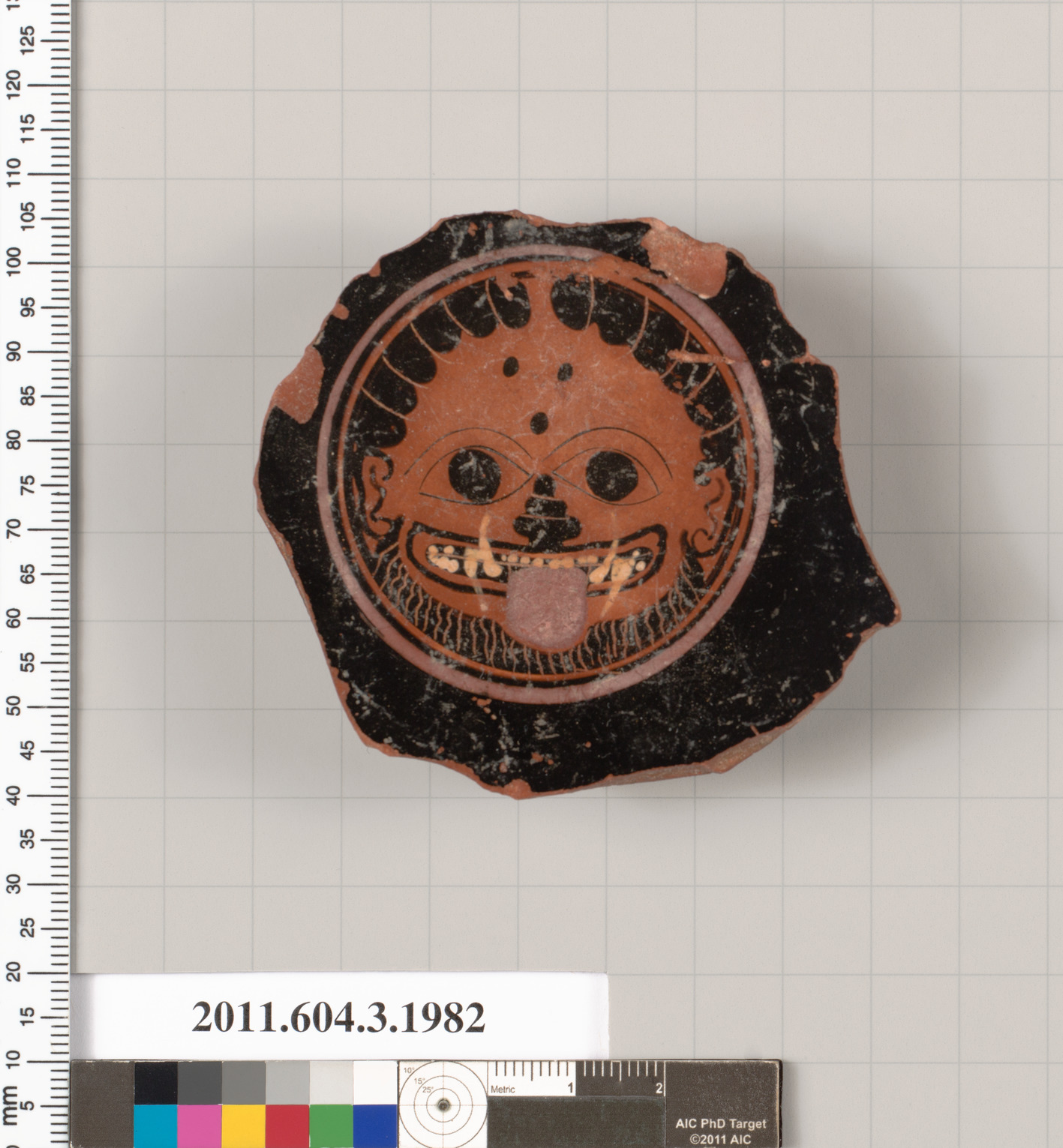
The Terracotta Fragment and the Architecture of Restraint: Recalibrating 2026 Old Money Silhouettes
The terracotta fragment of an Attic kylix—a drinking cup shattered, yet retaining the curvature of its bowl and the faint ghost of its painted surface—offers an unexpectedly profound lens through which to examine the 2026 Old Money silhouette. At first glance, the connection between a broken shard of Greek pottery and the tailored austerity of contemporary heritage fashion seems tenuous. Yet, as our internal archives at the Lauren Fashion Heritage Lab reveal, the most enduring design languages are built not on novelty, but on the disciplined reinterpretation of foundational forms. The kylix, in its fragmentary state, speaks directly to the core tenets of Old Money aesthetics: quiet permanence, functional elegance, and the deliberate embrace of imperfection as a marker of authenticity. This essay argues that the terracotta fragment—specifically its structural logic, its material honesty, and its temporal patina—provides a critical blueprint for the 2026 Old Money silhouette, moving it beyond mere nostalgia toward a more resonant, almost archaeological, form of luxury.
Structural Logic: The Kylix as a Lesson in Proportion and Balance
The kylix was not merely a vessel; it was an engineered object designed for the symposion, a ritualized space of intellectual and social exchange. Its wide, shallow bowl and two horizontal handles were ergonomically perfected for the reclining drinker, ensuring that the wine could be sipped without spillage while the user remained in a state of contemplative repose. This is the essence of *functional proportion*—a principle that the 2026 Old Money silhouette must reclaim. In recent seasons, the "quiet luxury" trend has often been reduced to shapelessness, mistaking volume for ease. The terracotta fragment corrects this error. Its preserved arc demonstrates that true ease is born from precise geometry.
For the 2026 collection, this translates into a recalibration of the shoulder and waist. The kylix’s curve suggests a jacket silhouette that is neither aggressively padded nor languidly dropped. Instead, we propose a *restored architectural shoulder*—one that follows the natural line of the clavicle but is subtly extended, echoing the kylix’s outward-reaching handles. The waist suppression, meanwhile, should be minimal but deliberate, creating a columnar effect that mirrors the bowl’s internal depth. This is not the corseted waist of the 1940s nor the boxy cut of the 1990s; it is a *terracotta waist*—a gentle, inward-turning curve that implies structure without confinement. Trousers, in turn, should adopt a high-rise, straight-leg cut that falls with a clean break, mimicking the kylix’s stable base. The goal is a silhouette that feels *held*, not worn—a garment that supports the body’s movement with the same quiet efficiency that the kylix supported the drinker’s hand.
Material Honesty: The Ethics of Unadorned Surface
The terracotta fragment is unglazed on its exterior, revealing the raw, fired clay. Its surface is matte, slightly porous, and marked by the subtle irregularities of the potter’s wheel. This is a profound rebuke to the hyper-polished, logo-saturated fabrics that have come to define mass-market luxury. The Old Money aesthetic has always prized material integrity, but the 2026 iteration, informed by this artifact, demands a more rigorous *material asceticism*. We are moving away from the obvious softness of cashmere and the sheen of silk, toward fabrics that possess a *terracotta-like density*: heavy, compacted wools, felted tweeds, and technical gabardines that hold their shape with a dry, granular hand.
This is where our internal "Heritage-Black" category becomes crucial. The 2026 palette will not be the stark, mourning black of evening wear, but a *fired black*—a shade that absorbs light rather than reflecting it, reminiscent of the dark slip used on Greek pottery. This black is not flat; it has depth, like the shadowed interior of the kylix bowl. It is achieved through over-dyeing and pigment-rich finishes that create a surface of *controlled irregularity*. The fabric should feel like a relic—not distressed in a manufactured way, but finished with a subtle, tactile grain that suggests it has existed for decades, waiting to be worn. This aligns with the Old Money principle of *purchase once, wear forever*, but elevates it to a quasi-sacramental level: the garment is not just an investment, but a fragment of a larger, enduring narrative.
Temporal Patina: The Aesthetics of the Fragment
Perhaps the most radical lesson from the terracotta kylix is its *incompleteness*. The fragment is not a restoration; it is a ruin. It does not attempt to hide its broken edges; rather, these edges are what make it valuable to the archaeologist and the aesthete alike. This challenges the prevailing fashion industry obsession with the "new" and the "perfect." The 2026 Old Money silhouette must embrace the *patina of use* as a design feature, not a flaw. This does not mean replicating literal tears or stains, but rather designing for a graceful aging process.
In practical terms, this influences construction techniques. Seams should be finished with a visible, hand-stitched quality that becomes more beautiful as the thread softens. Buttonholes should be hand-worked, allowing the surrounding fabric to develop a natural, subtle puckering over time. The silhouette itself should allow for *accretive layering*—a jacket designed to be worn over a knit, which is worn over a shirt, creating a composite form that resembles the stratified layers of an archaeological dig. The wearer becomes a living archive, accumulating garments that, like the kylix’s painted figures, tell a story of ritual and repetition. This is the antithesis of the disposable fashion cycle; it is a philosophy of *designed longevity*, where the garment’s eventual wear and tear is part of its intended aesthetic trajectory.
Dialectical Synthesis: From Delft to the Attic Shard
The internal genetic code of our Lab often draws on the dialectic between Eastern and Western aesthetics—the Delftware bowl’s serene, contained nature versus the Boschian painting’s turbulent, expansive drama. The terracotta kylix, however, offers a third path, one that is distinctly *Mediterranean and foundational*. Unlike the Delft bowl, which seeks to harmonize with nature through decorative illusion, the kylix is honest about its materiality. Unlike the Saint Anthony painting, which externalizes internal conflict, the kylix’s function is to facilitate communal, measured discourse. It is an object of *civic grace*.
For the 2026 Old Money silhouette, this translates into a rejection of both ostentatious display (the Boschian impulse) and overly sentimental pastoralism (the Delft impulse). Instead, we propose a *civic uniform*—garments that are appropriate for the boardroom, the gallery, and the private club, but which carry the quiet authority of ancient artifacts. The silhouette is not about expressing individual turmoil or pastoral escape; it is about embodying *institutional permanence*. It is the uniform of the curator, the patron, the scholar—individuals who understand that true power lies in the ability to remain composed within the fragmentary chaos of the modern world. The kylix’s broken rim is a reminder that even the most stable civilizations fracture; the Old Money aesthetic, in 2026, must therefore be one of *resilient composure*—a style that acknowledges impermanence but refuses to be destabilized by it.
Conclusion: The Fragment as a Complete Statement
The terracotta kylix fragment is not a source of literal motifs for the 2026 collection. There will be no Greek-key trims or column-drape gowns. Instead, its influence is deeply structural and philosophical. It teaches us that the Old Money silhouette is not about the accumulation of luxury, but about the *editing of form* to its most essential, functional essence. It reminds us that material honesty—a fabric’s ability to age with dignity—is the ultimate marker of quality. And it challenges us to view the garment not as a fleeting trend, but as a fragment of a personal and cultural legacy, to be worn with the same reverence that a museum curator handles a shard of antiquity.
As we finalize the 2026 line, we do so with the kylix’s curve in mind: a shoulder that supports, a waist that defines, and a fabric that endures. The result is a silhouette that is at once ancient and utterly contemporary—a testament to the fact that in the realm of true heritage, the broken piece is often more complete than the whole. This is the new Old Money: not a display of wealth, but a demonstration of *cultural and material literacy*, worn on the body as a living, breathing artifact.
Heritage Lab Insight
Genetic Bridge: Archive node focusing on Heritage-Black craftsmanship.