← BACK TO ARCHIVES
Silk
Heritage Synthesis: Flower Embroidery Design for Silk Manufactory of Lyon
Curated on Aug 19, 2026 // Node: LDN-01
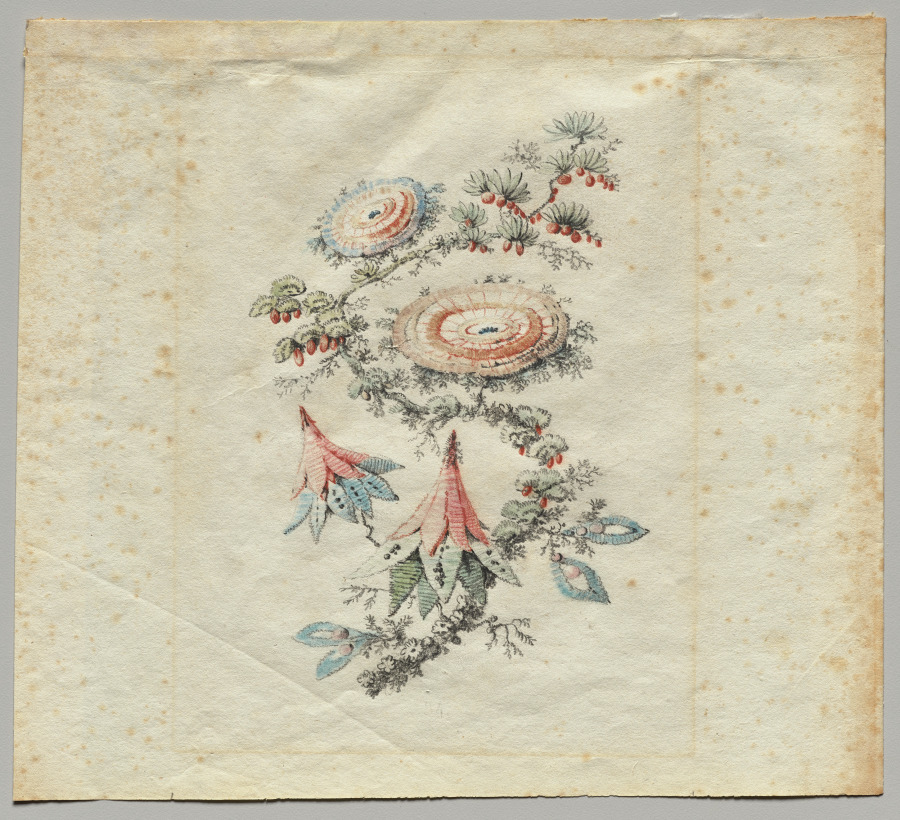
The Enduring Thread: Flower Embroidery and the Imperial Legacy of Lyon’s Silk
In the hushed, wood-panelled ateliers of Savile Row, where the cut of a shoulder is debated with the gravity of a diplomatic treaty, there exists an unspoken reverence for provenance. We do not merely commission cloth; we commission history. And among the most storied, the most politically charged, and the most exquisitely fragile of those histories is the flower-embroidered silk of Lyon. To handle a bolt of this material is to hold a fragment of the *Ancien Régime*, the Revolution, and the Napoleonic ambition that sought to weave an empire from a single thread.
The materiality of this artifact is not a passive quality; it is an active participant in its narrative. The silk itself—a continuous filament drawn from the cocoon of *Bombyx mori*—is a paradox. It is at once the strongest natural fibre known to man, yet it shimmers with a delicacy that suggests it might dissolve at a whisper. For the Lyon manufactories, this was not a limitation but a challenge. The imperial workshops, particularly those operating under the patronage of Napoleon I, transformed this paradox into a political statement. The ground weave, often a lustrous satin or a finely ribbed gros de Tours, provided a canvas of liquid light. Upon this, the embroiderer’s needle did not merely apply thread; it sculpted with light and shadow.
The floral motifs, so often dismissed as mere decoration, were in fact a coded lexicon of power. The rose, for instance, was not simply a flower; it was a symbol of Josephine, Napoleon’s first Empress, and by extension, a symbol of the new imperial order. The lily, a Bourbon emblem, was conspicuously absent or deliberately distorted, a botanical erasure of a deposed dynasty. The choice of blossom—whether the tightly furled bud of a rose, the open-faced peony, or the delicate sprig of jasmine—was a deliberate act of political communication, woven into the very fabric of court dress and state upholstery. To wear such a silk was to declare one’s allegiance not just to a fashion, but to a regime.
The technical execution of these embroideries is where the legacy of imperial weaving truly asserts itself. The Lyon workshops were not merely textile producers; they were centres of applied science and artisanal genius. The technique of *passé* embroidery, or laid work, allowed for the creation of large, lustrous surfaces that mimicked the sheen of painted velvet. The use of *cannetille*—fine, coiled metal threads of gold or silver—added a three-dimensional, almost sculptural quality to the petals, catching the candlelight of a ballroom and transforming the wearer into a living, breathing jewel. This was not embroidery for the faint of heart or the shallow of pocket. It required thousands of hours of labour, often by anonymous women working in conditions of intense concentration, their eyesight sacrificed to the perfection of a single leaf.
The imperial context imbued this craft with a sense of urgency and scale. Napoleon’s vision for Lyon was not merely economic; it was propagandistic. He understood that the grandeur of his court, and by extension the legitimacy of his rule, depended on the visual spectacle of its textiles. The great silk workshops, such as those of Pernon and Grand Frères, were commissioned to produce vast quantities of silk for the coronation, for the refurbishment of palaces, and for diplomatic gifts that would dazzle foreign courts. The flower embroidery, therefore, was not a cottage industry; it was a state enterprise. The designs, often originating from the prestigious *École de Dessin* in Lyon, were meticulously plotted on point paper, a grid system that translated the artist’s watercolour sketch into a precise, repeatable pattern for the weaver and embroiderer. This fusion of fine art and industrial precision is the hallmark of the Lyon legacy.
Yet, the true genius of this material lies in its negotiation between the machine and the hand. While the ground silk was woven on the revolutionary Jacquard loom—a machine that itself was a product of Lyon’s ingenuity—the embroidery remained stubbornly, gloriously manual. This was a deliberate choice. The Jacquard loom could produce intricate woven patterns, but it could not replicate the subtle, painterly gradations of colour achieved by the embroiderer’s needle. The hand-embroidered flower, with its ability to blend a dozen shades of crimson into a single petal, offered a level of artistic expression that the loom could never match. This symbiosis—the mechanical perfection of the ground, the human imperfection of the stitch—is the soul of the artifact. It is a testament to the belief that even in an age of industrialisation, the human hand remained the ultimate arbiter of luxury.
For the modern connoisseur on Savile Row, this heritage is not an abstract concept. It informs the very drape of a jacket lining, the weight of a silk tie, the subtle sheen of a bespoke waistcoat. When we specify a Lyon silk for a client, we are not merely choosing a fabric; we are choosing a lineage. We are choosing a material that has dressed emperors, survived revolutions, and been the silent witness to the rise and fall of dynasties. The flower embroidery, in its meticulous detail, is a reminder that true luxury is not about loudness, but about the quiet, confident assertion of craft. It is the knowledge that a single, perfectly rendered rose, stitched in silk and gold, carries within it the entire weight of an imperial history—a history that, like the finest bespoke garment, only improves with age and careful handling. The thread may be fine, but the story it weaves is unbreakable.
Heritage Lab Insight
Lab Insight: CMA Silk Archive Node integration.