← BACK TO ARCHIVES
Heritage-Black
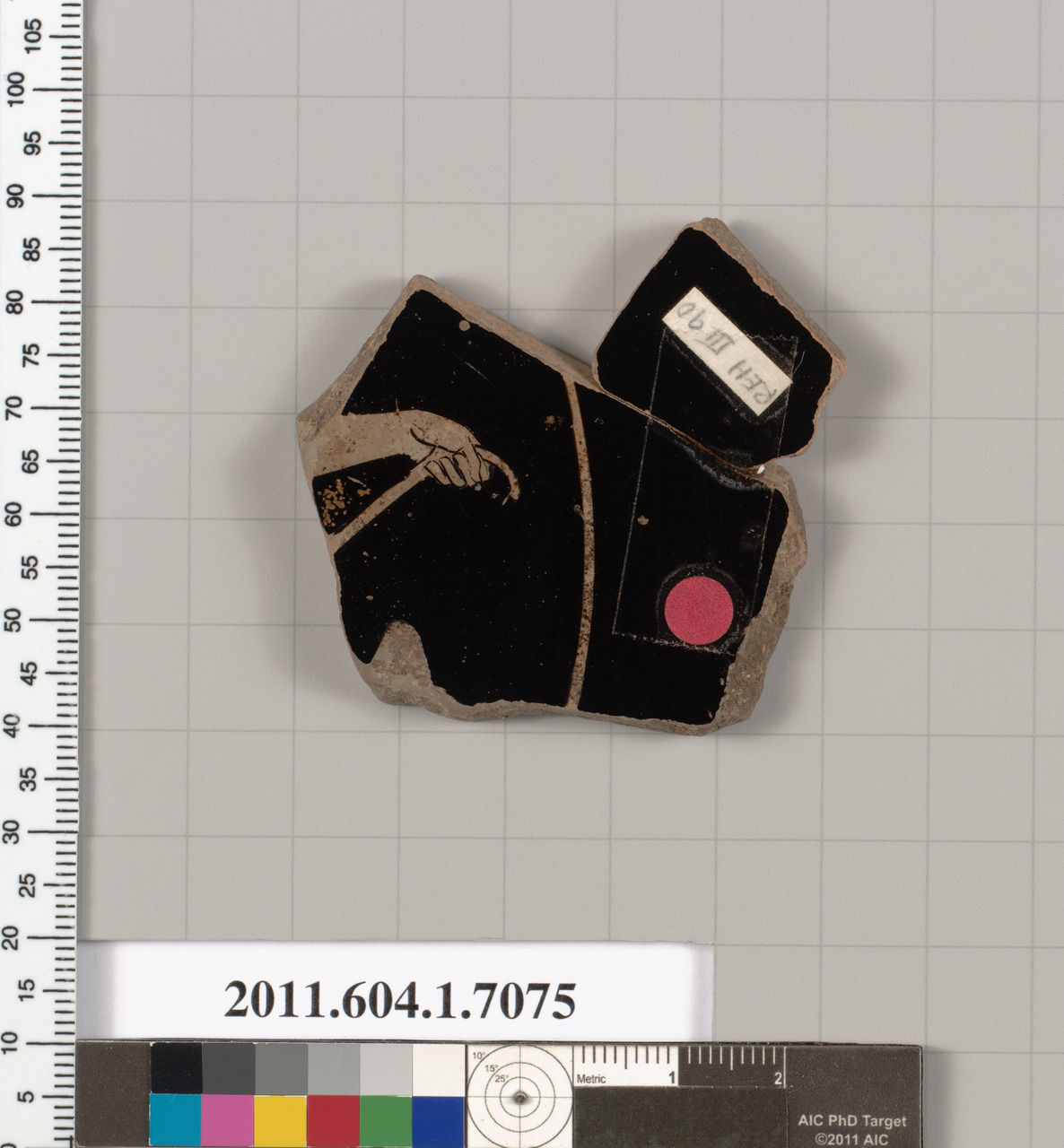
Heritage Synthesis: Terracotta fragment of a kylix (drinking cup)
Curated on Aug 20, 2026 // Node: LDN-01
From Attic Clay to Atelier Shadow: The Terracotta Kylix as a Blueprint for 2026 Old Money Silhouettes
The persistent allure of “Old Money” aesthetics lies not in ostentation, but in the quiet authority of restraint—a visual language predicated on lineage, material integrity, and an almost archaeological sense of permanence. As we at the Lauren Fashion Heritage Lab examine the internal genetic codes of our Liru archives—specifically the dialectical tension between the warm introspection of the *Pilgrim Sudhana* and the cold ceremonialism of the *Ceremonial Blade*—we find an unexpected, yet profoundly apt, external interlocutor: the terracotta fragment of an Attic kylix. This humble shard of a Greek drinking cup, with its curved walls and residual slip, is not merely an artifact of convivial antiquity. It is a masterclass in the very principles that must underpin the 2026 Old Money silhouette: controlled volume, tonal depth through surface variation, and the philosophical weight of the object as a carrier of ritual.
I. The Dialectics of Materiality: Warmth and Rigor in a Single Gesture
The internal Liru codex identifies a core dichotomy: the *Pilgrim Sudhana*’s “warm, jade-like gold” versus the *Ceremonial Blade*’s “cold, rigorous bronze.” The terracotta kylix fragment resolves this binary in a single, unified material. Terracotta, in its raw state, is earth—humble and warm. Yet the Greek craftsman’s application of a black-figure or red-figure slip transforms its surface into a field of stark, disciplined contrast. The fired clay retains a subtle, porous warmth, while the slipped areas achieve a glassy, near-metallic depth. This is the foundational principle for the 2026 Old Money silhouette: the use of a single, noble material (cashmere, heavy silk, or virgin wool) that possesses an inherent tonal duality. We are not speaking of prints or appliqués, but of a fabric’s intrinsic ability to shift character under light—a matte faille that catches a glint, a double-faced cashmere that reveals a darker under-layer at the cuff or hem. The silhouette must feel warm and approachable in its drape, yet rigorous and precise in its construction, mirroring the kylix’s union of earthy clay and disciplined slip.
II. The Architecture of the Curve: From Symposion to Sartorial Structure
The kylix is defined by its shallow, wide bowl and two horizontal handles—a form engineered for the reclining symposiast. Its profile is not a static circle, but a series of dynamic, shallow arcs. This is the antithesis of the stiff, armored formality of the *Ceremonial Blade*. For 2026, this translates into a radical reinterpretation of the tailored jacket and coat. The Old Money silhouette must abandon the hard, constructed shoulder in favor of what we term the “kylix curve.” This involves a sleeve head that is set with a deliberate, soft roll, creating a continuous, unbroken line from the shoulder to the wrist—reminiscent of the cup’s continuous curve from lip to stem. The body of the coat should follow a similarly shallow arc, skimming the torso without clinging, creating a column of fabric that moves with a fluid, liquid weight. This is not a relaxed or slouchy fit; it is a *controlled* drape. The internal canvas and tailoring should be as precise as the potter’s wheel, ensuring that the fabric’s fall is deliberate, echoing the kylix’s engineered stability. The “center-radial” structure noted in our Liru analysis of the *Sudhana* finds its secular parallel here: the garment’s center seam or placket acts as the kylix’s central tondo, from which all drape and movement radiate outward in harmonious proportion.
III. The Patina of Prestige: Surface as Narrative
The most compelling aspect of the terracotta fragment is its fragmentation. The broken edges, the worn slip, the accumulated calcification—these are not defects, but a record of time. Our internal codex speaks of the *Sudhana*’s “mottled blue-green oxidation” as “the weight of time.” In the context of 2026 Old Money dressing, this translates to a fetishization of *patina* over *newness*. The new silhouette must not look fresh from a factory; it must look as if it has been owned for decades, as if it has absorbed the rituals of its wearer. This is achieved through material choice: a silk twill with a subtle, irregular slub; a wool gabardine with a dry, chalky hand; a leather trim that will develop a rich, dark burnish. The color palette must echo the kylix’s fired earth tones—not bright white, but bone; not stark black, but a deep, smoky charcoal; not primary red, but a burnt sienna or terracotta. These are the colors of antiquity, of aged plaster and sun-baked earth. They signal a lineage that predates fast fashion, a wardrobe built on the same principles as a museum collection—curated, preserved, and valued for its historical depth.
IV. Ritual and Function: The Garment as an Instrument of Ceremony
The kylix was not merely a cup; it was the central instrument of the symposion, a ritualized space of philosophical discourse, poetry, and social bonding. Its form facilitated a specific, ceremonial action—the libation, the toast, the passing of the cup. This informs the 2026 Old Money silhouette’s relationship with function. Our Liru codex differentiates between the *Sudhana*’s “inner contemplation” and the *Blade*’s “external ritual.” The kylix silhouette must bridge these. The garments must be designed with specific, almost ceremonial, interactions in mind. A coat with a hidden, interior pocket for a slim volume of poetry. A jacket with a cuff button that requires a deliberate, two-second gesture to fasten. A trouser with a deep, precise pleat that falls perfectly when seated in a leather club chair. These are not practicalities; they are *rituals*. They slow down the act of dressing, transforming it from a mundane chore into a mindful ceremony. The wearer is not just putting on clothes; they are assuming a role within a larger, unspoken social order—just as the symposiast assumed his role by lifting the kylix.
V. Conclusion: The Eternal Return of the Fragment
The terracotta kylix fragment, in its incomplete state, paradoxically offers a complete philosophy for the 2026 Old Money silhouette. It teaches us that true luxury is not found in the totality of a perfect, untouched object, but in the integrity of the fragment—in the strength of a curve, the depth of a surface, the story of a break. As we synthesize this with our Liru archives, we move beyond the binary of warm gold versus cold bronze. We arrive at a third path: the *terracotta principle*. This is a design language that embraces the warmth of earth and the rigor of fire, the fluidity of a shallow arc and the precision of a potter’s wheel, the newness of a fresh firing and the depth of an ancient patina. For 2026, the Old Money silhouette will not shout its status through logos or exaggerated cuts. Instead, it will whisper through the quiet authority of a perfectly balanced curve, the subtle shift of a light-absorbing dye, and the profound, unspoken history embedded in a fragment of fired earth. It is a silhouette that understands that true permanence is not found in resisting time, but in wearing it beautifully.
Heritage Lab Insight
Genetic Bridge: Archive node focusing on Heritage-Black craftsmanship.