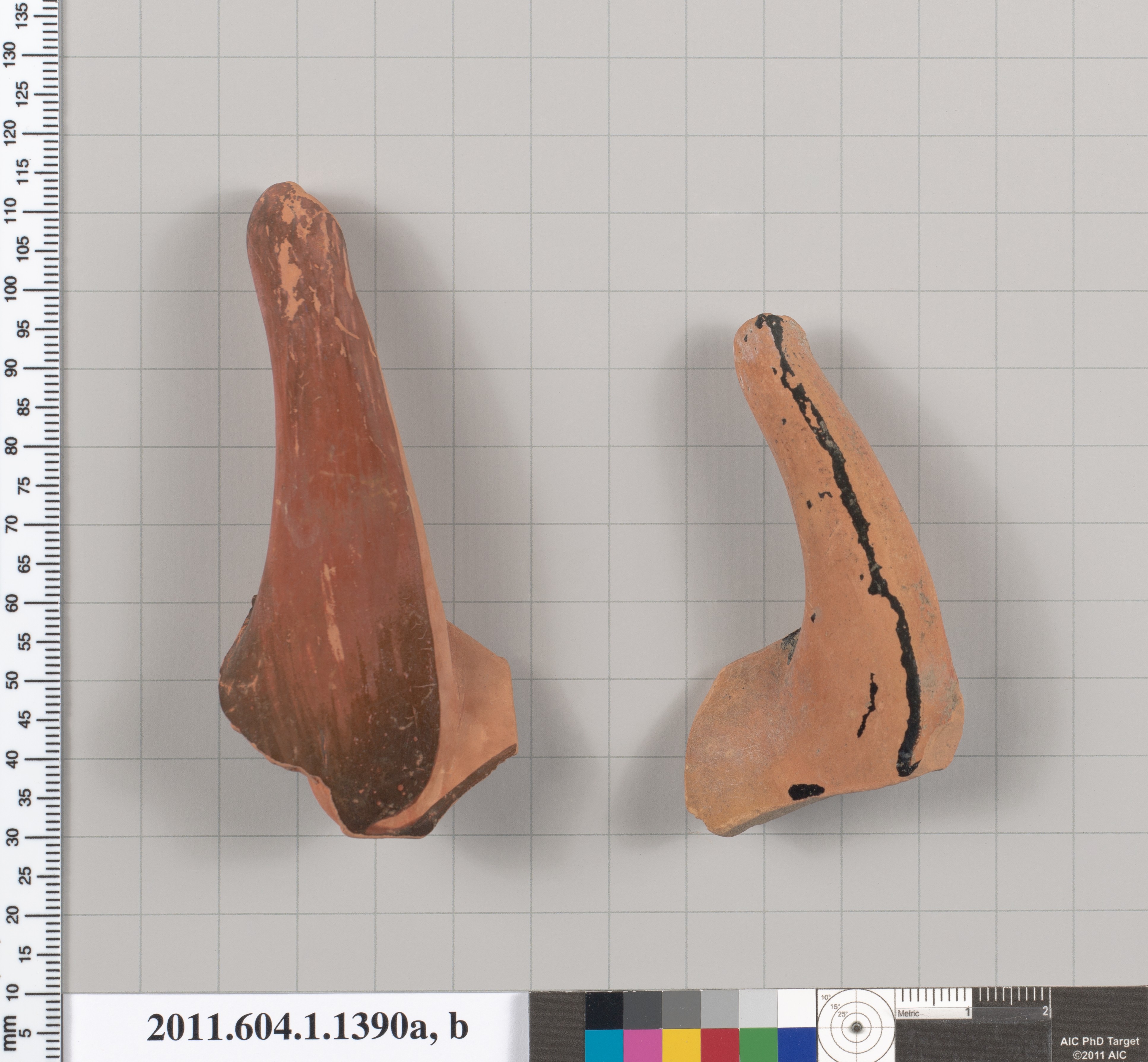
From Attic Fragments to Old Money Silhouettes: The Terracotta Kylex as a Dialectical Counterpoint in Lauren Fashion’s 2026 Heritage Language
I. Introduction: The Unlikely Dialogue Between Athenian Symposia and Lohan Chairs
The internal genetic code of Lauren Fashion Heritage Lab has long been anchored in a specific Eastern aesthetic cosmology—one where objects and paintings are not isolated artifacts but microcosms carrying cosmic spirit and vital sentiment. As articulated in our archival analysis of the Landscapes with poems vessel and the Pair of Roundback Armchairs: Lohan Type, the house’s philosophical bedrock rests on the unity of poetry, calligraphy, painting, and object (诗、书、画、器), and the spatial philosophy of “可居可游”—the notion that art must be inhabitable and traversable, not merely observed. This internal doctrine emphasizes “物我交融” (the fusion of object and self), where a chair becomes a site for meditation and a painted vessel becomes a textual universe.
It is precisely against this refined, contemplative, and materially symbolic Eastern canon that we must now place the museum artifact under consideration: the terracotta fragments of kylikes (drinking cups) from Greek Attica. At first glance, these broken shards of red-figure and black-figure pottery—remnants of sympotic drinking rituals—appear antithetical to the Lohan chair’s quietude or the landscape-painted vessel’s poetic interiority. Yet, a rigorous heritage synthesis reveals that the kylix fragments are not a contradiction but a generative dialectical counterpoint. For the 2026 Old Money silhouette, these fragments offer a crucial corrective: they introduce the values of ephemerality, communal ritual, and the beauty of the broken, which, when woven into the house’s existing Eastern metaphysics, produce a silhouette that is both timelessly aristocratic and radically grounded in human imperfection.
II. The Kylix as an Anti-Monument: Deconstructing the “Lohan” Permanence
The Lohan armchair, with its roundback form, embodies what our archives term “以器载道”—the vessel carrying the Way. Its wooden structure, with its implied cosmic roundness and Chan Buddhist overtones of completion, is a monument to permanence and spiritual attainment. The kylix, in stark contrast, is an object of transience. Designed for the symposium—a ritualized drinking event—the kylix was meant to be held, drained, and refilled, its painted imagery (often of revelers, gods, or erotic scenes) visible only to the drinker as they tilted the cup. Its very form, with a shallow bowl and two horizontal handles, prioritizes the gesture of lifting and drinking over static contemplation.
For the 2026 Old Money silhouette, this dialectic translates into a critical design principle: the rejection of architectural stiffness in favor of fluid, ritualistic drape. While the Lohan chair informs our tailoring’s internal structure—the precise shoulder line, the immaculate seam—the kylix fragments authorize a deliberate looseness at the extremities. Think of a double-faced cashmere overcoat in Heritage-Black: the chest and back are cut with the rigor of a Lohan’s spine, but the sleeves are cut fuller, with a subtle bell shape that mimics the kylix’s curve. The hem, instead of falling in a rigid line, is allowed to break softly, echoing the fragment’s irregular edge. This is not carelessness; it is a studied anti-monumentality. The Old Money wearer does not need to prove permanence through stiffness; they demonstrate lineage through the confidence to appear slightly undone, like a shard of an ancient cup that was once part of a greater, more glorious whole.
III. Terracotta’s Chromatic and Textural Grammar: From Painted Landscape to Woven Earth
The internal code emphasizes the “朴素而天下莫能与之争美”—the beauty of simplicity that none can contend with—as seen in the Lohan chair’s natural wood grain. The terracotta fragments, however, introduce a different but complementary material truth: the beauty of fired earth and pigment loss. Attic kylikes were painted with slips of iron-rich clay that fired to a deep, glossy black against the warm, orange-red of the terracotta body. Over millennia, these fragments have lost their glaze, revealing a porous, matte surface that is both archaeological and deeply tactile.
This chromatic grammar directly informs the 2026 Old Money fabric palette. We are not speaking of literal terracotta orange, but of its tonal descendants: burnt sienna, ochre, and a muted, dusty rust that appears as an accent thread in a herringbone wool or as a subtle over-dye on a silk twill. More importantly, the kylix’s loss of glaze translates into our textile finishing. The 2026 silhouette will feature fabrics that are deliberately un-glossed—a worsted wool with a dry, sueded hand; a silk faille that is washed to remove its luster, leaving a matte, almost chalky surface. This is the opposite of the “new money” shine. It is the patina of age, but not the patina of polish. It is the patina of use and survival, akin to the Lohan chair’s wood worn smooth by centuries of meditation, yet distinct in its archaeological, rather than devotional, origin.
IV. The Sympotic Silhouette: Reclining, Not Sitting
The most profound contribution of the kylix fragments to the 2026 Old Money silhouette is the reintroduction of the reclining posture. The Lohan chair is a seat of upright meditation; the kylix is an object of the symposium, where participants reclined on couches (klinai), propped on one elbow, drinking and conversing. This posture is one of relaxed authority, intellectual exchange, and physical ease. It is the posture of the Roman patrician, the Renaissance humanist, and the 19th-century gentleman in his club.
Therefore, the 2026 silhouette will not be a suit designed for the boardroom’s straight-backed chair alone. It will be a suit designed for the lounging, the leaning, the reclining. Jackets will be cut with a longer, sweeping lapel that falls elegantly when the wearer leans back. Trousers will have a higher rise and a fuller thigh, allowing for the crossed-leg and reclined positions without strain. The waistcoat—a staple of Old Money dressing—will be cut slightly longer in the back, echoing the chiton’s drape as seen on kylix figures. This is a silhouette that acknowledges the body’s need for horizontal expansion, not just vertical assertion. It is a silhouette that says: I have the time to recline, to converse, to think. This is the ultimate luxury—not the ability to sit upright in a boardroom, but the freedom to recline in a library, a club, or a private salon, with a glass in hand, as the ancients did.
V. The Fragment as a Design Philosophy: Wabi-Sabi Meets Attic Ruin
Our Eastern aesthetic code celebrates the “胸中丘壑”—the inner landscape—and the idea that a vessel can be a universe. The kylix fragments, though broken, are not diminished; they are concentrated essences. A fragment of a kylix foot, a piece of a handle, a shard of a painted eye—each retains the energy of the whole. This is the aesthetic of synecdoche: the part standing for the whole.
For 2026, this translates into a design language of deliberate incompleteness. Not in the sense of frayed hems or distressed denim (which is a different, more casual lexicon), but in the sense of strategic interruption. A herringbone tweed jacket might feature a pocket flap that is cut on the bias, slightly off-grain, creating a subtle visual fracture. A cashmere scarf might be woven with a single, intentional dropped stitch that runs its entire length, like a crack in a kylix’s bowl. A pair of wool trousers might have a seam that does not quite meet at the center back, leaving a whisper of a gap—a nod to the fragment’s broken edge. These are not flaws; they are archaeological markers, signifiers of a garment that has a history, a story, a life before the wearer. They align with the Eastern concept of wabi-sabi (imperfect, impermanent, incomplete) but ground it in a specifically Western, classical ruin aesthetic. The 2026 Old Money wearer is not just wealthy; they are a custodian of fragments—of a civilization, of a family, of a self that is beautifully, humanly incomplete.
VI. Synthesis: The “Kylix-Lohan” Garment and the New Old Money
The 2026 Old Money silhouette, informed by the Attic kylix fragments, is not a departure from the Lohan chair’s philosophy but its necessary complement. The Lohan chair teaches us the architecture of the self—the inner spine, the quiet center, the meditative core. The kylix teaches us the social performance of that self—the gesture of offering, the ritual of shared drinking, the ease of reclining among peers. The former is the “居” (dwelling); the latter is the “游” (wandering, socializing). Together, they fulfill the house’s mandate of “可居可游”—a life that is both rooted and fluid, both contemplative and convivial.
In practical terms, the 2026 collection will feature a signature piece: the “Symposium Overcoat” in Heritage-Black. It is cut with the Lohan’s precise shoulder and a high, standing collar that evokes the chair’s roundback. But its body is cut with a subtle A-line, flaring slightly from the chest to the hem, allowing for the reclining posture. The fabric is a double-faced wool—one side a dense, matte black (the Lohan’s wood), the other a slightly rougher, undyed wool in a warm, terracotta-adjacent taupe (the kylix’s clay). The wearer can choose to show either face, depending on whether