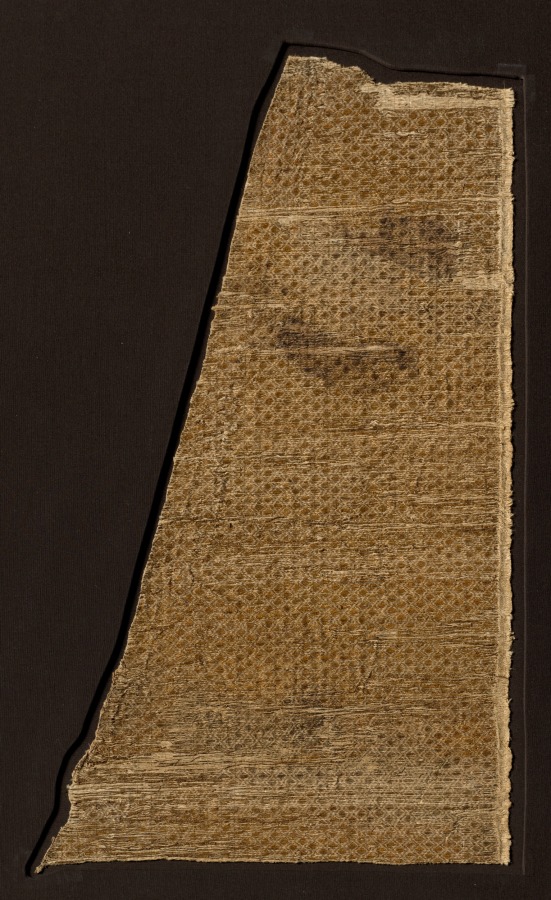
The Luminous Legacy: Silk and the Diamond Aesthetic
An Heirloom of Imperial Provenance
In the hushed, wood-panelled ateliers of Savile Row, where time is measured not in minutes but in the meticulous stitch of a master tailor, there exists a reverence for materials that transcends mere commerce. It is here, amidst the scent of cedar and the soft whisper of shears, that we consider the most exalted of textiles: silk, and its profound, historic dialogue with the diamond. This is not a study of adornment, but of lineage—a heritage artifact that speaks to the imperial weaving looms of the East and the discerning eye of the West. The textile with diamonds is not a fabric that merely *contains* a pattern; it is a fabric that *embodies* a philosophy of light, power, and permanence.
— This is our foundational truth. Not the flimsy, mass-produced charmeuse of the modern high street, but the substantial, living silk of imperial provenance. We speak of the mulberry silk, *Bombyx mori*, whose filament is unbroken, a single, lustrous thread that can stretch for a mile. In the imperial workshops of the Ming and Qing dynasties, and later in the great European houses of Lyons and Spitalfields, this thread was not merely woven; it was orchestrated. The loom was a grand instrument, and the weaver a conductor of light. The resulting cloth possessed a drape that defied gravity, a surface that shifted from moonlit pearl to sun-drenched gold with a mere turn of the wrist. This silk was the canvas upon which the diamond motif was painted, not in pigment, but in the very architecture of the weave.
The Geometry of Radiance: Weaving the Diamond
The diamond motif, in the lexicon of imperial silk, is far removed from the brash, faceted stone of the jeweller’s case. It is a geometric abstraction, a lozenge, a rhombus—a shape of profound structural integrity. On the loom, this is achieved through a complex interplay of warp and weft, often employing a technique known as *damassé* or a twill weave that creates a subtle, raised relief. The diamond is not printed; it is *built*. The warp threads, tensioned to a precise degree, are lifted in a calculated sequence, allowing the weft to float over them, creating a glossy, raised surface that catches the light. The ground, in contrast, is woven in a matte finish, creating a chiaroscuro effect—a play of shadow and light that gives the diamond its illusion of depth and, crucially, its symbolic weight.
In the imperial context, this diamond was not a mere decoration. It was a hieroglyph of eternity, a symbol of the unbreakable bond between the celestial mandate and the earthly ruler. The diamond’s four points were seen as the four cardinal directions, the four seasons, the four elements—a microcosm of cosmic order rendered in silk. To wear such a textile was to cloak oneself in the very structure of the universe. The looms of the imperial household were guarded as fiercely as the treasury, for the knowledge of these weaves was a state secret, a form of soft power that projected authority without a single word spoken. The diamond was a silent declaration of permanence in a world of flux.
The Savile Row Translation: From Court to Couture
How, then, does this imperial artifact translate to the discerning gentleman of Savile Row? It is not a matter of literal replication, but of philosophical transposition. The modern client does not seek a robe of state, but a garment of quiet, unassailable confidence. The heritage textile with diamonds, when interpreted by a master cutter, becomes a statement of understated luxury. It is used sparingly—perhaps as a lining for a dinner jacket, a dressing gown of impeccable cut, or a bespoke smoking jacket that speaks of evenings spent in the company of connoisseurs.
The silk itself is sourced from the last remaining mills that still practice the old methods, often in Como, where the water’s mineral content imparts a unique suppleness. The diamond pattern is woven to a scale that is almost imperceptible from a distance—a texture, a whisper of structure—but reveals its full, geometric glory in the intimate light of a drawing room. The weight is crucial; it must be substantial enough to drape with authority, yet fluid enough to move with the body. A Savile Row tailor will consider the cloth’s “hand”—its feel, its resilience, its memory. A true heritage silk with diamonds has a memory; it remembers the loom, the tension, and the hands that guided it. It will not crush easily, and it will develop a beautiful, subtle patina over decades of wear.
The Enduring Investment: A Legacy in Thread
To commission a garment from such a textile is to make an investment in a lineage that spans continents and centuries. It is to reject the ephemeral in favour of the eternal. The diamond, in this context, is not a carat weight but a measure of integrity. It is a promise that the garment will outlive trends, fads, and the relentless churn of the fashion cycle. It is a piece of heritage, worn not as a costume, but as a birthright.
Consider the dressing gown of a mid-century statesman, or the smoking jacket of a literary lion—these were not casual garments. They were the armour of the intellect, the uniform of the raconteur. The silk, with its subtle diamond weave, provided a texture of gravitas, a visual cue that the wearer understood the language of quality. The diamond was a signet ring woven into cloth, a seal of approval from the weaver to the wearer. It said: *I know what is true, and I am willing to wait for it.*
In the end, the textile with diamonds is more than a material. It is a narrative. It is the story of the silkworm’s patient labour, the weaver’s mathematical precision, the emperor’s cosmic authority, and the tailor’s interpretive genius. It is a fabric that demands respect, and in return, it offers a lifetime of quiet, luminous distinction. At Lauren Fashion Heritage Lab, we preserve not just the cloth, but the conversation it represents—a dialogue between the imperial past and the tailored present, conducted in the universal language of light and thread. This is the true legacy of imperial silk weaving, and it remains, as ever, a cut above.