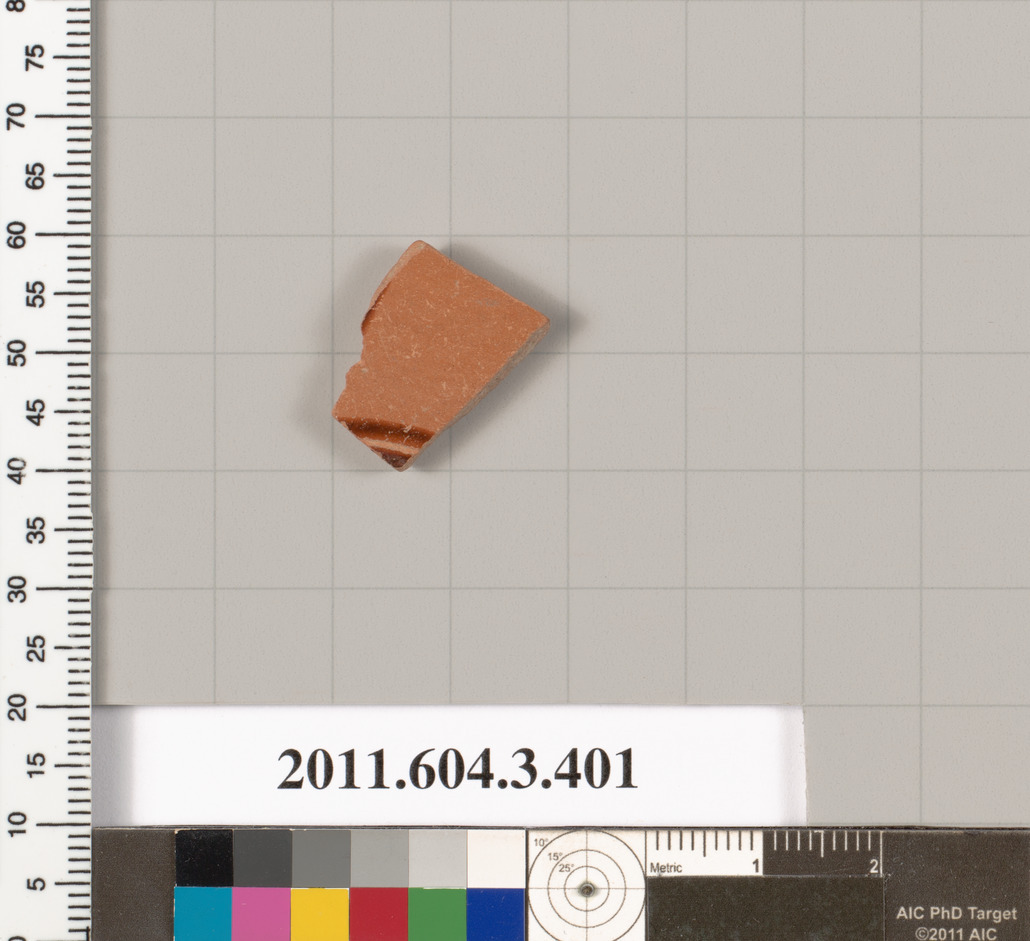
Vessel, Virtue, and the Voluminous Silhouette: A Classical Terracotta Informs the 2026 Old Money Aesthetic
The Lauren Fashion Heritage Lab’s internal genetic code posits a profound dialectic between Eastern “embodying the Dao within the vessel” and Western “expressing the heart through symbol.” This discourse, framed by the Delft bowl and the Temptation of Saint Anthony, finds a potent and foundational third term in the Terracotta fragment of a neck-amphora from Attic Greece. This artifact, a shattered yet eloquent relic, does not merely contribute to the conversation; it recalibrates it, providing the formal and philosophical bedrock for a 2026 interpretation of Old Money elegance. Moving beyond superficial signifiers of wealth, this analysis proposes that the coming silhouette will be defined by an architecture of contained volume, civic virtue, and narrative restraint—a direct inheritance from the classical vessel’s ethos.
The Amphora as Archetype: Contained Power and Civic Identity
The Attic neck-amphora was never a mere container. It was a civic object, designed for storage, trade, and ritual, its form a perfect marriage of function and symbolic geometry. Its ovoid body, stable foot, and balanced handles speak of a self-contained world. This is neither the Delft bowl’s “infinite within the finite” nor the dramatic, expansive conflict of Saint Anthony. It is a finite, perfect finite—a declaration of human scale and rational order. The fragment’s very state, revealing the curvature of the body, is key. It hints at the full, generous volume of the vessel, a volume that is never bloated but always held in check by the structural integrity of the form and the narrative bands that gird it. This principle translates directly to 2026 silhouettes: expect a move away from deconstructed fragility or overtly theatrical shape-making. Instead, the Old Money silhouette will embrace a voluminous integrity—wide-leg trousers that flow from a precise waist, coats with generous yet defined sleeves and torso room that imply activity and ease, dresses built from foundational draping rather than applied ornament. The body, like the amphora’s contents, is the valued essence, protected and dignified by its architectural casing.
The Black-Figure Narrative: Restraint as the Highest Drama
The terracotta fragment likely once bore black-figure painting, a technique where silhouetted forms tell myths, athletic triumphs, or funerary rites. This visual language is crucial. The drama is not in the psychological grotesquerie of a Bosch, but in the clarity of the composed scene. The narrative is externalized, civic, and legible, operating within a defined frieze. It symbolizes a world where identity and virtue are performed through understood codes and shared stories. For 2026, this translates to a sartorial language of restrained, coded narrative over explicit branding or trend-driven noise. The “black-figure” becomes the subtle but impeccable detail: the specific fold of a collar, the exact proportion of a lapel, the heritage cuff detail on a shirt, the quality of a button. These are the modern mythic friezes—silent, legible only to the initiated, speaking of lineage, discretion, and a participation in a sustained cultural tradition. The drama lies in what is *not* said, in the potency of the reserved gesture, much like the fragment’s broken edge invites the viewer to complete the revered form in their mind.
Heritage-Black: The Patina of Time and Ethical Materiality
The fragment’s material—terracotta, fired earth—is inherently humble, yet its transformation through fire and artistry renders it timeless. Its color is not a pure black, but the deep, warm, irregular black of ancient slip, often mottled with the ochre of the clay beneath or the accretions of millennia. This is Heritage-Black: not a flat, industrial hue, but a complex, layered, and time-earned darkness. It speaks of substance, patina, and an authenticity that cannot be replicated, only approximated through exceptional craftsmanship and noble materials. For the 2026 palette, Heritage-Black will dominate, but in rich, textural iterations: woolens with a deep, matte nap, velvets that absorb and release light, aged leathers, and silks with a substantial hand. This materiality carries an ethical dimension, mirroring the amphora’s civic purpose. It champions natural fibers, enduring construction, and a anti-disposable philosophy. Clothing becomes a vessel for values, designed to last and acquire its own narrative patina, a direct rebuke to the虚无 (nihilism) of fast fashion.
Synthesis: The 2026 Silhouette as Modern Vessel
In synthesizing the Lab’s genetic code with the Attic artifact, a clear silhouette emerges. The 2026 Old Money aesthetic is neither the bowl’s harmonious immersion nor the painting’s transcendent struggle. It is the vessel’s dignified carriage. It answers the ultimate question of “how to settle the mind and body within finite existence” not through escape or immersion, but through steadfast, elegant form and civic-minded self-presentation. The silhouette is voluminous yet structured, narrative yet reserved, materially profound and ethically grounded. It is clothing as a vessel for a modern virtue—a virtue of discernment, sustainability, and quiet confidence. In a fragmented world, this aesthetic offers not the “琉璃的宁静” (glazed tranquility) of the bowl nor the “试炼的火焰” (trial by fire) of the saint, but a third path: the poised, purposeful, and enduring strength of the classical column and the storied jar. It is an armor of culture, designed not for war, but for the sustained, graceful navigation of life’s complexities, becoming, like the terracotta fragment, an artifact of enduring relevance.