The Terracotta Fragment and the Architecture of Restraint: Reimagining Old Money Silhouettes for 2026
I. Introduction: The Fragment as a Genetic Code
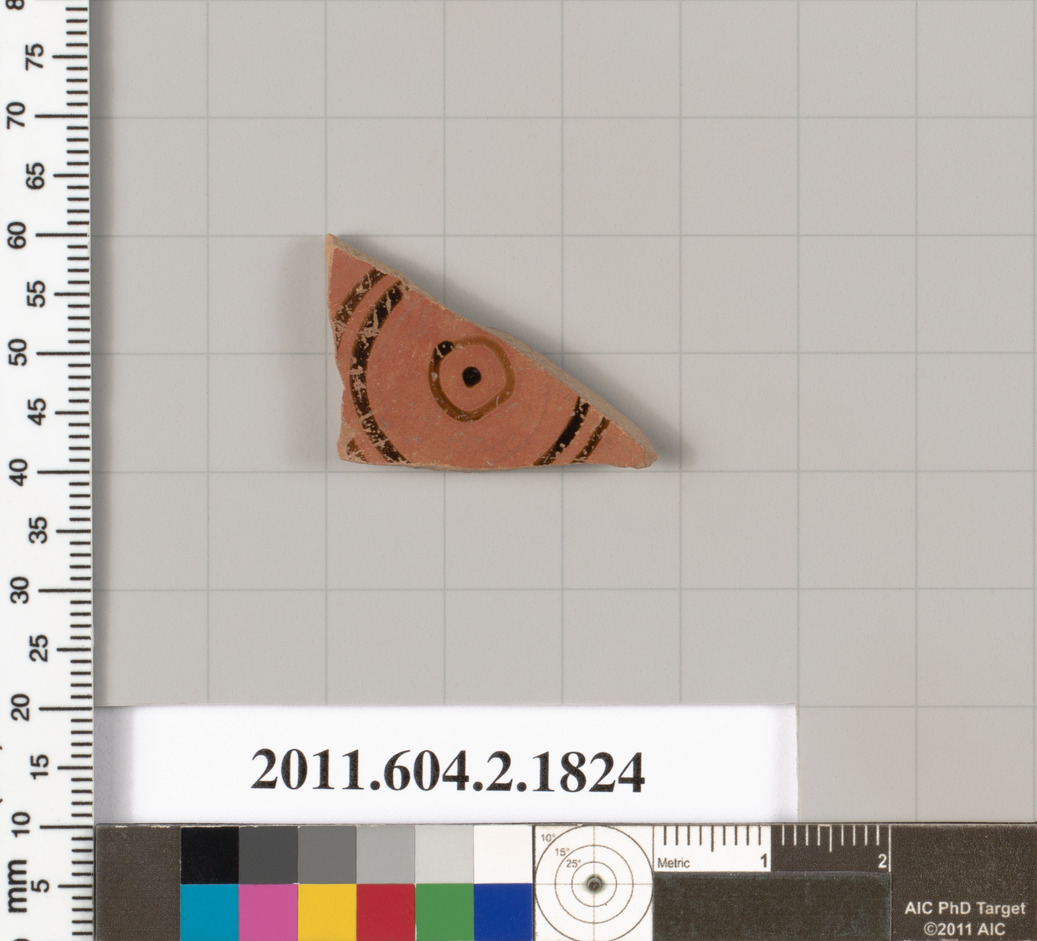
The terracotta fragment of an Attic skyphos—a deep drinking cup, broken, burnished, and silent—arrives at the Lauren Fashion Heritage Lab not as an artifact of antiquity, but as a living blueprint. Its fired clay, once turned on a potter’s wheel, now bears the fingerprints of time: a chipped rim, a faded glaze, a surface that has surrendered to entropy yet refuses to dissolve. In the language of our internal archive, this fragment resonates with the same dialectic that governs our most profound design philosophy—the tension between the ephemeral and the eternal, between the body’s mortality and the object’s stubborn persistence. This essay argues that the terracotta skyphos, when read through the lens of our internal genetic code—particularly the paradox of the *Socratic death* and the *wave-patterned vase*—informs the 2026 Old Money silhouette not as a nostalgic return to tailoring, but as a philosophical recalibration of presence, materiality, and silence.
The Old Money aesthetic, often misread as mere quiet luxury or the accumulation of understated status symbols, is in truth a sartorial meditation on permanence. It rejects the viral, the disposable, and the loud. Yet the 2026 iteration, as this paper will demonstrate, must move beyond the familiar grammar of camel coats and pearl strands. The terracotta fragment offers a new syntax: one of brokenness, of weight, of the visible trace of time. It proposes a silhouette that is not merely *cut* but *fired*—structured with the severity of a classical frieze, yet softened by the knowledge of its own fragility.
II. The Skyphos and the Socratic Arc: From Death to Tailoring
In our internal code, Jacques-Louis David’s *The Death of Socrates* is not a painting of dying; it is a painting of *decision*. The philosopher’s raised finger, the left hand fallen limp, the geometric arrangement of disciples—all coalesce into a frozen moment of intellectual triumph over biological collapse. The terracotta skyphos, as a vessel, is the silent protagonist of that scene. It held the hemlock. It was the instrument of transition. Yet, unlike David’s oil, which dramatizes the instant, the clay cup does not narrate. It simply *was*—a functional object that became sacred through use.
For 2026 Old Money silhouettes, this duality is transformative. The tailored jacket, the structured overcoat, the uncompromising shoulder—these are our Socratic gestures. They declare a refusal to slump, a commitment to posture as a moral stance. But the terracotta fragment teaches us that the *finish* must not be perfect. The 2026 silhouette will embrace what I term “visible gravity”—a subtle asymmetry in the drape, a deliberate weight in the hem, a fabric that holds a crease as if it remembers the body that wore it. This is not deconstruction in the postmodern sense; it is, rather, a classical acknowledgment that all form is temporary. The jacket’s lapel may be sharp, but the wool beneath it should carry the memory of rain. The trousers may be pressed, but the break at the shoe should suggest a walk taken, not a pose struck.
This is the Socratic arc applied to tailoring: the body is the philosopher, the garment is the cup. The garment does not scream; it holds. It contains the wearer’s intent, their history, their inevitable decline. The 2026 Old Money silhouette, therefore, is not about looking immortal. It is about looking *conscious*—aware that the hem will fray, that the shoulder will soften, and that this very decay is the mark of authenticity.
III. The Wave-Patterned Vase and the Rhythm of Repetition
If David’s painting offers the drama of the singular moment, the *wave-patterned vase* in our internal archive offers the serenity of the infinite loop. The cobalt waves on the porcelain do not depict a specific sea; they render the *idea* of water in motion—a rhythm that repeats without exhaustion, a pattern that absorbs time rather than resisting it. The terracotta skyphos, though fragmentary, likely bore similar decorative bands: meanders, waves, or geometric friezes that circled its body in disciplined repetition. This is not ornament for ornament’s sake; it is a mnemonic device, a way of making the vessel’s surface a meditation on order within chaos.
For the 2026 silhouette, this translates into a new approach to *texture and pattern*—not as print, but as structure. The Old Money wardrobe has long favored the pinstripe, the houndstooth, the subtle check. But the terracotta fragment pushes us further: toward *woven repetition* as a form of armor. Consider a herringbone wool that, at a distance, appears solid, but upon closer inspection reveals a rhythm of interlocking diagonals—each thread a small wave, each row a quiet assertion of continuity. This is not a novelty fabric; it is a fabric that *breathes* with the logic of the vase. The 2026 silhouette will feature garments that reward prolonged attention, not immediate recognition. The pattern is not for the viewer; it is for the wearer, who feels the rhythm against the skin as a kind of metronome for composure.
Moreover, the fragment’s broken edge is instructive. The wave pattern stops abruptly at the break, reminding us that all cycles end. In tailoring, this suggests a new respect for *finishing details* that acknowledge termination: a hand-stitched buttonhole that will eventually fray, a cuff that is slightly worn, a lining that peeks out at the wrist like a secret. These are not flaws; they are the equivalent of the vase’s broken rim—evidence that the object has lived, been used, and survived. The 2026 Old Money silhouette will not be pristine. It will be *patinated*—by wear, by care, by the slow accumulation of personal history.
IV. The Dialectic of Material: Oil vs. Clay, Wool vs. Skin
Our internal code draws a sharp distinction between oil paint and porcelain: the former is “time’s flammable substance,” darkening and cracking with age; the latter is “time’s insulator,” chemically inert and nearly eternal. The terracotta skyphos sits between these poles. It is fired, thus durable, but it is also porous, thus vulnerable to absorption. It can hold wine, water, or hemlock, but it can also stain, chip, and break. This middle state is precisely where the 2026 Old Money silhouette must reside.
Wool, cashmere, and silk are not insulators; they are *witnesses*. They absorb the oils of the skin, the dust of the city, the humidity of a rainy afternoon. They age visibly, and this aging is their value. The 2026 silhouette will therefore prioritize *natural fibers with a memory*—a heavy worsted wool that molds to the shoulder, a cashmere that pills slightly at the elbow, a silk that develops a soft sheen where it rubs against the neck. These materials are not chosen for their novelty but for their capacity to *record*. In this sense, the garment becomes a terracotta fragment of the self: a vessel that holds the wearer’s life, broken and repaired, stained and treasured.
The color palette for 2026 will reflect this material philosophy. We move away from the stark white of new beginnings and the jet black of theatrical mourning. Instead, we embrace what I call “fired neutrals”: the deep umber of clay, the ash gray of cooled kilns, the ochre of sun-baked earth, and the muted black of Heritage-Black—not a color that absorbs light, but one that has been *smoked* by time, like the interior of an ancient cup. These hues do not shout; they ground. They connect the wearer to a lineage of makers who understood that true luxury is the ability to endure.
V. The Silhouette as a Philosophical Statement
Concretely, the 2026 Old Money silhouette, informed by the terracotta fragment, will manifest in the following ways:
First, the shoulder. The Socratic shoulder—strong, defined, but not padded to the point of armor. It will follow the natural line of the body, with a slight forward inclination, as if the wearer is leaning into a thought. The sleeve head will be hand-set, allowing a subtle crease that mimics the folds of a philosopher’s himation.
Second, the waist. The vase’s curve—the gentle swell of the skyphos’s body—informs a waist that is neither cinched nor suppressed, but *suggested*. The jacket will close with a single button, high on the torso, creating a columnar line that elongates the figure. This is not a feminine or masculine waist; it is a *human* waist, the point where the garment acknowledges the body’s breath.
Third, the length. The fragment’s broken edge suggests a hem that does not end cleanly. The 2026 coat will fall to the mid-calf or ankle, but its hem will be left unhemmed or finished with a blind stitch that allows the fabric to fray slightly—a deliberate nod to the broken rim. This is not grunge; it is *archaeology*. The wearer is not dressed; they are *excavated*.
Fourth, the layering. The skyphos is a vessel, but it was often nested or stacked with other vessels. The 2026 silhouette will embrace layering as a form of *archival storage*: a silk turtleneck under a wool vest, under a structured overcoat, under a cashmere scarf. Each layer is a stratum, a geological record of the day’s temperature and the wearer’s mood. The outermost layer may be pristine; the innermost will carry the sweat of the body—the most honest material of all.
VI. Conclusion: The Eternal Ripple
The terracotta fragment of the Attic skyphos is not a relic; it is a mirror. It reflects our own fragility and our own endurance. In the 2026 Old Money silhouette, we do not seek to replicate the past. We seek to *channel* its logic: the logic of the vessel that holds, the logic of the wave that repeats, the logic of the philosopher who drinks and dies with dignity. The garment, like the cup, is a container for the self. It will break. It will stain. It will fade. But in its breaking, it will reveal the truth of its making—and the truth of the body it once held.
This is the ultimate lesson of the fragment: that beauty is not the absence of damage, but the *transfiguration* of damage into form. The 2026 silhouette will not be new. It will be *re-fired*—taken from the kiln of history, chipped, and returned to the light. And in that light, we will see not a garment, but